
ERBIL, Kurdistan Region - Israeli Prime Minister Benjamin Netanyahu on Thursday relayed a phone call with Syrian interim President Ahmed al-Sharaa during the clashes between Arab Bedouin tribes and the Druze community in July 2025, saying that his “very short and very sharp conversation” dissuaded Damascus and its aligned tribes from resuming their offensive against Druze in the Suwayda province in southern Syria.
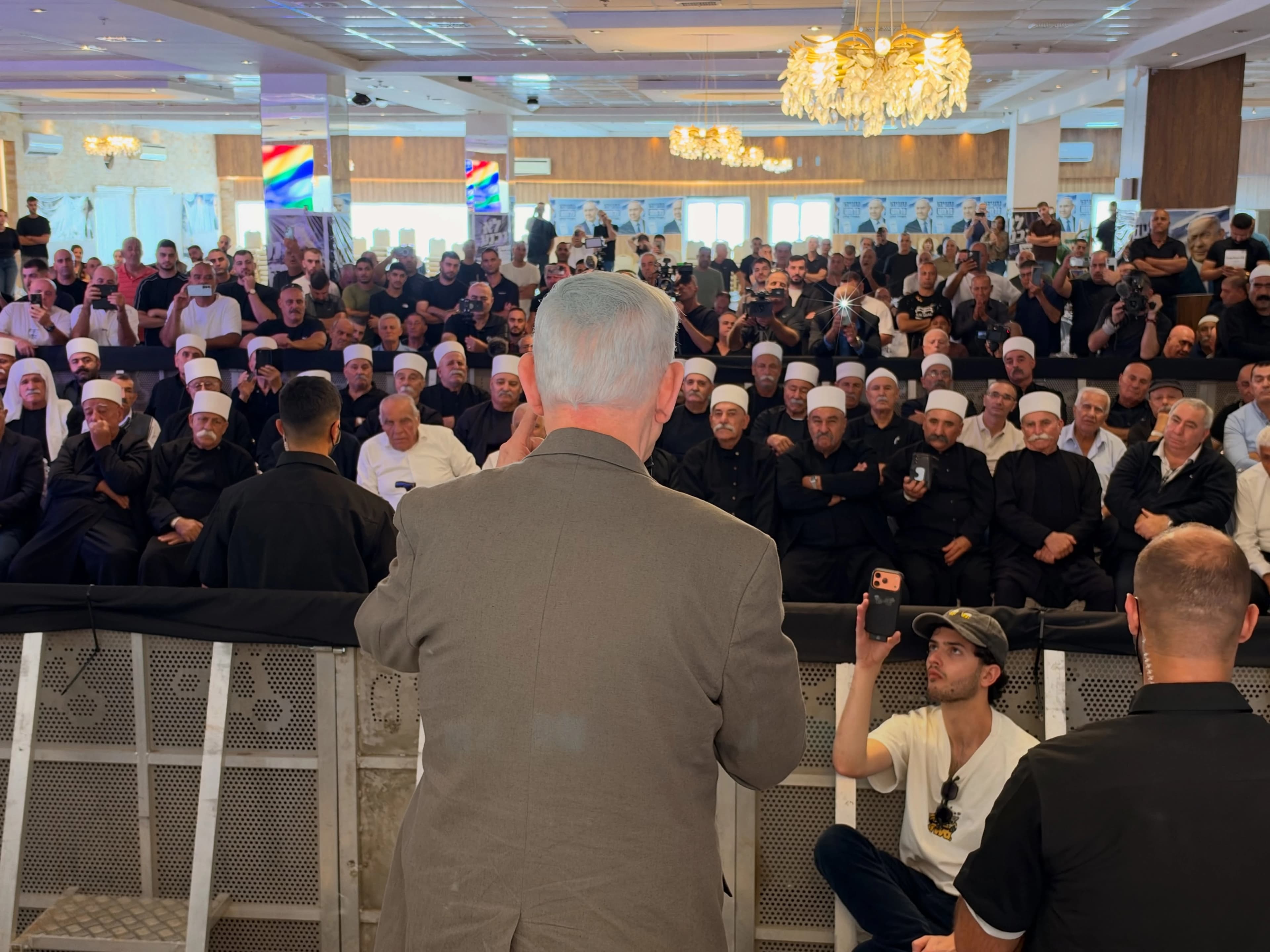
“I picked up the phone to Sharaa,” Netanyahu said at a conference for his right-wing Likud party conference for the Druze community in Yarka, a major Druze village in northern Israel, according to local Israeli media.
After the call, he stated, “the slaughter [of Druze in Suwayda] stopped.”
The Israeli premier is heading toward a competitive election in late October, where his domestic and regional policies will be tested. It is the country’s first election since the Hamas-led attack in October 2023 and Israel’s subsequent offensive in Gaza.
Israel is home to a population of roughly 150,000 Druze, who reside primarily in the north, with around 25,000 in the Golan Heights - an internationally disputed territory in Syria's south which was brought under Israeli control in 1967 during the Six-Day War. More than 44 percent of Druze in the Golan retain Israeli citizenship, with an uptick in applications following recent hostilities. Many Druze also maintain strong family ties across the border. Syria boasts a population of 500,000 - 700,000 Druze, comprising roughly 3 percent of its population with about 350,000 to 600,000 concentrated in Suwayda.
Triggered by a kidnapping involving a Druze driver and local Bedouin tribesmen, violence in the Druze heartland began as a cycle of retaliatory kidnappings. By mid-July 2025, the unrest had escalated into full-scale conflict, claiming hundreds of lives and displacing tens of thousands, namely Druze, in what became known as the “Suwayda massacre.”
The clashes widened further when the newly formed Damascus government, led by Sharaa, deployed interior ministry and military forces to Suwayda, which rights monitors say did not function as peacekeepers, but rather aligned with Sunni Bedouin fighters in joint assaults on Druze positions.
A UN report in March 2026 found more than 1,700 people dead and 200,000 from their homes, including at least 1,340 members from the Druze population alone.
In response, Israel fiercely intervened on behalf of the Druze community, striking multiple positions of the Syrian security forces in and around Suwayda as well as in Damascus, including the headquarters of the Syrian defense ministry and a location near Syrian presidential palace.
“We took out the Ministry of Defense in Damascus; we took out a target inside the palace compound,” the Israeli premier said Thursday. “I will do everything I can to protect our brothers and your brothers,” added, speaking to the representatives of the community.
Meanwhile, a Syrian government source on Thursday said the administration “categorically rejects any attempt to politicize” the issue ahead of the Israeli elections, affirming that “The Druze community in Suwayda Governorate has been, and will remain, an integral and inseparable part of the national fabric of the Syrian Arab Republic,” according to state-run Syrian Arab News Agency (SANA).
Regarding the lack of response from the Syrian government at the time, and absolving responsibility toward ensuring the safety of the minority community residing in its borders, the source instead claimed that “Israeli bombardment… prevented the Syrian government from intervening to put an end to the clashes between Druze and Bedouin communities,” framing it instead as “a major and deliberate Israeli role in targeting civil peace in Suwayda Governorate…by arming an outlaw militia to provoke widespread chaos and fabricate a pretext to drag the country into a full-scale war” amid “persistent Israeli attempts to undermine the stability that has been achieved in the governorate.”
In contrast, Hikmat al-Hijri - the most influential Druze leader from the community’s three-member council - openly expressed his pro-Israeli views after the July 2025 incident, calling for a self-rule in Suwayda under Israel’s behest.
Meanwhile, Youssef Jarbou, a Druze leader and another member of the council, has rejected ties with Israel and maintained that steering towards Tel Aviv risks fracturing the Syrian state.