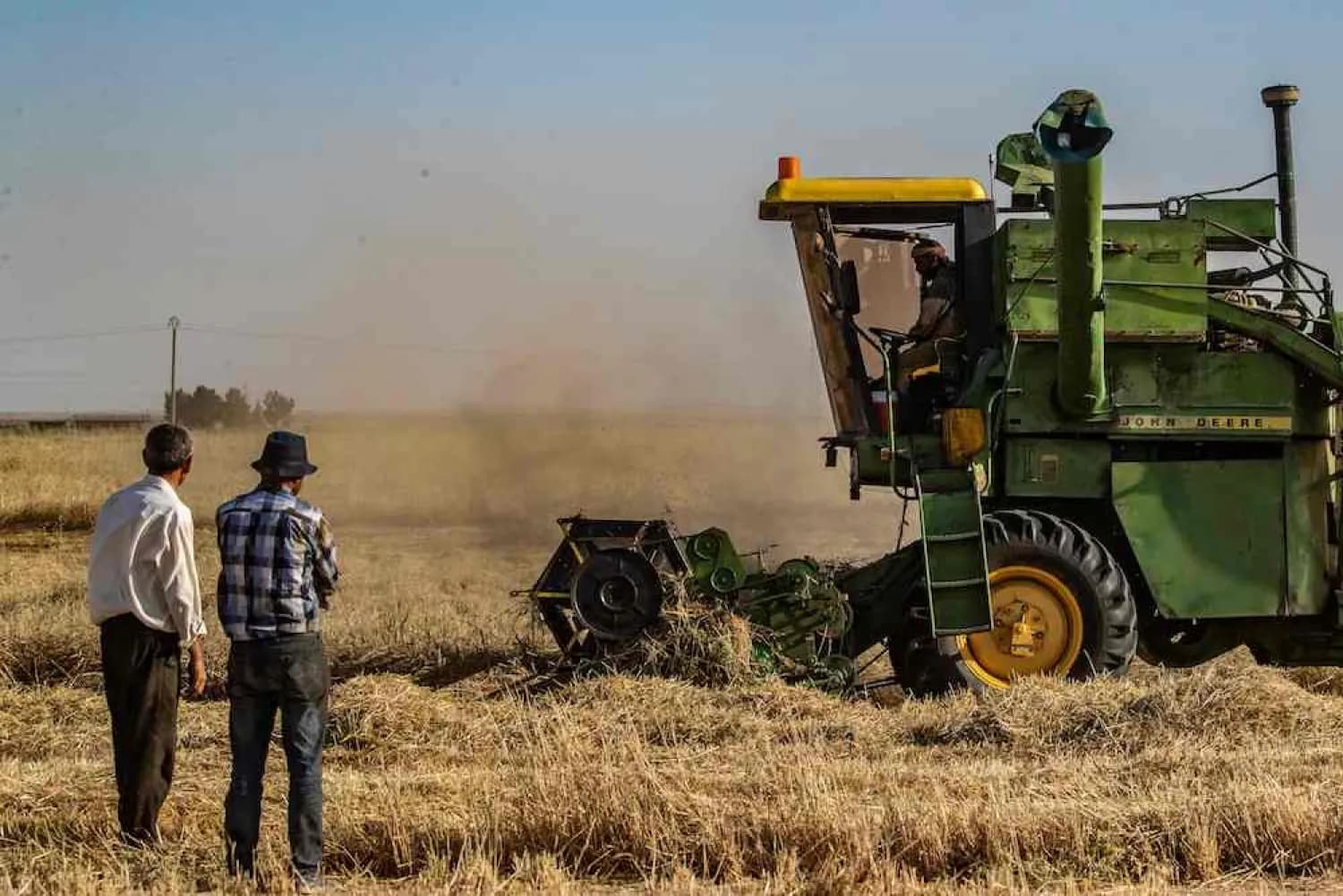

ERBIL, Kurdistan Region - Syria on Thursday said it has secured domestic wheat self-sufficiency and has received and stored two million and 750 thousand tons, according to state-owned Syrian Arab News Agency (SANA), as wheat farmers cite delays in payments from the transitional government.
SANA announced Thursday that Syria “achieves wheat self-sufficiency by receiving two million and 750 thousand tons and storing them.”
However, farmers in Tal Tamer in northeast Syria (Rojava) told a local outlet that the transitional government’s delay in executing partial or no payment at all for wheat dues spans several months after harvests were collected and delivered to storage facilities, silos and warehouses.
Delays in payment have sparked widespread discontent among farmers and residents alike in Rojava, dubbed the country’s bread basket for its provision of a major share of the country’s domestic wheat cultivation, who say their families rely on the income from the harvests to sustain their livelihood.
“More than two months have passed since we delivered our wheat to the collection centers, and so far no one has received their full dues,”Khalil Shandi, one of the farmers, saying he has only received 25 percent of dues owed to him and that the remaining amount had been postponed for another three months.
“This puts farmers in a difficult position” for expenses associated with farmworks and “places a heavy financial burden on them,” Shandi said.
Ali Alwan, another farmer, said “will not grow wheat next year because we will face the same obstacles we are experiencing now. Wheat farming has therefore become the biggest loss for farmers and citizens.”
A resident by the name of Shafik Murad told the outlet that the delays pose “severe difficulties” for farmers whose proceeds have yet to be disbursed given the seasonal nature of work in which they “wait from one year to the next for the harvest.”
This comes amid ongoing efforts to integrate Rojava’s civilian and military institutions into Syrian state structures under a January 29 agreement incorporating the autonomous administration’s civil institutions into the Syrian state.
During an interview with Rudaw recorded in mid-August, Mazloum Abdi, the commander of the now-dissolved Syrian Democratic Forces (SDF) announced that the integration of Rojava’s military, security and civilian structures had been fully completed, a development welcomed by the interim government.
Nevertheless, in interviews with Rudaw, residents in nearby Qamishli have raised concerns over bouts of crushing inflation, poverty, and price surges in Rojava in the last several years, including incidents in late July which sparked demonstrations over a potential “hunger revolution.”
.png&w=3840&q=75)