
ERBIL, Kurdistan Region - The return of thousands of displaced Kurdish families to Sare Kani (Ras al-Ain) in northeast Syria (Rojava) is being obstructed by settlers demanding up to $10,000 to vacate properties they illegally seized from locals, a member of the city's internally displaced persons (IDP) committee told Rudaw on Monday, adding that returns have been slow since the first convoy of displaced people to arrive in the city was met with violence in August.
Armed groups originally from other Syrian provinces “and even Iraq” are “now residing in Kurdish neighborhoods” in Sare Kani, Mohammed Hajo told Rudaw’s Nalin Hassan, describing the return of Kurdish families as “rare” because settlers “continue to threaten them.”
“These [settler] groups threaten the Kurds, saying, ‘If the Kurds return, we will drive them out,’” he added, noting that the Syrian government seeks to remove these settlers “peacefully” but “they are not complying.”
Around 200,000 Kurds fled Sare Kani in 2019, when a Turkish-led offensive drove out Kurdish forces. The residents’ properties were subsequently seized by Ankara-backed factions and Arab settlers.
The arrival of the first convoy of displaced persons in Sare Kani in August was met with violence from settlers. Damascus vowed to resume the return process, in line with the landmark integration agreement signed between the interim authorities and the now-dissolved Syrian Democratic Forces (SDF) in late January.
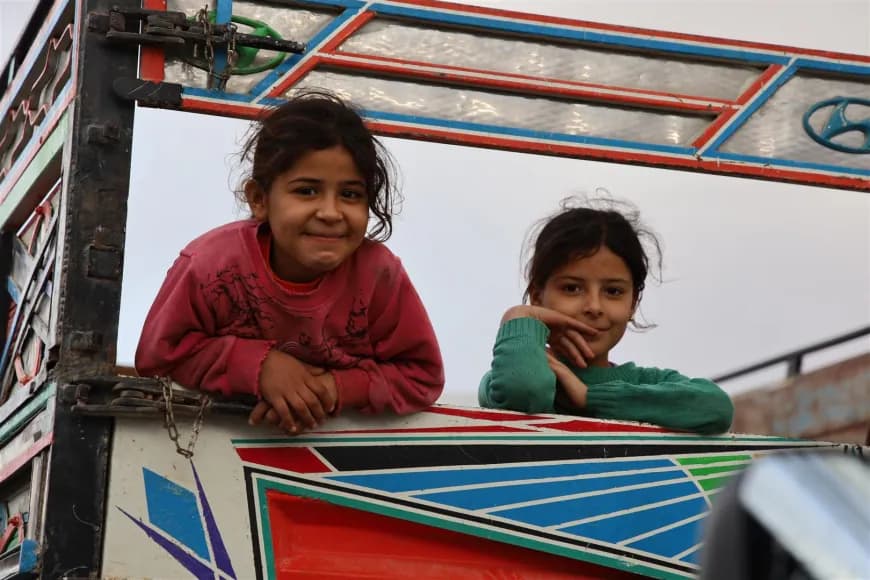
The third convoy of IDPs, comprising 3,242 individuals, departed for Sare Kani from displacement camps in the predominantly-Kurdish Hasaka province in Rojava on Monday, according to Hawar News Agency, an outlet affiliated with the enclave’s administration.
“We do not know what condition our home is in, but according to our neighbors, the house is in good condition, although its contents were stolen,” returnee Ali Hassan al-Haso told Hawar as the convoy departed.
Haso added that 19 families from Monday’s convoy were prohibited from returning to their homes.
“Two of the villages the convoy is heading toward today - Nedas and Dawudiya - are Kurdish villages, but because a Turkish military base is located there, people have not been allowed to return,” he claimed.
For his part, Hajo detailed to Rudaw that up to 1,608 families have so far returned to Sare Kani, while more than 13,000 families are still waiting to return to the city center alone.
“Around 60 Kurdish families tried to go back, but due to tensions and the obstacles created for them, they were forced to leave again,” He said, adding that most of the returnees are Arabs from villages such as Ahras, Manajir, Dwera, Tel Halaf and Allouk.
A Damascus-appointed local official in Sare Kani told Rudaw in July that Syrian interim President Ahmed al-Sharaa had vowed to end displacement by the end of 2026. With obstructions ongoing, however, it remains to be seen whether that pledge will be fulfilled.