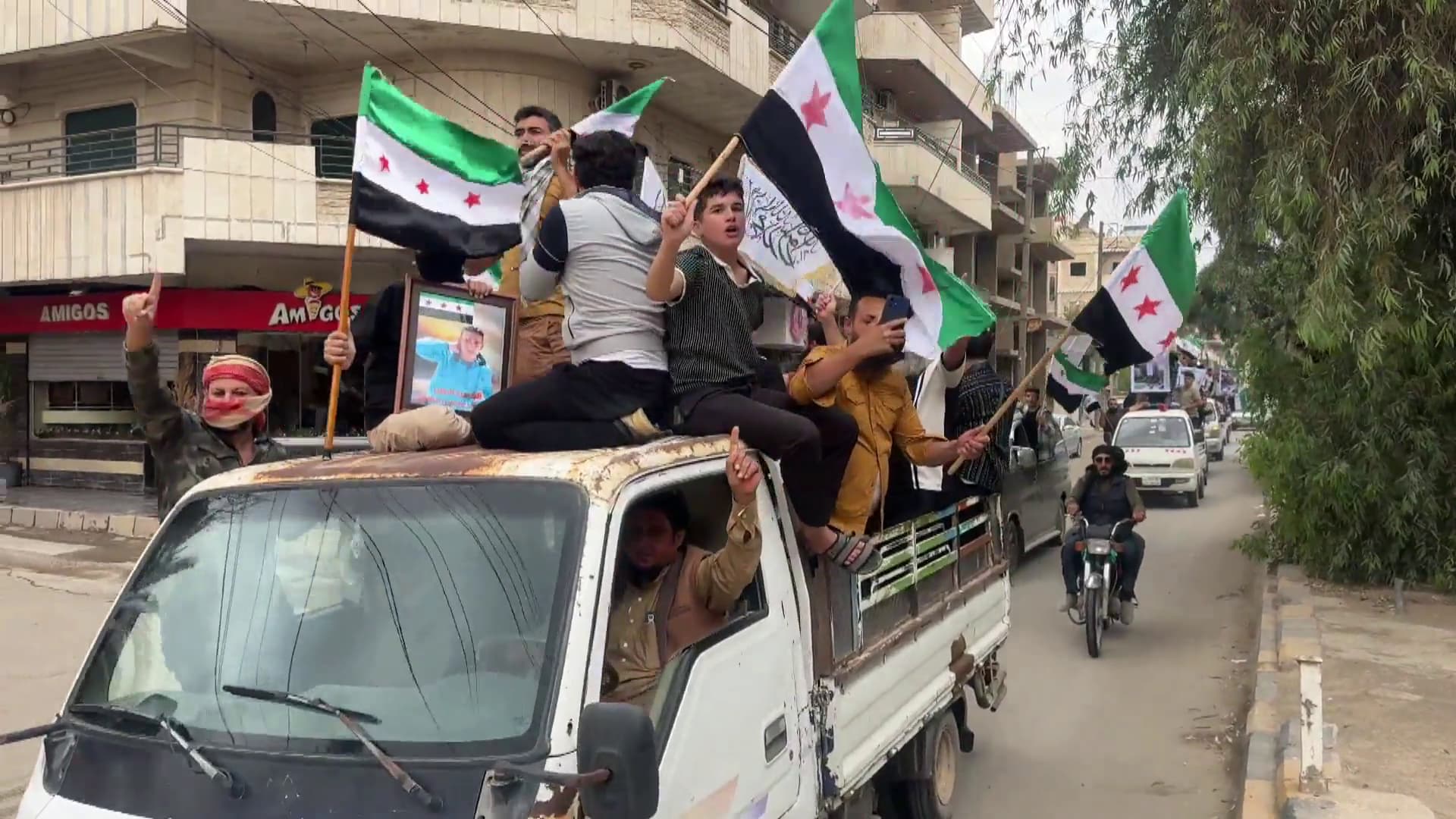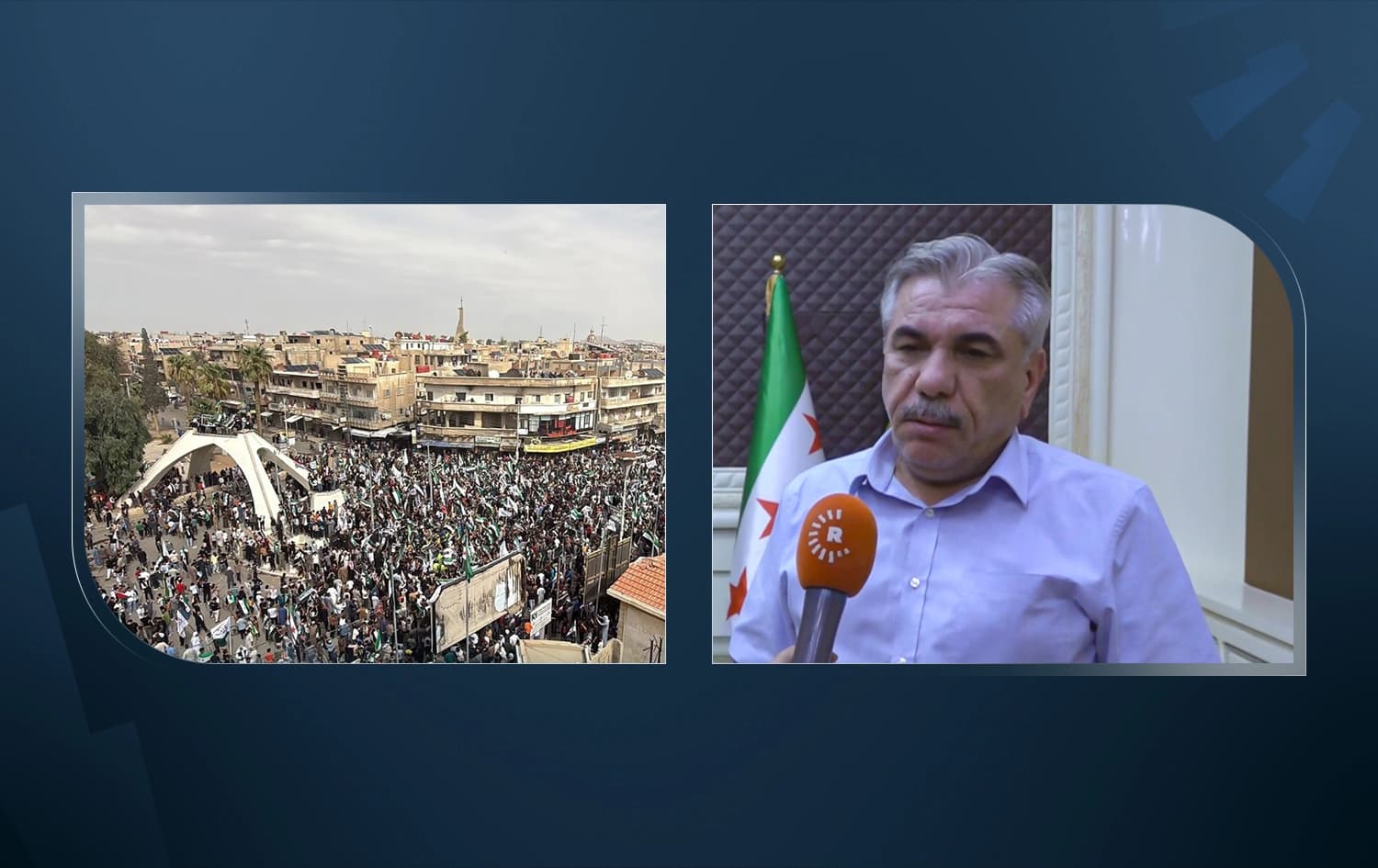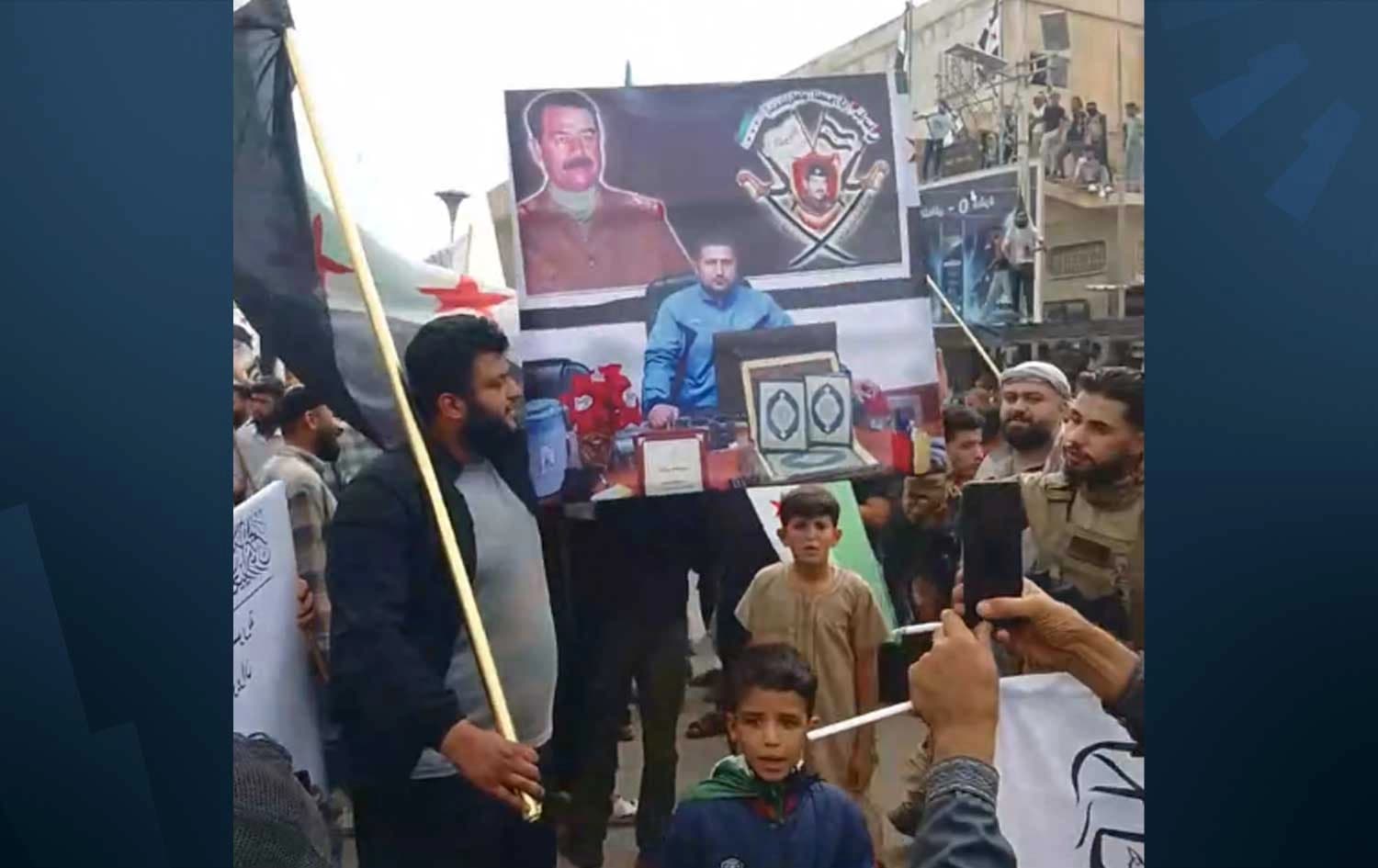

ERBIL, Kurdistan Region - Pro-government Arab demonstrators in Syria’s northeastern city of Hasaka raised a portrait of former Iraqi president Saddam Hussein during Friday protests demanding the restoration of full government control over the Kurdish-administered city.
A video captured by an Arab man and went viral on social media showed demonstrators at Freedom Square holding a portrait of Hussein. “Today’s demonstration in the presence of Saddam Hussein,” he said, adding, “Raising a picture of Saddam Hussein by our brothers at Freedom Square.”
Hussein, who ruled Iraq from 1979 to 2003, presided over a regime responsible for widespread atrocities against Kurds, including the 1988 Anfal campaign, the chemical attack on Halabja and the forced displacement of Kurdish families under a policy of Arabization.
For Kurds, the display of Hussein’s portrait is particularly contentious given his regime’s history of brutal repression and atrocities against the Kurdish population. During the Anfal campaign in 1988, Iraqi forces destroyed thousands of Kurdish villages and killed, detained or forcibly displaced large numbers of Kurdish civilians. The campaign is widely recognized as genocide against the Kurds.
On March 16, 1988, Iraqi forces carried out a chemical weapons attack on the Kurdish town of Halabja, killing thousands of civilians and injuring many more. The regime also pursued Arabization policies in Kirkuk and other disputed areas, displacing Kurdish families and settling Arab families in their place.
The latest unrest in Hasaka underscores the challenges facing efforts to integrate Kurdish-led institutions into the Syrian state while addressing competing political demands and preserving fragile relations between Kurdish and Arab communities.
Following the unrest, three Kurdish brothers were shot and beaten by armed men on Friday while driving home through the Sinaa roundabout in Hasaka province in a car displaying the Kurdistan flag. Rudaw’s Viviyan Fetah reported from Hasaka on Saturday that the brothers were receiving medical treatment after the attack.
The United States on Saturday voiced concern over the unrest in the city.
“The United States is closely monitoring and concerned by reports of unrest in Hasakah and urges all parties to exercise restraint, reject violence and incitement, and resolve differences through peaceful dialogue,” a US State Department spokesperson told Rudaw’s Diyar Kurda.
The remarks came after several days of demonstrations by pro-government Arab protesters opposing Kurdish authorities and calling for Damascus to reassert full control over the city.
Tensions intensified after protesters targeted Kurdish symbols, including flags and an image of a woman’s braid, which has recently emerged as a symbol of Kurdish resistance in northeast Syria, also known as Rojava.
Kurdish residents subsequently staged counter-protests, triggering confrontations with state-affiliated security forces. Footage circulated by the UK-based Syrian Observatory for Human Rights (SOHR) showed security forces firing into the air to disperse demonstrators.
Hasaka Governor Nour al-Din Ahmed on Friday attributed the unrest to individuals and groups seeking to undermine the integration agreement between the Kurdish-led Syrian Democratic Forces (SDF) and Damascus.
“Some figures and parties oppose the agreement [between the SDF and Damascus] and do not want it to be implemented. So they have sought to play with the emotions of the community by finding pretexts to mobilize the public,” Ahmed told Rudaw.
Ahmed, a Kurd appointed by the SDF and approved by Damascus under the agreement, said authorities had met with Kurdish and Arab representatives in an effort to contain tensions and prevent further escalation.
The unrest comes as Syrian authorities and the Kurdish-led administration continue implementing a landmark agreement reached in January to integrate the administration’s civilian and military institutions into the Syrian state.