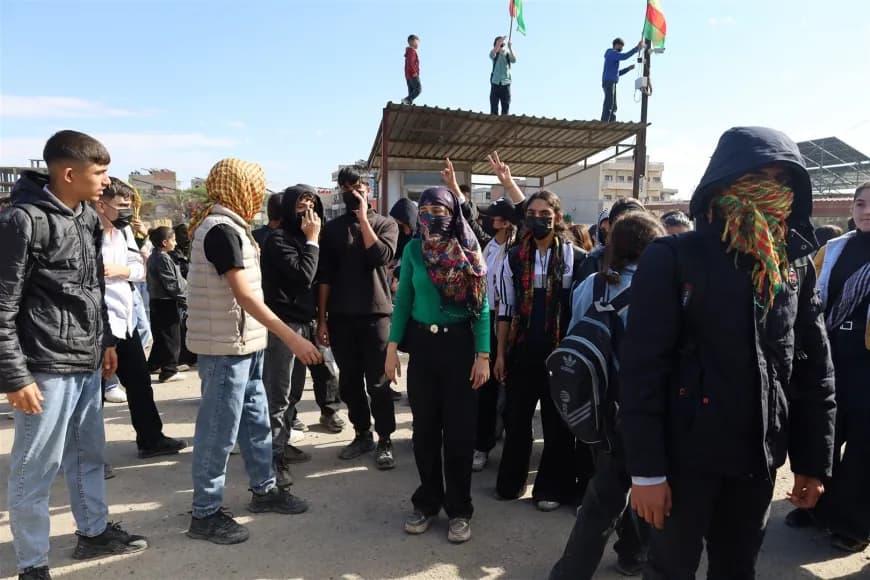

ERBIL, Kurdistan Region - Students in Hasaka, northeast Syria (Rojava), on Sunday demanded constitutional recognition of the Kurdish language and the protection of mother-tongue education, as opposition mounts to decisions by Syria’s interim government to bring Kurdish-administered educational institutions under state control.
Chanting “We want our language” and “There is no life without language,” the demonstrators called for their linguistic rights to be upheld and their cultural identity safeguarded, according to Hawar News Agency (ANHA), affiliated with Rojava authorities.
Akram Mahshoush, an advisor to the al-Jubour tribe who attended the demonstration, voiced support for the students, describing their demands as legitimate and deserving of recognition.
“We are here today to demand your legitimate right. This is a demand that stems from human conscience; we demand our rights and the rights of all students,” ANHA quoted Mahshoush as saying.
The demonstration comes amid mounting tensions over the future of Kurdish-language education in Rojava as Damascus and the Kurdish authorities seek to implement a January agreement that ended weeks of fighting and laid out a framework for integrating Rojava’s military and civilian institutions into Syrian state structures.
Kurdish leaders have made constitutional recognition of their language, particularly in education, a central demand in the talks, seeking to preserve cultural and educational rights established during more than a decade of autonomous administration in Rojava.
The protests come after decisions by Syria’s Ministry of Higher Education to merge two prominent universities in Kurdish-held areas into the country's state-run higher education system.
Earlier this month, Rojava University in Qamishli and Kobane University rejected the proposed mergers, insisting that their Kurdish identity, academic autonomy and existing educational structures be preserved.
Emphasizing the importance of coexistence among the region’s communities, Mahshoush said: “We have been together for 13 years, and we will remain together.”
“As an Arab resident, it is my right to demand my language, and it is also the Kurds' right to demand their language rights. Our demand for language is a peaceful and civilized demand,” he added.
The dispute is rooted in broader negotiations between Damascus and the Kurdish-led Democratic Autonomous Administration of North and East Syria (DAANES), following an agreement reached in late January to integrate institutions in Kurdish-administered areas into Syria’s national frameworks.
Kurdish representatives have made constitutional recognition of the language and guarantees for its use in education central demands in negotiations with Damascus, seeking to protect linguistic and cultural rights established during more than a decade of autonomous administration.
Late last month, senior Kurdish politician Elham Ahmed said Kurdish-language education must be guaranteed under Syria’s constitution rather than restricted to a few hours a week in schools.
Speaking at a seminar at the University of Sulaimani on developments in Rojava and the ongoing integration process, Ahmed said what they are currently fighting for is "to have education in the Kurdish language enshrined in the constitution. This is our natural right as Kurds, and no one can treat it as a favor granted to us.”
Since 2011, Kurdish authorities have operated a separate education system in northeast Syria, replacing the former state curriculum and introducing Kurdish as a language of instruction.