
ERBIL, Kurdistan Region - Turkey’s defense ministry on Thursday denied that its forces were present at a northwestern Syrian air base when it was targeted by Israeli airstrikes earlier this week, condemning the attack as an attempt to undermine Syria’s stability and infrastructure.
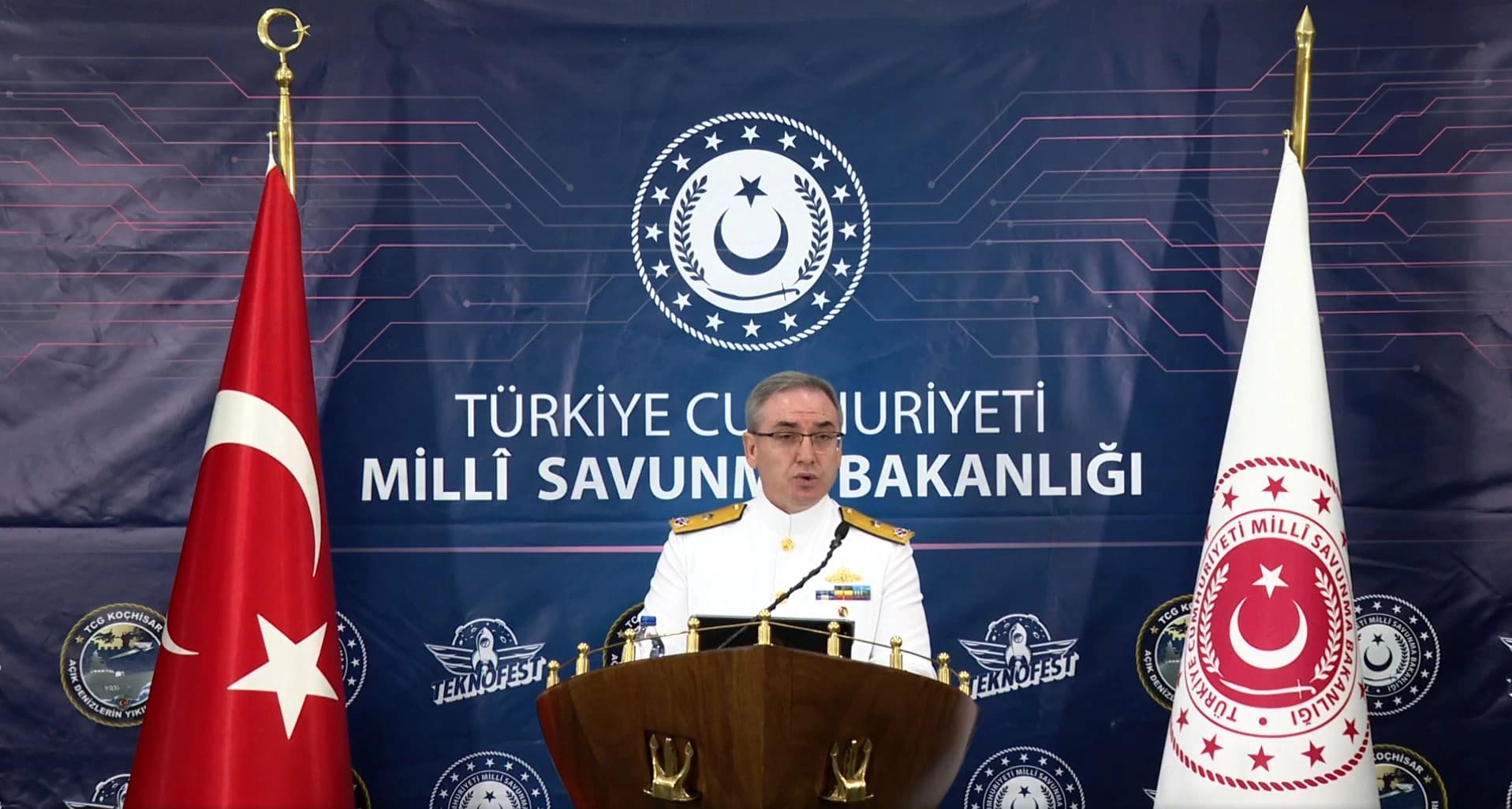
“We state that no Turkish military delegation was present at the base prior to or during Israel's attack on the Abu al-Duhur airbase in Syria,” Turkish Defense Ministry spokesperson Admiral Zeki Akturk said during a press briefing.
His remarks came after Israeli airstrikes targeted the Abu al-Duhur air base in Idlib province on Tuesday, drawing condemnation from Damascus, Washington and several regional states.
Syria’s foreign ministry described the strikes as an "unjustified act of aggression" and urged the international community and the UN Security Council to "clearly condemn this aggression and take a firm position against Israel's repeated violations of Syrian sovereignty," while affirming it will "continue to defend its rights and national interests through legitimate means."
Akturk told reporters on Thursday that "attacks violating Syria's sovereignty and territorial integrity are unacceptable,” adding that “for the peace and stability of both Syria and the region, it is imperative that Israel halts such reckless attacks and abides by the requirements of international law.”
The strikes come amid mounting tensions between Israel and Turkey over Ankara’s growing role in Syria following the fall of Bashar al-Assad’s government.
Earlier on Thursday, Israeli Defense Minister Israel Katz posted in Turkish on X that “Israel will not allow any actor to threaten its security.”
He added that “it would be better for [Turkish President Recep Tayyip] Erdogan to continue his detached-from-reality, delusional rhetoric against Israel in the Turkish Grand National Assembly, rather than attempting to test Israel's resolve to defend itself.”
Israeli Prime Minister Benjamin Netanyahu issued a similar warning on Wednesday.
"We will not tolerate a Turkish military entrenchment in Syria that threatens Israel," Netanyahu posted on X.
"We made the message perfectly clear: Don't," he added. "Apparently, they didn't hear it well enough, so we made sure they understood it better."
Washington also criticized the Israeli strikes.
Tom Barrack, the US special presidential envoy for Syria and Iraq, said Tuesday that Washington was "deeply concerned that the confirmed Israeli airstrikes on Abu al-Duhur Airbase constitute an unnecessary escalation that does not advance regional stability."
He added that the government of Syrian interim President Ahmed al-Sharaa had "repeatedly indicated a preference for de-escalation with Israel," and that the US "will continue to host discussions to encourage diplomatic cadence over kinetic frustration for both nations."
The strikes came as Syria and Israel have maintained contacts aimed at easing tensions.
Reuters reported Wednesday, citing three unnamed sources, that Mossad chief Roman Gofman and Syrian Foreign Minister Asaad al-Shaibani spoke by phone on Friday, marking one of the highest-level contacts between Israel and Syria’s new administration.
The two sides have held several rounds of rare, US-mediated talks aimed at de-escalating tensions and reviving the 1974 Disengagement Agreement governing the Golan Heights.
Despite the UN-brokered agreement, Israeli forces entered the buffer zone east of the Israeli-occupied Golan Heights and pushed into parts of Quneitra province after Sharaa and allied forces took power, citing concerns that the security vacuum could be exploited by elements linked to the Islamic State (ISIS), al-Qaeda and Iran-aligned armed groups.
RELATED: Syria accuses Israel of undermining its defenses after fresh strikes on airbase