
ERBIL, Kurdistan Region - Jailed Kurdistan Workers' Party (PKK) leader Abdullah Ocalan has called for a “democratic republic” that legally recognizes Kurds as a founding constituent of Turkey, arguing that such recognition could make Turkey a model for the Middle East, according to remarks conveyed by PKK-Ankara peace process mediators who visited him on Sunday.
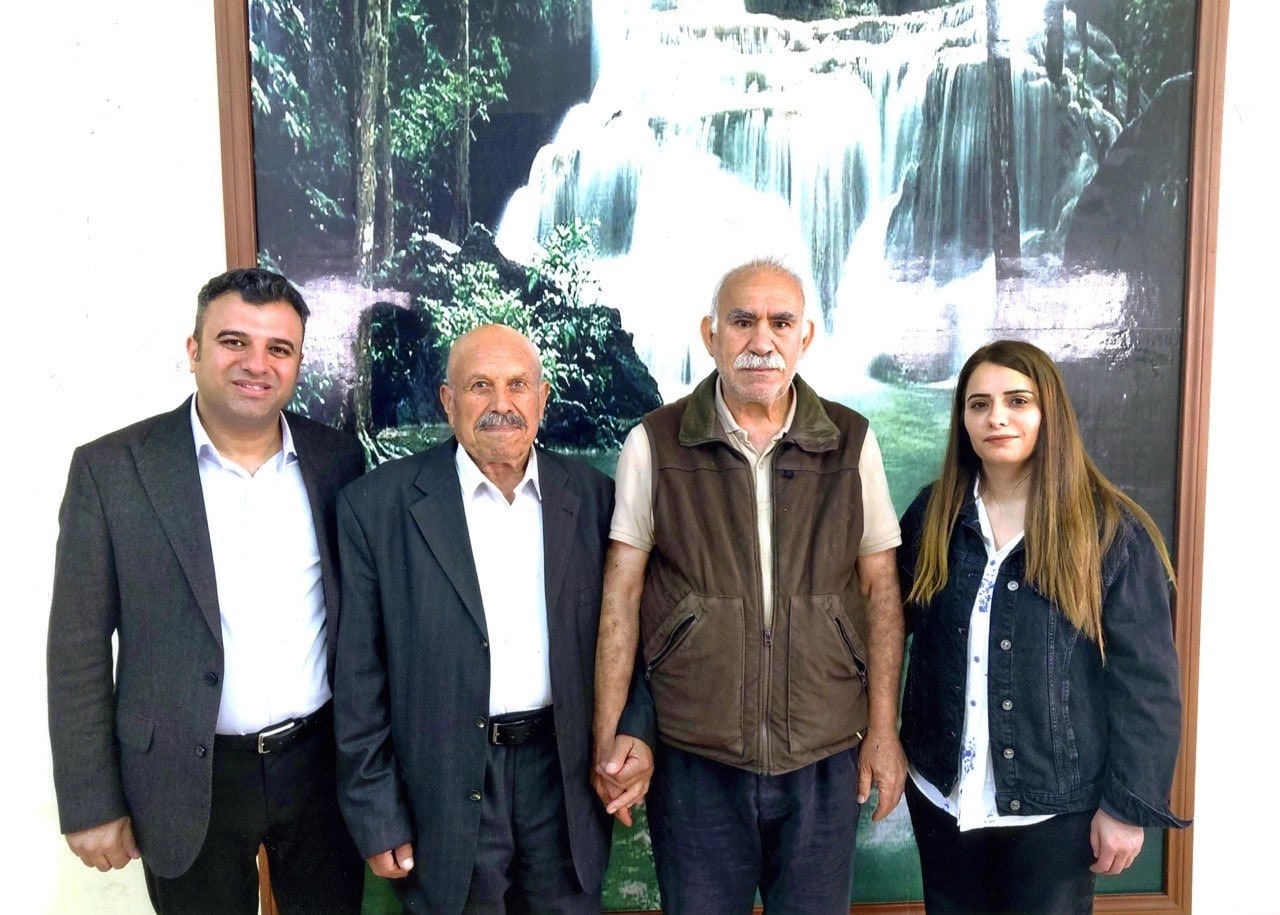
“We aim for a Democratic Republic together with all democrats who believe that Turkey can become a model for the Middle East, particularly by granting legal guarantees recognizing Kurds as a fundamental founding constituent, and who embrace this principle,” Ocalan said in remarks conveyed by the pro-Kurdish Peoples' Equality and Democracy’s (DEM Party) Imrali delegation on Monday following the Sunday meeting.
The remarks come amid efforts by Ankara and Kurdish representatives to advance the peace process aimed at ending decades of conflict between Turkey and the PKK.
In its statement, the DEM Party delegation also called for Ocalan to be allowed to address the public and media directly following his recent transfer to a newly constructed facility on Imrali Island, where he has been jailed since 1999, arguing that greater communication was necessary to advance the peace process.
“What is needed now is for Mr. Ocalan to be given the means to speak directly to the press and the public so that he can give a full account of the extensive work he has done over the past two years,” the delegation said.
The delegation, comprising DEM Party senior officials Pervin Buldan and Mithat Sancar and lawyer Ozgur Faik Erol, described Ocalan’s transfer to a new facility as an improvement in his living and working conditions.
The peace process gained momentum following Ocalan's February 2025 call for the PKK to disarm and dissolve.
Although the group has since announced steps toward ending its armed campaign, disagreements remain over legal reforms, the implementation of disarmament arrangements and Ocalan's role in the process.
In remarks conveyed by the delegation, Ocalan described the current stage as a potential turning point in Turkey's history, while warning that political provocations could undermine efforts to end decades of conflict.
“We have reached a point where concrete action can make this a turning point in the history of the Republic,” he said, according to the statement.
Ocalan warned that attempts to derail the process could create opportunities for anti-democratic forces, arguing that democratic law and political freedoms were essential to securing lasting peace.
“I see the Kurdish question as a question of democracy,” he said, maintaining that resolving it would benefit all political and social groups in Turkey.
“Justice, the rule of law and democracy are what everyone in Turkey wants, Kurds included,” he added.
Ocalan further criticized prison conditions, including deaths in custody, restrictions on conditional release and inconsistent practices between prisons, describing them as provocations that could undermine the peace process.
His remarks come amid differing assessments of the next steps required from Ankara and Kurdish representatives.
In an analysis published by state-run Anadolu Agency on Sunday, Turkish presidential chief adviser Mehmet Ucum acknowledged Ocalan's importance to the process but warned against making his personal circumstances its central issue
Ucum argued that the process could not advance without Ocalan, while insisting that the PKK and DEM Party must take greater responsibility for building public confidence, particularly by demonstrating that disarmament would be completed.
He also called for faster implementation of practical measures, warning that political disputes and rhetoric perceived as confrontational could weaken public support.
Meanwhile, senior PKK figure Duran Kalkan said in a recent interview with the PKK-affiliated Medya Haber TV that the party had already taken substantial steps to eliminate the grounds for armed confrontation with Turkey.
“The factors for armed conflict with Turkey have now disappeared, unless a planned, deliberate military attack is launched,” Kalkan said, arguing that further progress depended on political and legal measures by Ankara.
Kalkan also maintained that Ocalan needed greater freedom to conduct his work and that his relocation within the prison complex did not constitute a fundamental change in his legal status or ability to communicate.
Separately, DEM Party co-chair Tulay Hatimogulları reiterated the party's commitment to the peace process during a visit to Mardin's Kiziltepe district on Sunday, criticizing continued military spending while calling for greater investment in public services and economic relief.