
ERBIL, Kurdistan Region - Turkey's Human Rights Association (IHD) on Monday called for an investigation into suspected human remains found in a cave in the Kurdish city of Diyarbakir (Amed), stating that the discovery could help shed light on unresolved enforced disappearances and killings in the country’s southeast in the 1990s.
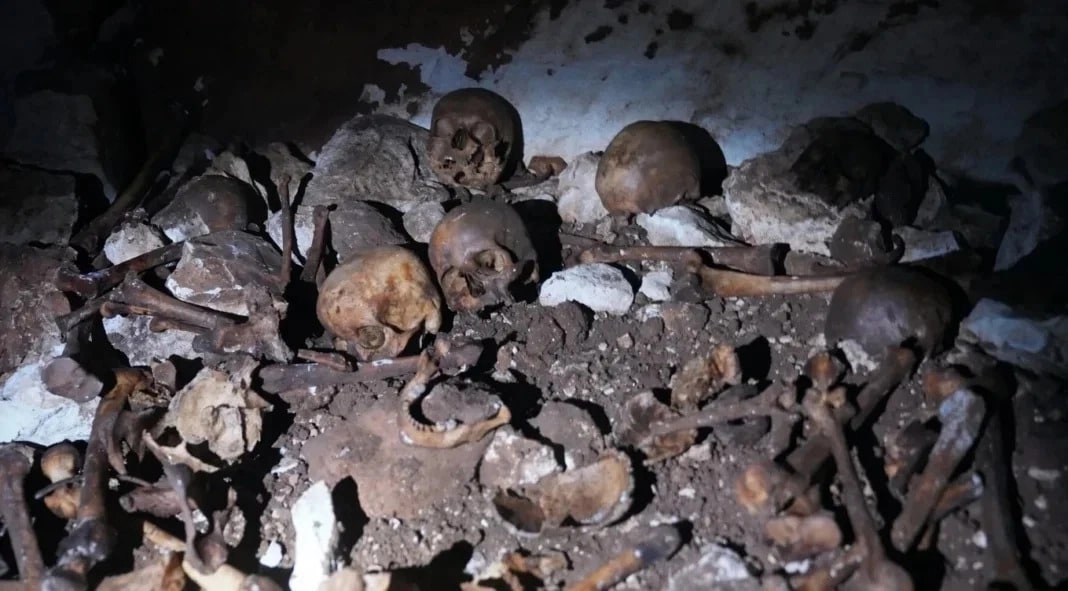
A delegation from the IHD, the Diyarbakir Bar Association, and the Lawyers' Association for Freedom discovered “skulls and bones, believed to be human remains,” in “all three layers” of an area known as the "Foreigner's Cave" in Diyarbakir’s Silvan district.
The discovery has renewed calls for accountability over enforced disappearances and unresolved killings in Kurdish-majority areas in the 1990s, when the conflict between Turkish security forces and the Kurdistan Workers' Party (PKK) was accompanied by widespread human rights abuses.
IHD's Central Commission Against Disappearances on Monday said in a statement that the remains found in the cave in Silvan must be investigated and "the truth brought to light."
The cave, known locally as Ecnebi, is located between the rural villages of Bosat and Ciceka, on a wooded mountain summit in Silvan district. Reaching its narrow entrance requires a 45 to 50-minute walk, and visitors must lower themselves inside from above.
Firat Akdeniz, a member of the Missing Persons Commission of the Diyarbakir Branch of the IHD, who participated in the investigation, said that the entrance to the cave was dangerous and that they had difficulty descending inside and that they encountered “more human remains than they expected,” especially in the second layer.
The team reported finding between 15 and 20 skulls and hundreds of bones in the cave's second level. Some skulls appeared to have possible bullet marks, while others were small enough to raise suspicions that they could belong to children. Several skulls were found in the first layer. Some skulls showed holes suggestive of gunshot wounds, some of the bones were observed to be broken and fragmented.
Bone remains were also seen in the third layer of the cave. The team noted that no clothing was found.
Clashes broke out in the region in August 1984 between Turkish soldiers and police and the PKK, prompting armed retaliation from state forces. Human Rights Watch published a report in June 1996 documenting the complete and partial depopulation of 2,685 villages and hamlets in Turkey's southeastern provinces.
The report documents cases of civilians being abducted, killed and forcibly disappeared, with many families still unaware of the fate of their relatives decades later.
Thousands of civilians were killed during the period, while investigations and prosecutions remained limited, the report stated. Estimates of the number of individuals displaced “range from 275,000 to two million.”
IHD said many cases from that period remain unresolved and the fate of those who disappeared has yet to be established.
The findings have prompted the IHD, the Diyarbakir Bar Association and the Association of Lawyers for Freedom (OHD) to file a criminal complaint with the Silvan Chief Public Prosecutor's Office, seeking an urgent investigation, Mezopotamya Agency, a Turkey-based pro-Kurdish media outlet, confirmed.
IHD Diyarbakir branch chairman Ercan Yilmaz said authorities must establish whether the remains date back to the 1990s, adding that the organizations had requested an "effective investigation."
The organizations called for the cave to be secured, the remains to be examined by forensic experts and DNA comparisons to be conducted with relatives of people who disappeared in the region. They also urged authorities to examine historical detention records and question witnesses.
DEM Party parliamentary group deputy chair Sezai Temelli said the discovery had reopened "the dark pages of the 1990s" in Kurdish collective memory, calling for scientific examinations and a transparent investigation involving families of missing people.
The incident follows a series of similar discoveries in recent years.
In March 2009, investigators searching an oil well site in southeastern Turkey recovered a human skull fragment along with six other bones and a sock during inquiries into alleged extrajudicial killings and disappearances of Kurdish victims.
In May 2020, a total of 40 skulls believed to have belonged to the victims of unsolved murders were found in a cave in the southeastern province of Mardin, raising alarm that the skulls belonged to victims of unsolved murders in the 1990s.