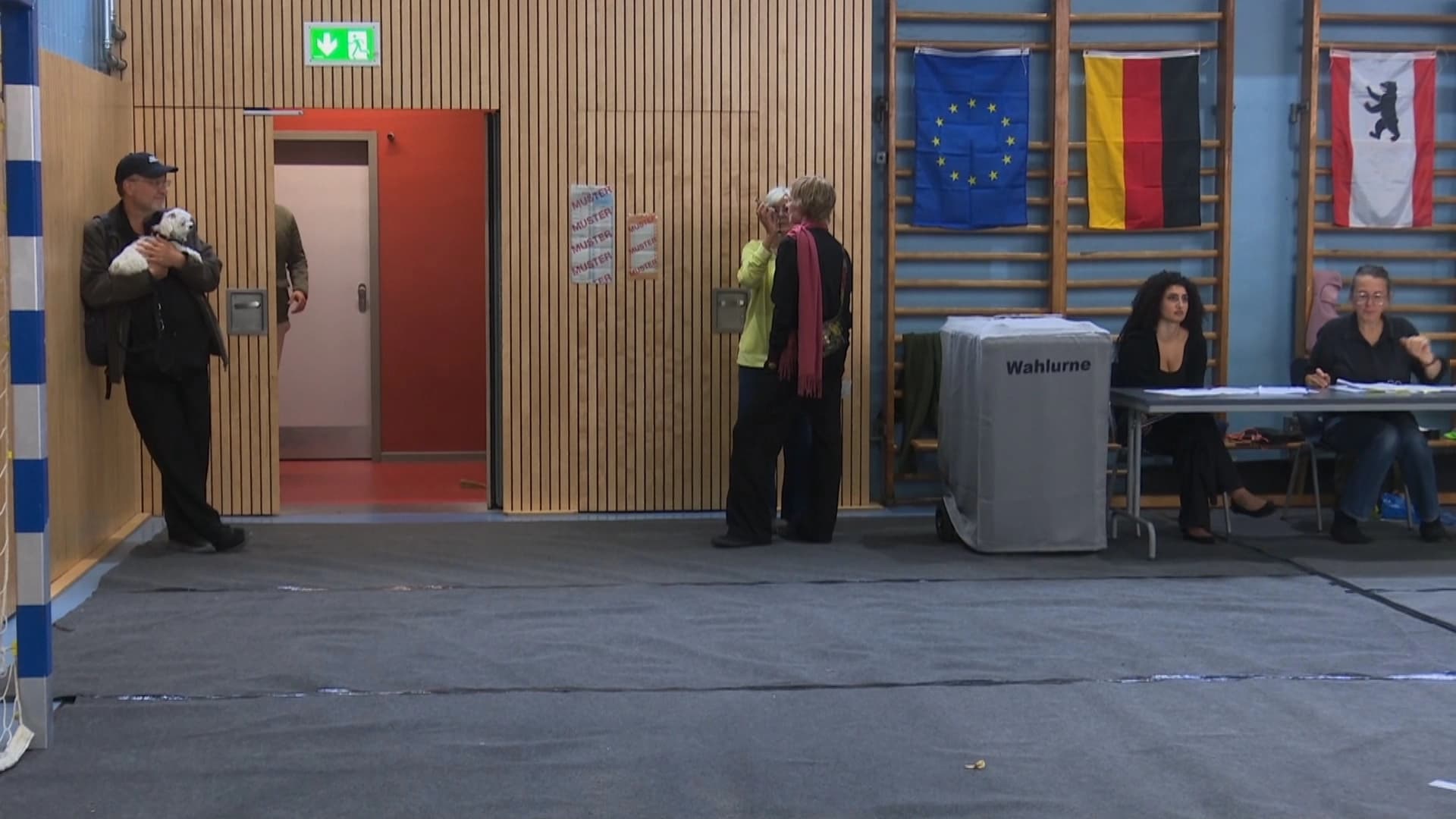

ERBIL, Kurdistan Region - Kurdish-German lawmaker Jian Omar and his family cast their ballots in Berlin on Sunday, as voters across the German capital went to the polls in a state election dominated by concerns over housing and the cost of living.
Omar, a Green Party candidate, retained his seat in the Berlin parliament, according to preliminary official results.
“The most important issue is housing rent. It has become very expensive in Berlin; people are facing a lot of difficulties in this regard,” Omar told Rudaw's Zinar Shino after casting his vote on Sunday. “The second issue is poverty, the rising cost of goods. And people are saying that the salary they receive is no longer enough to pay rent, buy food, and live a decent life.”
Racism remains an issue in the German capital, but housing affordability and declining purchasing power emerged as major concerns during the campaign.
Among those casting their ballots was 33-year-old Ciwan Sefer, a Kurdish voter whose family originates from Varto in Turkey’s Mus province. He said his decision was shaped both by Germany’s broader political landscape and by how parties and candidates address Kurdish issues.
“It’s a mix of the general situation in Germany, and of course, as a Kurd, you have to pay special attention, because Kurds are simply underrepresented,” Sefer said.
“We are marginalized; politically, we are partly counted as Turks or Iranians... I don't necessarily want to say strictly people of Kurdish descent, but rather people who stand up for Kurds, the Kurdish presence, and the Kurdish communities in Berlin.”
A board member of the Kurdish Community in Berlin estimated that around 150,000 Kurds live in the German capital.
“The Kurds who vote for left-wing parties are mostly from northern Kurdistan or western Kurdistan (Rojava),” Benav Mustafa said.
Preliminary official results showed the Left winning the Berlin state election with 25.7 percent of the vote, ahead of the CDU with 18.8 percent. The far-right Alternative for Germany (AfD) came third with 16.3 percent, followed by the Greens with 14.3 percent and the Social Democrats (SPD) with 12.1 percent.
The AfD meanwhile came first in a separate state election in the northeastern state of Mecklenburg-Western Pomerania.