


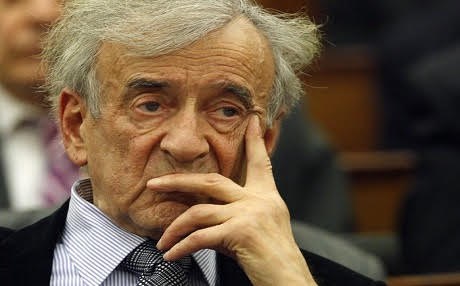
ERBIL, Kurdistan Region—Elie Wiesel, Holocaust survivor who became a life-long advocate for victims of injustice, passed away on Saturday. He was 87.
His story of surviving enormous brutality at a young age and dedicating the rest of his life to speaking for fellow victims and working towards a world in which the dignity of each person is respected, is one that resonates with many people who have experienced similar atrocities.
“I see myself in him, I see him in me,” tweeted Nadia Murad on the news of Wiesel’s death, saying that his contribution to mankind is “beyond any words.”
Like Wiesel, Murad survived genocide and has become a witness and advocate for her Yezidi people and all victims of human rights violations.
The notion of being a witness for those who have suffered is one that Wiesel promoted throughout his lifetime.
“‘For the dead and the living, we must bear witness.’ For not only are we responsible for the memories of the dead, we are also responsible for what we are doing with those memories,” said Wiesel speaking at the dedication of the United States’ Holocaust Memorial Museum in 1993, quoting his own words that are etched on the memorial.
Within the Kurdistan Region, Wiesel was remembered as an advocate for the Kurdish cause. “He spoke for the tormented in Kurdistan, at a time when few would care,” said Barham Salih, former Prime Minister of the Kurdistan Regional Government, on Twitter.
Born in Romania, he lost his parents in the Holocaust and carried a constant reminder of Nazi cruelty in the concentration camp identification number tattooed on his arm, A-7713.
His memoir Night is a poignant detailing of his experiences in the Nazi concentration camp Auschwitz.
"Never shall I forget that night, the first night in camp, which has turned my life into one long night, seven times cursed and seven times sealed. Never shall I forget that smoke. Never shall I forget the little faces of the children, whose bodies I saw turned into wreaths of smoke beneath a silent blue sky. ... Never shall I forget these things, even if I am condemned to live as long as God Himself. Never," reads a passage from Night.
Awarding Wiesel the Nobel Peace Prize in 1986, the Nobel Committee called him “one of the most important spiritual leaders and guides in an age when violence, repression and racism continue to characterize the world.”
“We must always take sides,” said Wiesel accepting the award. “Neutrality helps the oppressor, never the victim. Silence encourages the tormentor, never the tormented.”
After winning the Nobel prize, Wiesel and his wife Marion founded the Elie Wiesel Foundation for Humanity to “combat indifference, intolerance and injustice through international dialogue and youth-focused programs that promote acceptance, understanding and equality.”
The first winner of the Elie Wiesel Foundation’s Humanitarian Award was Danielle Mitterrand, “for her passionate and courageous defense of victims of evil and misfortune.”
Mitterrand, former first lady of France, is known in Kurdistan as the Mother of Kurds. After witnessing the suffering of Kurdish refugees fleeing Saddam Hussein’s regime in 1991, she campaigned for the establishment of a no-fly zone over Kurdish areas of northern Iraq. The no-fly zone allowed the Kurdistan Region the security to develop the self-autonomy it now enjoys.
Wiesel is remembered as an example of what humanity could and should be.
"His life, and the power of his example, urges us to be better,” said US President Barak Obama. “In the face of evil, we must summon our capacity for good. In the face of hate, we must love.”
German Chancellor Angela Merkel lamented a "voice of morality and humanity has fallen silent".
Israeli Prime Minister Benjamin Netanyahu, described him as a symbol of “human spirit over cruelty and evil.”
Though Wiesel is respected the world over for his commitment to bearing witness to and preventing injustice, he grieved over a failure for humanity to change. Describing his greatest disappointment in life, he said, “Human nature remained what it was. Society remained what it was. Too much indifference in the world, to the other, his pain, and anguish and hope.”
His story of surviving enormous brutality at a young age and dedicating the rest of his life to speaking for fellow victims and working towards a world in which the dignity of each person is respected, is one that resonates with many people who have experienced similar atrocities.
“I see myself in him, I see him in me,” tweeted Nadia Murad on the news of Wiesel’s death, saying that his contribution to mankind is “beyond any words.”
Like Wiesel, Murad survived genocide and has become a witness and advocate for her Yezidi people and all victims of human rights violations.
The notion of being a witness for those who have suffered is one that Wiesel promoted throughout his lifetime.
“‘For the dead and the living, we must bear witness.’ For not only are we responsible for the memories of the dead, we are also responsible for what we are doing with those memories,” said Wiesel speaking at the dedication of the United States’ Holocaust Memorial Museum in 1993, quoting his own words that are etched on the memorial.
Within the Kurdistan Region, Wiesel was remembered as an advocate for the Kurdish cause. “He spoke for the tormented in Kurdistan, at a time when few would care,” said Barham Salih, former Prime Minister of the Kurdistan Regional Government, on Twitter.
Born in Romania, he lost his parents in the Holocaust and carried a constant reminder of Nazi cruelty in the concentration camp identification number tattooed on his arm, A-7713.
His memoir Night is a poignant detailing of his experiences in the Nazi concentration camp Auschwitz.
"Never shall I forget that night, the first night in camp, which has turned my life into one long night, seven times cursed and seven times sealed. Never shall I forget that smoke. Never shall I forget the little faces of the children, whose bodies I saw turned into wreaths of smoke beneath a silent blue sky. ... Never shall I forget these things, even if I am condemned to live as long as God Himself. Never," reads a passage from Night.
Awarding Wiesel the Nobel Peace Prize in 1986, the Nobel Committee called him “one of the most important spiritual leaders and guides in an age when violence, repression and racism continue to characterize the world.”
“We must always take sides,” said Wiesel accepting the award. “Neutrality helps the oppressor, never the victim. Silence encourages the tormentor, never the tormented.”
After winning the Nobel prize, Wiesel and his wife Marion founded the Elie Wiesel Foundation for Humanity to “combat indifference, intolerance and injustice through international dialogue and youth-focused programs that promote acceptance, understanding and equality.”
The first winner of the Elie Wiesel Foundation’s Humanitarian Award was Danielle Mitterrand, “for her passionate and courageous defense of victims of evil and misfortune.”
Mitterrand, former first lady of France, is known in Kurdistan as the Mother of Kurds. After witnessing the suffering of Kurdish refugees fleeing Saddam Hussein’s regime in 1991, she campaigned for the establishment of a no-fly zone over Kurdish areas of northern Iraq. The no-fly zone allowed the Kurdistan Region the security to develop the self-autonomy it now enjoys.
Wiesel is remembered as an example of what humanity could and should be.
"His life, and the power of his example, urges us to be better,” said US President Barak Obama. “In the face of evil, we must summon our capacity for good. In the face of hate, we must love.”
German Chancellor Angela Merkel lamented a "voice of morality and humanity has fallen silent".
Israeli Prime Minister Benjamin Netanyahu, described him as a symbol of “human spirit over cruelty and evil.”
Though Wiesel is respected the world over for his commitment to bearing witness to and preventing injustice, he grieved over a failure for humanity to change. Describing his greatest disappointment in life, he said, “Human nature remained what it was. Society remained what it was. Too much indifference in the world, to the other, his pain, and anguish and hope.”
Comments
Rudaw moderates all comments submitted on our website. We welcome comments which are relevant to the article and encourage further discussion about the issues that matter to you. We also welcome constructive criticism about Rudaw.
To be approved for publication, however, your comments must meet our community guidelines.
We will not tolerate the following: profanity, threats, personal attacks, vulgarity, abuse (such as sexism, racism, homophobia or xenophobia), or commercial or personal promotion.
Comments that do not meet our guidelines will be rejected. Comments are not edited – they are either approved or rejected.
Post a comment