Culture
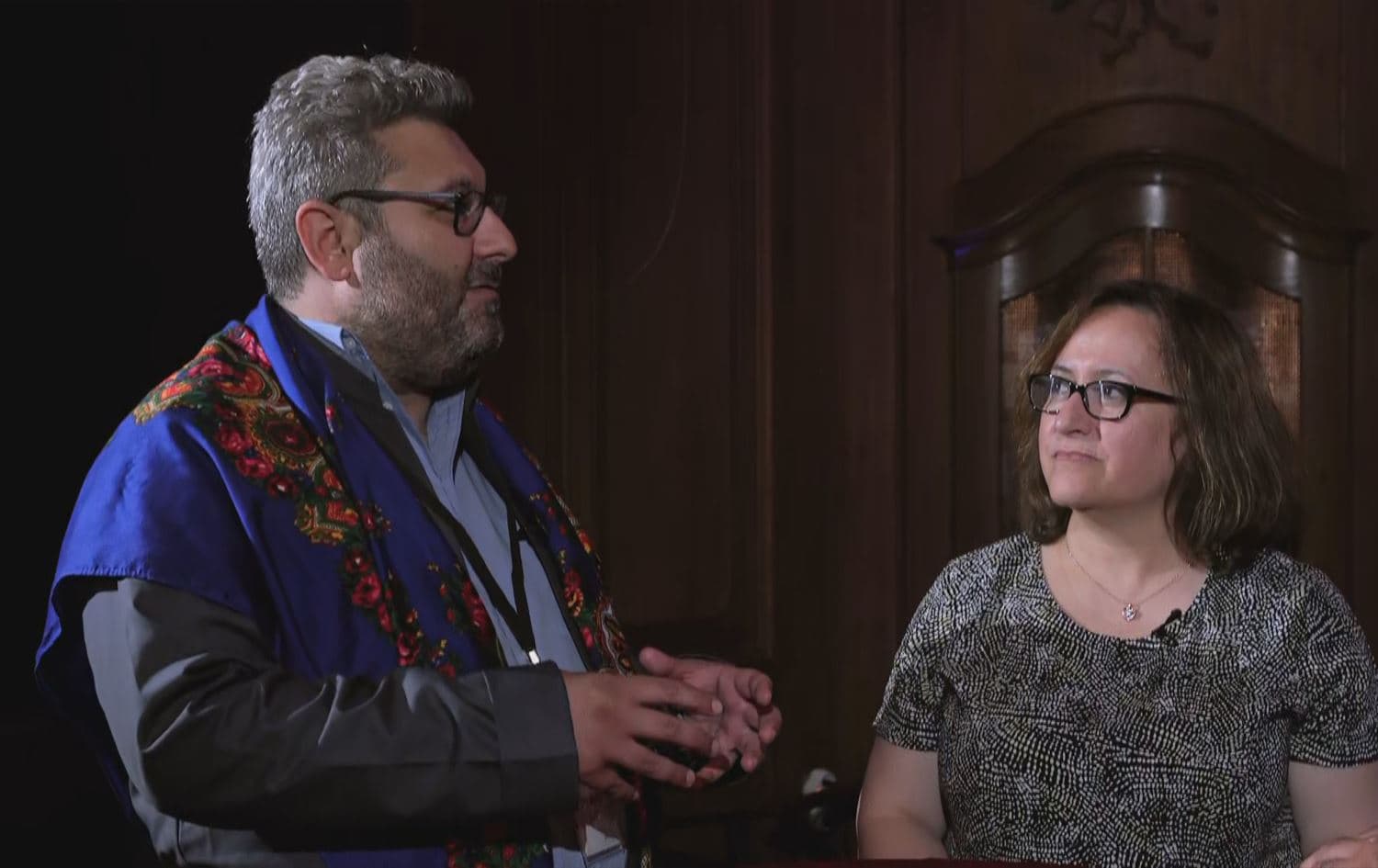
Maxim Issa, director of the Kurdish Arts and Culture Festival (left) and Gunay Darici, managing director of the education non-profit Yekmal Association (right), speaking to Rudaw in Berlin on June 6, 2025. Photo: Rudaw
ERBIL, Kurdistan Region - The Kurdish Arts and Culture Festival kicked off in Berlin on Friday, this year focused on the future of Kurds in Syria after the fall of Bashar al-Assad’s regime.
“The festival this year comes with the fall of Assad’s regime, and we wanted to focus on this as it marks a new era in Syria and Rojava [northeast Syria],” festival director Maxim Issa told Rudaw’s Diaspora program that aired on Friday.
Over the festival weekend, Kurdish and German youth will engage in discussions, showcase their work, introduce their businesses, prepare traditional Kurdish cuisine, and perform traditional folk dances.
Kurds from the diaspora and other ethnicities, including Arabs and Assyrians, are attending the festival this year, according to Issa.
Gunay Darici, managing director of the education non-profit Yekmal Association, said events like this festival give Kurds a platform to express themselves without the restrictions that they would face in their home countries.
“In the diaspora, we can practice cultural and political work more effectively,” she said, noting that in Turkey’s southeastern Kurdish areas, “there is no freedom for associations.”
The festival, titled “Turning Point in Syria - A New Future for the Kurds,” will run through Monday.
Germany is home to a large Kurdish diaspora community of at least 1.3 million, according to official government figures, making it the largest Kurdish community in Europe.
“The festival this year comes with the fall of Assad’s regime, and we wanted to focus on this as it marks a new era in Syria and Rojava [northeast Syria],” festival director Maxim Issa told Rudaw’s Diaspora program that aired on Friday.
Over the festival weekend, Kurdish and German youth will engage in discussions, showcase their work, introduce their businesses, prepare traditional Kurdish cuisine, and perform traditional folk dances.
Kurds from the diaspora and other ethnicities, including Arabs and Assyrians, are attending the festival this year, according to Issa.
Gunay Darici, managing director of the education non-profit Yekmal Association, said events like this festival give Kurds a platform to express themselves without the restrictions that they would face in their home countries.
“In the diaspora, we can practice cultural and political work more effectively,” she said, noting that in Turkey’s southeastern Kurdish areas, “there is no freedom for associations.”
The festival, titled “Turning Point in Syria - A New Future for the Kurds,” will run through Monday.
Germany is home to a large Kurdish diaspora community of at least 1.3 million, according to official government figures, making it the largest Kurdish community in Europe.
Comments
Rudaw moderates all comments submitted on our website. We welcome comments which are relevant to the article and encourage further discussion about the issues that matter to you. We also welcome constructive criticism about Rudaw.
To be approved for publication, however, your comments must meet our community guidelines.
We will not tolerate the following: profanity, threats, personal attacks, vulgarity, abuse (such as sexism, racism, homophobia or xenophobia), or commercial or personal promotion.
Comments that do not meet our guidelines will be rejected. Comments are not edited – they are either approved or rejected.
Post a comment