

Error occured during this request! Please try again later.

A Newroz song video clip produced and submitted by Atta Qanih in March 2021.
ERBIL, Kurdistan — A Kurdish musician in Iran celebrates the Kurdish New Year (Newroz) in a special way, performing on musical instruments he makes from basic tools such as spades and brooms.
Atta Qanih, 34, lives in the village of Malqarani, north of the town of Saqqez in Iran’s Kurdistan province.
Raised in a musical family, Qanih has been a musician for more than 12 years, and recently started to play musical string instruments he makes from basic tools such as spades, brooms, and shovels.
Qadih says he chose to use them as instruments to show solidarity with agricultural workers and the elderly.
“I was a farmer in the past, and I was working hard with these tools. I used to play with them randomly using my fingers. I thought of making something to the people who do such work,” he told Rudaw English on Thursday.”
“In solidarity with elderly people, I have made Kamancheh, [an Iranian bowed string instrument used in Persian, Azerbaijani, Armenian, and Kurdish music], from the walking stick. As for farmers, I have made string instruments from a spade. The idea is mine and I haven’t taken it from anywhere else.” Qanih said.
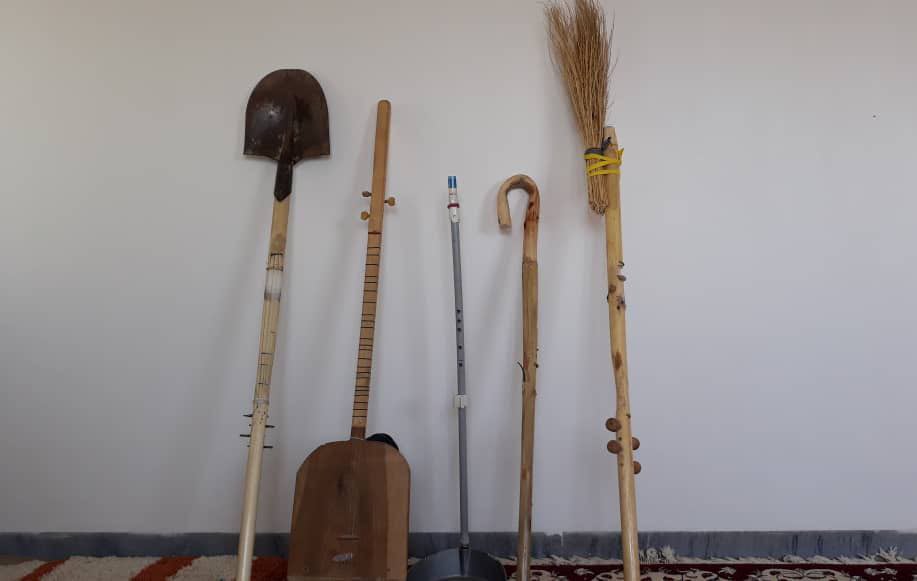
The musician says making the instrument takes a lot of time and effort.
“I have made some changes to the sound of the instruments. The walking stick produces a sound similar to that of the Kamancheh and the spade produces a sound close to violin,” he added, saying he is ready to play “anywhere in the world.”
Qanih says he has planned to visit the Kurdistan Region and stay for six months when coronavirus regulations permit.
“There are thousands of musicians in the world who play the violin very well but my work is different from theirs; I make these instruments are made myself. I haven’t seen anyone who has done something like this.”


Comments
Rudaw moderates all comments submitted on our website. We welcome comments which are relevant to the article and encourage further discussion about the issues that matter to you. We also welcome constructive criticism about Rudaw.
To be approved for publication, however, your comments must meet our community guidelines.
We will not tolerate the following: profanity, threats, personal attacks, vulgarity, abuse (such as sexism, racism, homophobia or xenophobia), or commercial or personal promotion.
Comments that do not meet our guidelines will be rejected. Comments are not edited – they are either approved or rejected.
Post a comment