


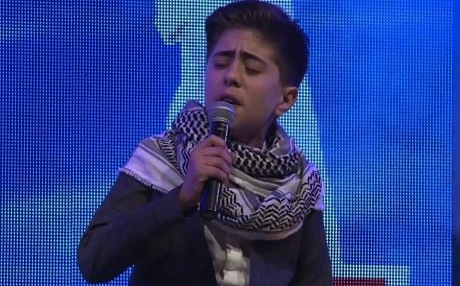
ERBIL, Kurdistan Region – Gaylan Tahir’s heartfelt singing at the closing ceremonies of the Turkish Culture and Language Olympiad this month earned him a standing ovation from the crowd of 200,000, among them Prime Minister Recep Tayyip Erdogan.
Praising Tahir’s rendition of "Yaratan Var," in which a conceited Sultan is beseeched to control his pride before God, the premier told reporters: “I am very glad that a Turkmen from Iraq is singing here.” But Tahir is not Turkmen; he is a Kurd from the Shaqlawa district of Iraqi Kurdistan.
"It is possible that Erdogan made that statement by chance or was misinformed. I don't believe he said that deliberately," Tahir says, admitting he was worried after hearing Erdogan’s words.
Erdogan also said that Tahir, who was born in 1999 and is currently a student at the Private Isik University in Erbil, reminded him of Ibrahim Tatlises, a famous Turkish pop singer with mixed Turkish and Kurdish backgrounds.
At the 2011 You are an Idol television singing contest in Erbil, in which Tahir came first, Tatlises was one of the judges.
With tears in his eyes after hearing his singing, the famous singer told the youngster: "God bless your parents for raising you in this way."
After Tahir came fourth in the Turkler (The Turks) song contest, in which talented singers from 120 countries participated, Tatlises said that judges had been unfair to the Kurd.
Tahir, however, told Rudaw television after returning home from the contest, “I participated in that song contest to introduce Kurdish culture to the world."
Tahir is not bitter about not receiving the same media attention as Perwaz Hussein, a Kurdish singer from Kurdistan who mesmerized judges like Lebanese superstar Nancy Ajram with her singing on the Arab Idol talent contest.
“I was not upset with the little attention I received from the Kurdish media. Perwaz deserves more than that and she is very talented,” Tahir said humbly, adding that Hussein and he have never met or spoken.
Comments
Rudaw moderates all comments submitted on our website. We welcome comments which are relevant to the article and encourage further discussion about the issues that matter to you. We also welcome constructive criticism about Rudaw.
To be approved for publication, however, your comments must meet our community guidelines.
We will not tolerate the following: profanity, threats, personal attacks, vulgarity, abuse (such as sexism, racism, homophobia or xenophobia), or commercial or personal promotion.
Comments that do not meet our guidelines will be rejected. Comments are not edited – they are either approved or rejected.
Post a comment