


Culture

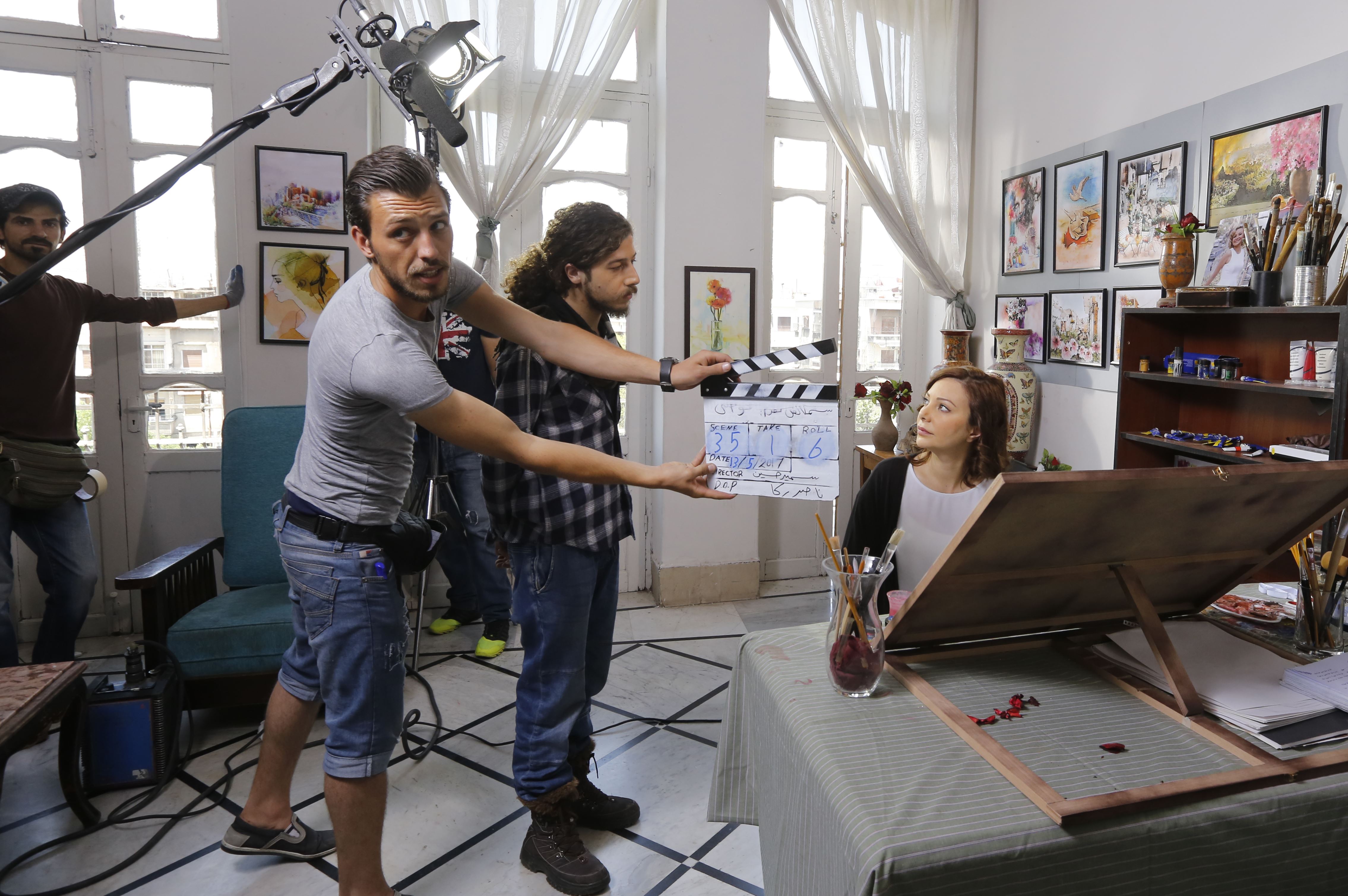
Syrian actress Nadine Tahseen Beck is seen during the filming of the serial drama "Fouda" or "Chaos" in the al-Qasaa area near the capital Damascus's Jobar district. Photo: Louai Beshara / AFP
DUBAI – One of the Middle East's favorite pastmines has become the latest victim of the coronavirus pandemic, Ramadan television series are struggling to keep the cameras rolling.
Just weeks before the Islamic holy month, scenes are being left out, episodes unfinished and sets being disinfected, and actors in quarantine as it's uncertain that those staying at home will have the beloved to preoccupy them.
Gangster wars in rural villages, social taboos, historical sagas, love, cheating, mystery and comedy all form part of the daily diet on pan-Arab and local channels.
Many countries in the Middle East have imposed tough restrictions to curb the spread of the pandemic, forcing studios to shut down temporarily and others to work under strict rules.
At the same time, residents have been asked to stay off the streets and work from home, unleashing a potentially huge captive television audience and pressuring networks to provide a constant supply of content.
"We have four unfinished Ramadan TV series we were shooting in Lebanon, and another one in Syria. All are on hold now," the head of acquisitions at one Dubai-based network told AFP.
"The countdown has begun. We need as much content as possible before Ramadan. If we can't have our shows ready, we'll look at buying from outside production houses even if it means lower quality," the soaps executive said, requesting anonymity.
In addition to being the religious holy month marked by fasting and self-reflection, Ramadan is a time most Muslims celebrate by spending indoors with family — and watching long-awaited TV specials.
Up to 90 percent of people across the Middle East watch traditional television, according to US research firm Frost & Sullivan and the Pan Arab Research Center at Northwestern University in Qatar.
They are already locked in a fierce battle for viewers with online platforms such as Netflix and local competitor Starz Play.
For fans like 60-year-old Hayam Ali, not having plenty of soap operas to watch during Ramadan would be a real blow. She hasn't left her home Sharjah, United Arab Emirates, for three weeks for fear of catching the disease.
"Ramadan is prayers, good food, family gatherings and TV. But I havent seen anyone in weeks and I don't think I will soon. The TV series better be good enough. I'll really need that," she said.
Don't laugh
For Jamal Sinan, owner of Eagles Films Production, it's a race against time to get the cameras rolling again for his company's three Ramadan series in Lebanon.
"We are committed to following the rules while we look for a specific way to continue working, like doing the job with fewer cameramen... But we don’t know when this can happen," he told AFP.
"Only circumstances will decide how ready we will be."
In one of the series, Lebanese star Cyrine Abdel Nour plays the leading role -- a tailor who falls in love with the owner of a fashion house.
Wearing a white mask and blue gloves, the actress closed her eyes and stood still while she was sprayed from head to toe with sanitiser before entering a house in a Lebanese village where one of the last scenes was being filmed before shutting down.
Abdel Nour posted a video of the incident on her Instagram account, which has 8.9 million followers.
"Please don't laugh at me," she wrote in the caption. "This is how we used to film. May God end this phase... so we can go back to filming."
While filming has shut down in countries including Lebanon and Kuwait, cameras have kept rolling in other places such as the United Arab Emirates, but under strict rules limiting the number of cameramen and non-essential crew.
'Filming has stopped'
Leading regional broadcaster MBC has been "constantly sanitising the studios and places of filming", according to its spokesman Mazen Hayek.
"There are mobile (medical) emergency units outside our HQs," he added.
In Egypt, a country with a population of almost 100 million, television is considered a golden goose, and no official order to close studios has been issued.
But Ashraf Zaki, head of the actors' syndicate, said "80 percent of filming has stopped anyway", and a handful of actors have petitioned online for an official order to stop work, accusing the authorities of taking risks.
The worldwide death toll from the novel coronavirus rose to more than 48,000 this week, and the measures taken to stop the spread have hit the whole of the entertainment industry.
Scores of events have been postponed and cinemas have closed their doors in many countries, with more than three billion people confined to their homes.
Syrian producer Diana Jabbour said her company stopped filming even before the authorities demanded it.
"We will not gamble with the health of anybody working with us, from the smallest technician to the greatest actor," she told AFP.
With additional reporting by Rudaw


Comments
Rudaw moderates all comments submitted on our website. We welcome comments which are relevant to the article and encourage further discussion about the issues that matter to you. We also welcome constructive criticism about Rudaw.
To be approved for publication, however, your comments must meet our community guidelines.
We will not tolerate the following: profanity, threats, personal attacks, vulgarity, abuse (such as sexism, racism, homophobia or xenophobia), or commercial or personal promotion.
Comments that do not meet our guidelines will be rejected. Comments are not edited – they are either approved or rejected.
Post a comment