


By Alla Shali
BERLIN, Germany - A Kurdish Yezidi survivor who escaped captivity under the Islamic State (ISIS) slammed the international community for “its failure” to respond to the atrocities committed by the militants, aimed at annihilating the Yezidi community in Iraq.
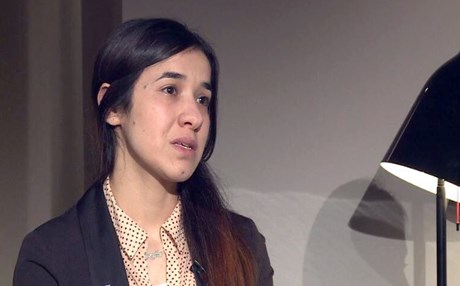
Nadiya Murad, 23, who escaped from ISIS in November 2014 after three months in captivity and who delivered an emotional speech at the United Nations about what had happened to others like her in ISIS hands, accused the international community -- including Kurdish and Iraqi institutions -- of failure to protect them. More than 5,000 Yezidi women and girls reportedly remain in ISIS captivity.
“I told them what I knew and expected them to act, to solve the problem, to stop ISIS and free the women and children from their captivity. Crying or telling me that I was a hero does not solve these people’s misery,” Murad said in an interview with Rudaw in Germany.
“All of them said good things and were against ISIS but they have not done anything yet, said Murad, who is from the Yezidi rural area of Kojo. “They haven’t done anything that I asked them to do. But I will not give up and will continue my fight,” she said.
The following is a translated version of the interview.
Rudaw: How did you feel when you spoke at the Security Council, where you took the cry of the Yezidis to the United Nations?
Nadiya Murad: I conveyed what ISIS had done against Kurdish Yezidi girls and women, to which I had been witness. My call and cry was not only for my fellow Yezidis, but also for all other victims of ISIS to whom the world should open its eyes and help. I feel that I have not yet completed my work. I haven’t done anything for all those young and old who are still in ISIS captivity. What I wanted to convey was that ISIS is against humanity, it’s against women and children and it is against all religions. What I said there was that ISIS was a threat against all humanity. There was a line of other victims before us at the hands of these militants. They killed innocent people in Syria and in France. I want to call on the world to come to our rescue. What we experienced is beyond imagination. When they attacked us, they killed our men and then they abducted our women and children. They did all that and said they were perpetrating these crimes in the name of Islam. They forced us to convert to Islam. I have said this before in other Arab countries and I also say this to the young people who sympathize with ISIS here (in Germany). I want to tell them that what ISIS does has no reference in any religion. We were subjected to great cruelty, but no one came to our rescue. ISIS raped thousands of our Yezidi women. They sold us into slavery. Our children have been in their captivity for the past one and a half years. It’s everybody’s duty to do something for the victims and survivors. Sadly, no one has done anything so far.
When you escaped ISIS in Mosul you sought refuge with an Arab family. Did that change how you feel in any way?
It is true that an Arab family helped me, but when ISIS attacked us many of the Arab families around our home and even the Muslim Kurds in Shingal joined ISIS. Some of our Muslim neighbors were recruited by ISIS. I’m not saying that every Muslim is ISIS. Most of those we saw were ISIS from Mosul. Those who were in the bus (with us) between Mosul and Solaq were from Talafar and spoke the Turkmani language. We lost trust in them and many others whom we thought would help us a lot. I was asleep when my mother woke me up early in the morning of August 3. She said ISIS was now in Shingal. Men from the village went to the Peshmerga. They said it was nothing to worry about. But the people in charge of the area left in the night. We lost trust in them too. When ISIS entered our village no one came to our rescue. We were surrounded in our village until August 15. Our men called the Iraqi government and Kurdistan Regional Government for help… we were continually calling the Peshmerga to come and rescue us. But we were left alone and never thought that we would be so lonely. But one and half years have passed and we, the victims, still wait for the KRG to punish those who abandoned Shingal and left us at the mercy of ISIS. After I fled ISIS, I was in touch with many Kurdish families who have opened their heart and homes to us, Kurds from all Kurdish areas.
Six of your brothers were killed that day when you were forcefully gathered in the school. Can you describe the atmosphere of that day?
It was a difficult day. They were moving us all around. It was a very hot day. We had been under siege for days. We were all thirsty and hungry. Around noon they came and took the men. When they gathered us in the school I was walking beside my brother. Before getting to the school building I saw earth digging vehicles along the way. I was scared and asked my brother what these vehicles were doing there. He said perhaps they needed them to open the roads. Little did we know that the machines were there to dig mass graves. I never saw my brothers after that day when they separated us in the school. There were many people who were separated from their children. They killed all of my six brothers but I know families who lost nine members. The most difficult thing was that I was the youngest child in our home. We are in agony because of my brothers. What is even more painful is that our village is still in ISIS control. We don’t even know where the remains of our brothers could be… There are thousands of children who still wait to be united with their mothers. Thousands of mothers still wait to see their children. Unfortunately those we trusted didn’t do much for us. One and half years have passed but not one child has been rescued in a military operation.
You say that what you expected has not been done to help you and your fellow Yezidis. People who were listening to you at the Security Council were very moved and some of them began to cry when you told the horrifying stories. What do you think of the world commitment to the Yezidis case and other victims of the ISIS?
I told them what I knew and expected them to act, to solve the problem, to stop ISIS and free the women and children in their captivity. Crying or telling me that I was a hero does not solve these people’s misery.
What did you ask the world leaders to do when you met them?
I asked them to destroy ISIS. It’s a threat against all humanity. And to rescue the women that are in ISIS captivity. To prevent young people to join ISIS and recognize the mass murder as genocide.
What do you expect Yezidis to do now?
The Yezidi people are being gradually annihilated. There are many mass graves. Some have left for Europe in despair. Some have remained in the camps without any services available to them. What we want is help, that our case is recognized as genocide, that our areas are protected by our own Yezidi people and the administration in Shingal is managed by the Yezidis themselves.
I want to say that even the areas that were liberated from ISIS were recaptured, not for restoration of Yezidi honor but for political reasons. Every political party has its own flags. The war I see is not for us but for the flags and that has added to our agony and deepened our wounds.
You live in Germany now, as do many other Yezidis who have taken refuge here in Europe and many more who want to do the same. Do you want Yezidis to stay in their homeland or leave for Europe?
I don’t tell my people to leave their homeland. But I don’t want my people to be captured again. I have lost trust in those who protected us. Whenever they held accountable those who left us in the hands of ISIS, then I will return.
How did you feel when the Peshmerga freed Shingal?
Shingal has not been fully freed. We want all our regions to be freed. I support all those who try to stop ISIS, whether militarily or by other means. It is the duty of the Peshmerga and Iraqi forces to recapture all areas from ISIS. But I would be glad to see the commanders who abandoned Shingal held accountable.
How do you regard the efforts of the Kurdish government for international recognition of the mass murder of Yezidis as genocide? Should they do more?
Wherever I have been I have called for recognition of the Yezidi case as genocide. So far no one has told me that other people have pushed for the same recognition. This case has not been moved forward at all. This is why I call on both the Kurdish and Iraqi governments to speed up their efforts.
You are in the list of candidates to receive the Nobel Peace Prize. Is it important for you to receive it?
The Nobel Prize is a very great prize. But I see the rescue of Yezidi women and girls as much bigger than the Nobel Prize. It is true that the Nobel is a world prize, but our case is bigger than that prize.
BERLIN, Germany - A Kurdish Yezidi survivor who escaped captivity under the Islamic State (ISIS) slammed the international community for “its failure” to respond to the atrocities committed by the militants, aimed at annihilating the Yezidi community in Iraq.
Nadiya Murad, 23, who escaped from ISIS in November 2014 after three months in captivity and who delivered an emotional speech at the United Nations about what had happened to others like her in ISIS hands, accused the international community -- including Kurdish and Iraqi institutions -- of failure to protect them. More than 5,000 Yezidi women and girls reportedly remain in ISIS captivity.
“I told them what I knew and expected them to act, to solve the problem, to stop ISIS and free the women and children from their captivity. Crying or telling me that I was a hero does not solve these people’s misery,” Murad said in an interview with Rudaw in Germany.
“All of them said good things and were against ISIS but they have not done anything yet, said Murad, who is from the Yezidi rural area of Kojo. “They haven’t done anything that I asked them to do. But I will not give up and will continue my fight,” she said.
The following is a translated version of the interview.
Rudaw: How did you feel when you spoke at the Security Council, where you took the cry of the Yezidis to the United Nations?
Nadiya Murad: I conveyed what ISIS had done against Kurdish Yezidi girls and women, to which I had been witness. My call and cry was not only for my fellow Yezidis, but also for all other victims of ISIS to whom the world should open its eyes and help. I feel that I have not yet completed my work. I haven’t done anything for all those young and old who are still in ISIS captivity. What I wanted to convey was that ISIS is against humanity, it’s against women and children and it is against all religions. What I said there was that ISIS was a threat against all humanity. There was a line of other victims before us at the hands of these militants. They killed innocent people in Syria and in France. I want to call on the world to come to our rescue. What we experienced is beyond imagination. When they attacked us, they killed our men and then they abducted our women and children. They did all that and said they were perpetrating these crimes in the name of Islam. They forced us to convert to Islam. I have said this before in other Arab countries and I also say this to the young people who sympathize with ISIS here (in Germany). I want to tell them that what ISIS does has no reference in any religion. We were subjected to great cruelty, but no one came to our rescue. ISIS raped thousands of our Yezidi women. They sold us into slavery. Our children have been in their captivity for the past one and a half years. It’s everybody’s duty to do something for the victims and survivors. Sadly, no one has done anything so far.
When you escaped ISIS in Mosul you sought refuge with an Arab family. Did that change how you feel in any way?
It is true that an Arab family helped me, but when ISIS attacked us many of the Arab families around our home and even the Muslim Kurds in Shingal joined ISIS. Some of our Muslim neighbors were recruited by ISIS. I’m not saying that every Muslim is ISIS. Most of those we saw were ISIS from Mosul. Those who were in the bus (with us) between Mosul and Solaq were from Talafar and spoke the Turkmani language. We lost trust in them and many others whom we thought would help us a lot. I was asleep when my mother woke me up early in the morning of August 3. She said ISIS was now in Shingal. Men from the village went to the Peshmerga. They said it was nothing to worry about. But the people in charge of the area left in the night. We lost trust in them too. When ISIS entered our village no one came to our rescue. We were surrounded in our village until August 15. Our men called the Iraqi government and Kurdistan Regional Government for help… we were continually calling the Peshmerga to come and rescue us. But we were left alone and never thought that we would be so lonely. But one and half years have passed and we, the victims, still wait for the KRG to punish those who abandoned Shingal and left us at the mercy of ISIS. After I fled ISIS, I was in touch with many Kurdish families who have opened their heart and homes to us, Kurds from all Kurdish areas.
Six of your brothers were killed that day when you were forcefully gathered in the school. Can you describe the atmosphere of that day?
It was a difficult day. They were moving us all around. It was a very hot day. We had been under siege for days. We were all thirsty and hungry. Around noon they came and took the men. When they gathered us in the school I was walking beside my brother. Before getting to the school building I saw earth digging vehicles along the way. I was scared and asked my brother what these vehicles were doing there. He said perhaps they needed them to open the roads. Little did we know that the machines were there to dig mass graves. I never saw my brothers after that day when they separated us in the school. There were many people who were separated from their children. They killed all of my six brothers but I know families who lost nine members. The most difficult thing was that I was the youngest child in our home. We are in agony because of my brothers. What is even more painful is that our village is still in ISIS control. We don’t even know where the remains of our brothers could be… There are thousands of children who still wait to be united with their mothers. Thousands of mothers still wait to see their children. Unfortunately those we trusted didn’t do much for us. One and half years have passed but not one child has been rescued in a military operation.
You say that what you expected has not been done to help you and your fellow Yezidis. People who were listening to you at the Security Council were very moved and some of them began to cry when you told the horrifying stories. What do you think of the world commitment to the Yezidis case and other victims of the ISIS?
I told them what I knew and expected them to act, to solve the problem, to stop ISIS and free the women and children in their captivity. Crying or telling me that I was a hero does not solve these people’s misery.
What did you ask the world leaders to do when you met them?
I asked them to destroy ISIS. It’s a threat against all humanity. And to rescue the women that are in ISIS captivity. To prevent young people to join ISIS and recognize the mass murder as genocide.
What do you expect Yezidis to do now?
The Yezidi people are being gradually annihilated. There are many mass graves. Some have left for Europe in despair. Some have remained in the camps without any services available to them. What we want is help, that our case is recognized as genocide, that our areas are protected by our own Yezidi people and the administration in Shingal is managed by the Yezidis themselves.
I want to say that even the areas that were liberated from ISIS were recaptured, not for restoration of Yezidi honor but for political reasons. Every political party has its own flags. The war I see is not for us but for the flags and that has added to our agony and deepened our wounds.
You live in Germany now, as do many other Yezidis who have taken refuge here in Europe and many more who want to do the same. Do you want Yezidis to stay in their homeland or leave for Europe?
I don’t tell my people to leave their homeland. But I don’t want my people to be captured again. I have lost trust in those who protected us. Whenever they held accountable those who left us in the hands of ISIS, then I will return.
How did you feel when the Peshmerga freed Shingal?
Shingal has not been fully freed. We want all our regions to be freed. I support all those who try to stop ISIS, whether militarily or by other means. It is the duty of the Peshmerga and Iraqi forces to recapture all areas from ISIS. But I would be glad to see the commanders who abandoned Shingal held accountable.
How do you regard the efforts of the Kurdish government for international recognition of the mass murder of Yezidis as genocide? Should they do more?
Wherever I have been I have called for recognition of the Yezidi case as genocide. So far no one has told me that other people have pushed for the same recognition. This case has not been moved forward at all. This is why I call on both the Kurdish and Iraqi governments to speed up their efforts.
You are in the list of candidates to receive the Nobel Peace Prize. Is it important for you to receive it?
The Nobel Prize is a very great prize. But I see the rescue of Yezidi women and girls as much bigger than the Nobel Prize. It is true that the Nobel is a world prize, but our case is bigger than that prize.
Comments
Rudaw moderates all comments submitted on our website. We welcome comments which are relevant to the article and encourage further discussion about the issues that matter to you. We also welcome constructive criticism about Rudaw.
To be approved for publication, however, your comments must meet our community guidelines.
We will not tolerate the following: profanity, threats, personal attacks, vulgarity, abuse (such as sexism, racism, homophobia or xenophobia), or commercial or personal promotion.
Comments that do not meet our guidelines will be rejected. Comments are not edited – they are either approved or rejected.
Post a comment