



Interview by Hiwa Salah
Sama Ismaeli was born in 1986 to Persian parents. She speaks good Kurdish, and has a diploma in the art of design. She is currently doing makeup and modeling, although she doesn’t see herself as a model. In an interview with Rudaw, she spoke about the art of makeup in Kurdish cinema.
Rudaw: What impressed you about the art of cinematic makeup?
Sama Ismaeli: I think art is a sea with no bottom. No matter how much you know about art, you still are a beginner. The art of makeup was an old want to me. When I started cinematic makeup in Kurdistan, few people were doing it. It was a bit easier for me because I studied drawing. And these two are very close. The art of drawing helped me in choosing the color and form. I have long been interested in the world of colors, makeup and drawing.
Where did you first start cinematic makeup? In Kurdistan or Iran?
I first started in Iran where I did makeup for two short films. Later, I came to Kurdistan in 2010 and worked with a young producer, Rekar Ahmad. Then I became known to people in Kurdistan, and worked as makeup artist for some Kurdish television channels.
Have you done makeup for video clips, in addition to cinematic makeup?
Yes I have worked with many Kurdish singers and have taken part in nearly 450 video clips. I have also worked with Iraqi artists. I have also supervised makeup and the selection of clothing in many of the advertisements done in Kurdistan.
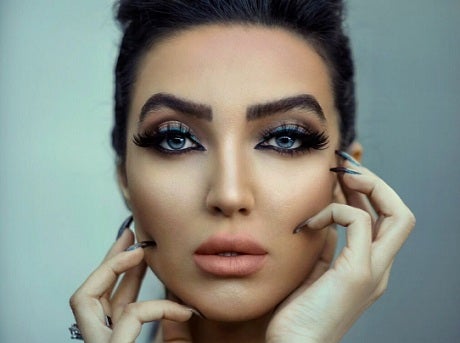
Sama says her modelling is just a hobby that showcases her makeup designs. Photo: Sama Ismaeli
What do you think of the level of cinematic makeup in Kurdistan?
Unfortunately, very little work has been done on the art of cinematic makeup in Kurdistan. Art faculties haven’t paid much attention to this field either. I tried to study this abroad and then return to Kurdistan and serve at art faculties. But I couldn’t do it. In addition, cinematic films are not produced that much in Kurdistan, and the ones produced have poor quality, with the exception of a few. There is no good quality material for cinematic makeup in Kurdistan, which is called effect makeup in cinema. We get the material from Iran and other countries. I have taken many courses on this subject. New material emerges in the world of cinema every day.
The effect of makeup is more obvious in zombie and horror films. Why are there no such films in Kurdish cinema?
I am familiar with zombie and horror films, but haven’t received a good opportunity in Kurdistan yet to work on it. I have been waiting for this day for a while. No one has so far supported these ideas, which is why horror films are not produced in Kurdistan. And producers haven’t tested themselves in this field because they fear people might not welcome these kinds of films.
You often appear as a model. Is this your third profession or just a hobby?
I don’t consider myself a model because this requires some standards. I like modeling. It is my hobby. The production of cinematic work and video clips declined after the war on ISIS started. I turned to modeling and wanted to convey a message to people that I still continue my artwork. I think people who work in art cannot sit at home idle. That is why these people continue their efforts in other areas of art.
You were expected to participate in a Kurdish film as an actress to portray the war on ISIS. What happened to this film?
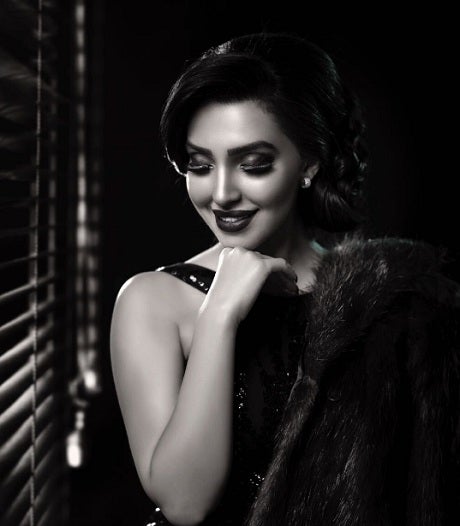
Yes I took part in a Kurdish film as an actress. Mohammed Muhsin wrote the script and Jwan Bamarne produced it. We did the photography on the frontlines. But it hasn’t yet been screened in Kurdistan cinemas because it had production problems.
What do you think of the level of Kurdish cinema at this stage?
I think the level of Kurdish cinema at this stage has stopped and hasn’t progressed. If you look at the neighbors of Kurdistan, like Iran and Turkey, their cinemas are overcrowded because they produce good cinematic films. That is why people are eager to watch them. But this is not the case with Kurdistan.
You were born to Iranian parents. How did you learn Kurdish?
Kurdish language is a bit close to Persian. When I first came to Kurdistan, I felt like it was country and I still have the same impression. I don’t feel like a foreigner in Kurdistan because the people are very kind and hospitable. That is why I love them and work for their sake.
What is your latest project?
I have always hoped that I could work for homeless children. I have a great project on this, which I have been working on for a while. And I need the assistance and sponsorship of anyone who could help. The project aims to teach these children all kinds of art so that they can make a living through art.
Sama Ismaeli was born in 1986 to Persian parents. She speaks good Kurdish, and has a diploma in the art of design. She is currently doing makeup and modeling, although she doesn’t see herself as a model. In an interview with Rudaw, she spoke about the art of makeup in Kurdish cinema.
Rudaw: What impressed you about the art of cinematic makeup?
Sama Ismaeli: I think art is a sea with no bottom. No matter how much you know about art, you still are a beginner. The art of makeup was an old want to me. When I started cinematic makeup in Kurdistan, few people were doing it. It was a bit easier for me because I studied drawing. And these two are very close. The art of drawing helped me in choosing the color and form. I have long been interested in the world of colors, makeup and drawing.
Where did you first start cinematic makeup? In Kurdistan or Iran?
I first started in Iran where I did makeup for two short films. Later, I came to Kurdistan in 2010 and worked with a young producer, Rekar Ahmad. Then I became known to people in Kurdistan, and worked as makeup artist for some Kurdish television channels.
Have you done makeup for video clips, in addition to cinematic makeup?
Yes I have worked with many Kurdish singers and have taken part in nearly 450 video clips. I have also worked with Iraqi artists. I have also supervised makeup and the selection of clothing in many of the advertisements done in Kurdistan.
Sama says her modelling is just a hobby that showcases her makeup designs. Photo: Sama Ismaeli
What do you think of the level of cinematic makeup in Kurdistan?
Unfortunately, very little work has been done on the art of cinematic makeup in Kurdistan. Art faculties haven’t paid much attention to this field either. I tried to study this abroad and then return to Kurdistan and serve at art faculties. But I couldn’t do it. In addition, cinematic films are not produced that much in Kurdistan, and the ones produced have poor quality, with the exception of a few. There is no good quality material for cinematic makeup in Kurdistan, which is called effect makeup in cinema. We get the material from Iran and other countries. I have taken many courses on this subject. New material emerges in the world of cinema every day.
The effect of makeup is more obvious in zombie and horror films. Why are there no such films in Kurdish cinema?
I am familiar with zombie and horror films, but haven’t received a good opportunity in Kurdistan yet to work on it. I have been waiting for this day for a while. No one has so far supported these ideas, which is why horror films are not produced in Kurdistan. And producers haven’t tested themselves in this field because they fear people might not welcome these kinds of films.
You often appear as a model. Is this your third profession or just a hobby?
I don’t consider myself a model because this requires some standards. I like modeling. It is my hobby. The production of cinematic work and video clips declined after the war on ISIS started. I turned to modeling and wanted to convey a message to people that I still continue my artwork. I think people who work in art cannot sit at home idle. That is why these people continue their efforts in other areas of art.
Sama has also turned her hand at acting. Photo: Sama Ismaeli
You were expected to participate in a Kurdish film as an actress to portray the war on ISIS. What happened to this film?
Yes I took part in a Kurdish film as an actress. Mohammed Muhsin wrote the script and Jwan Bamarne produced it. We did the photography on the frontlines. But it hasn’t yet been screened in Kurdistan cinemas because it had production problems.
What do you think of the level of Kurdish cinema at this stage?
I think the level of Kurdish cinema at this stage has stopped and hasn’t progressed. If you look at the neighbors of Kurdistan, like Iran and Turkey, their cinemas are overcrowded because they produce good cinematic films. That is why people are eager to watch them. But this is not the case with Kurdistan.
You were born to Iranian parents. How did you learn Kurdish?
Kurdish language is a bit close to Persian. When I first came to Kurdistan, I felt like it was country and I still have the same impression. I don’t feel like a foreigner in Kurdistan because the people are very kind and hospitable. That is why I love them and work for their sake.
What is your latest project?
I have always hoped that I could work for homeless children. I have a great project on this, which I have been working on for a while. And I need the assistance and sponsorship of anyone who could help. The project aims to teach these children all kinds of art so that they can make a living through art.
Comments
Rudaw moderates all comments submitted on our website. We welcome comments which are relevant to the article and encourage further discussion about the issues that matter to you. We also welcome constructive criticism about Rudaw.
To be approved for publication, however, your comments must meet our community guidelines.
We will not tolerate the following: profanity, threats, personal attacks, vulgarity, abuse (such as sexism, racism, homophobia or xenophobia), or commercial or personal promotion.
Comments that do not meet our guidelines will be rejected. Comments are not edited – they are either approved or rejected.
Post a comment