


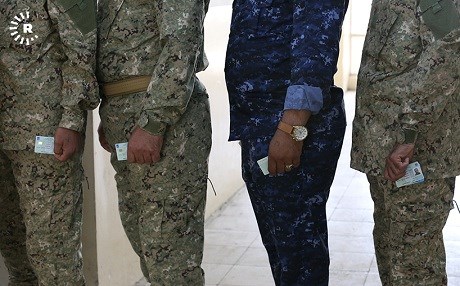
ERBIL, Kurdistan Region — Following much frustration by Peshmerga after learning they wouldn’t be paid until after Eid al-Fitr, the KDP announced that it will work for Peshmerga salaries to be paid before the Eid.
“The KDP faction assures the brave Peshmerga, interior forces and the retirees that we are in communication with relevant governmental agencies for the salaries of Peshmerga, retirees, and the interior forces to be paid before Eid,” read a statement by KDP bloc in the Kurdistan Region’s parliament.
On Thursday, KRG’s Ministry of Finance and the Economy announced a new schedule for salary payments that would start with the Ministry of Education being paid on June 3 up to June 13, without mentioning the Peshmerga forces.
This led to outrage. A Peshmerga-affiliated Kurdistan Officers’ Facebook page urged for protests, calling the KRG the “government of interests” as it paid the Peshmerga first when there was the war against ISIS, but now pays them last because they aren’t needed.
KDP says that Decision No. 19 of the Kurdistan parliament stipulates that Peshmerga need to be paid first, not last. It vows that it will continue working.
Eid al-Fitr is the end of the Islamic holy month Ramadan. It is expected to begin on June 15 in most of the Middle East. After a month of fasting for Ramadan, feasts are held. Sweets and nuts are eaten, especially during the Eid holidays. Shop owners have told Rudaw English they are hoping to see an increase in sales for Eid.
“So that we all can celebrate this Eid together, the Kurdistan Regional Government has to do everything so that the salaries of the brave Peshmerga, police, interior forces, and retirees are inserted into the salary paying schedule,” Firsat Sofy, a KDP MP in the Kurdistan parliament, wrote on a Facebook post.
KRG’s financial crisis forced the Region in 2016 to implement many unpopular salary-reduction measures and trimming its public sector payrolls. The KRG introduced salary system reforms earlier this year; however, it still needs funds from the Iraqi central government and other revenues like oil to pay salaries.
“The KDP faction assures the brave Peshmerga, interior forces and the retirees that we are in communication with relevant governmental agencies for the salaries of Peshmerga, retirees, and the interior forces to be paid before Eid,” read a statement by KDP bloc in the Kurdistan Region’s parliament.
On Thursday, KRG’s Ministry of Finance and the Economy announced a new schedule for salary payments that would start with the Ministry of Education being paid on June 3 up to June 13, without mentioning the Peshmerga forces.
This led to outrage. A Peshmerga-affiliated Kurdistan Officers’ Facebook page urged for protests, calling the KRG the “government of interests” as it paid the Peshmerga first when there was the war against ISIS, but now pays them last because they aren’t needed.
KDP says that Decision No. 19 of the Kurdistan parliament stipulates that Peshmerga need to be paid first, not last. It vows that it will continue working.
Eid al-Fitr is the end of the Islamic holy month Ramadan. It is expected to begin on June 15 in most of the Middle East. After a month of fasting for Ramadan, feasts are held. Sweets and nuts are eaten, especially during the Eid holidays. Shop owners have told Rudaw English they are hoping to see an increase in sales for Eid.
“So that we all can celebrate this Eid together, the Kurdistan Regional Government has to do everything so that the salaries of the brave Peshmerga, police, interior forces, and retirees are inserted into the salary paying schedule,” Firsat Sofy, a KDP MP in the Kurdistan parliament, wrote on a Facebook post.
KRG’s financial crisis forced the Region in 2016 to implement many unpopular salary-reduction measures and trimming its public sector payrolls. The KRG introduced salary system reforms earlier this year; however, it still needs funds from the Iraqi central government and other revenues like oil to pay salaries.
Comments
Rudaw moderates all comments submitted on our website. We welcome comments which are relevant to the article and encourage further discussion about the issues that matter to you. We also welcome constructive criticism about Rudaw.
To be approved for publication, however, your comments must meet our community guidelines.
We will not tolerate the following: profanity, threats, personal attacks, vulgarity, abuse (such as sexism, racism, homophobia or xenophobia), or commercial or personal promotion.
Comments that do not meet our guidelines will be rejected. Comments are not edited – they are either approved or rejected.
Post a comment