


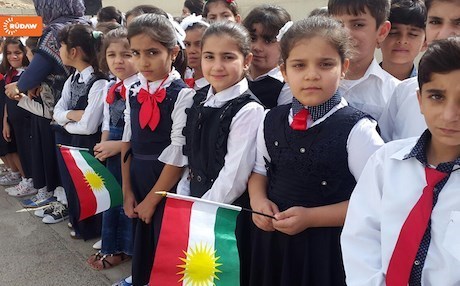
ERBIL, Kurdistan Region – Fewer Kurdish students have enrolled for the 2018-2019 academic year in Kirkuk than previous years, endangering the future of Kurdish language study in the disputed city, according to a local education official.
“Day after day, threats to Kurdish language studies are exacerbated,” Sherzad Rashid Kaka, head of Kirkuk province’s Kurdish studies department, told Rudaw.
This year just 9,700 Kurdish students have enrolled for the Kurdish curriculum, down from 12,000 in 2017.
If the Kirkuk situation does not normalize, “we predict the number will fall further next year,” he said.
An estimated 615 schools and 32 kindergartens in Kirkuk teach their students in the Kurdish language. These are run by 7,600 teachers and 400 support staff.
After the US-led invasion that ousted the Baathist regime in 2003, the KRG established inclusive studies administrative units in many of the disputed areas such as Kirkuk, Shingal, Mandali, Makhmour, Sheikhan, Dubiz and Tuz Khurmatu, employing thousands of employees. The Turkmen, Kurdish, Arabic, and Assyrian languages are protected by KRG law.
The ethnically mixed city of Kirkuk was garrisoned by the Peshmerga at the peak of ISIS war. Since their withdrawal, the city has seen a new wave of ‘Arabization’ policies on a scale not seen since the Baathist era.
Dozens of Kurdish officials have been removed from local authority posts since October 16.
“Day after day, threats to Kurdish language studies are exacerbated,” Sherzad Rashid Kaka, head of Kirkuk province’s Kurdish studies department, told Rudaw.
This year just 9,700 Kurdish students have enrolled for the Kurdish curriculum, down from 12,000 in 2017.
If the Kirkuk situation does not normalize, “we predict the number will fall further next year,” he said.
An estimated 615 schools and 32 kindergartens in Kirkuk teach their students in the Kurdish language. These are run by 7,600 teachers and 400 support staff.
After the US-led invasion that ousted the Baathist regime in 2003, the KRG established inclusive studies administrative units in many of the disputed areas such as Kirkuk, Shingal, Mandali, Makhmour, Sheikhan, Dubiz and Tuz Khurmatu, employing thousands of employees. The Turkmen, Kurdish, Arabic, and Assyrian languages are protected by KRG law.
As a result of the October 16 events, when the Peshmerga withdrew from the disputed province and the Iraqi army and Shiite paramilitias took over, a large number of teachers and students fled Kirkuk. Many of them will continue their studies in the Kurdistan Region provinces of Erbil and Sulaimani where they now live as IDPs.
The ethnically mixed city of Kirkuk was garrisoned by the Peshmerga at the peak of ISIS war. Since their withdrawal, the city has seen a new wave of ‘Arabization’ policies on a scale not seen since the Baathist era.
Dozens of Kurdish officials have been removed from local authority posts since October 16.
Comments
Rudaw moderates all comments submitted on our website. We welcome comments which are relevant to the article and encourage further discussion about the issues that matter to you. We also welcome constructive criticism about Rudaw.
To be approved for publication, however, your comments must meet our community guidelines.
We will not tolerate the following: profanity, threats, personal attacks, vulgarity, abuse (such as sexism, racism, homophobia or xenophobia), or commercial or personal promotion.
Comments that do not meet our guidelines will be rejected. Comments are not edited – they are either approved or rejected.
Post a comment