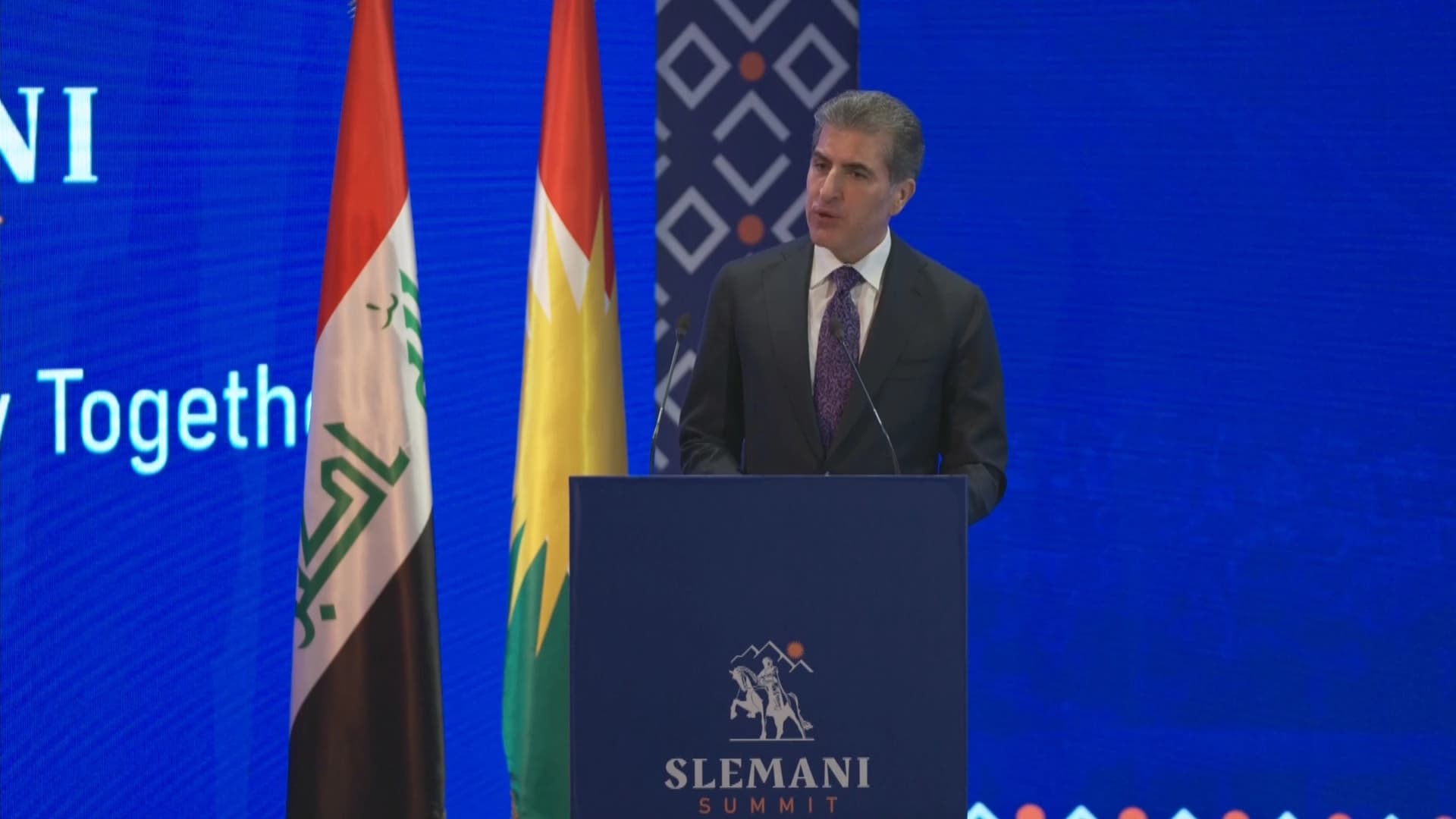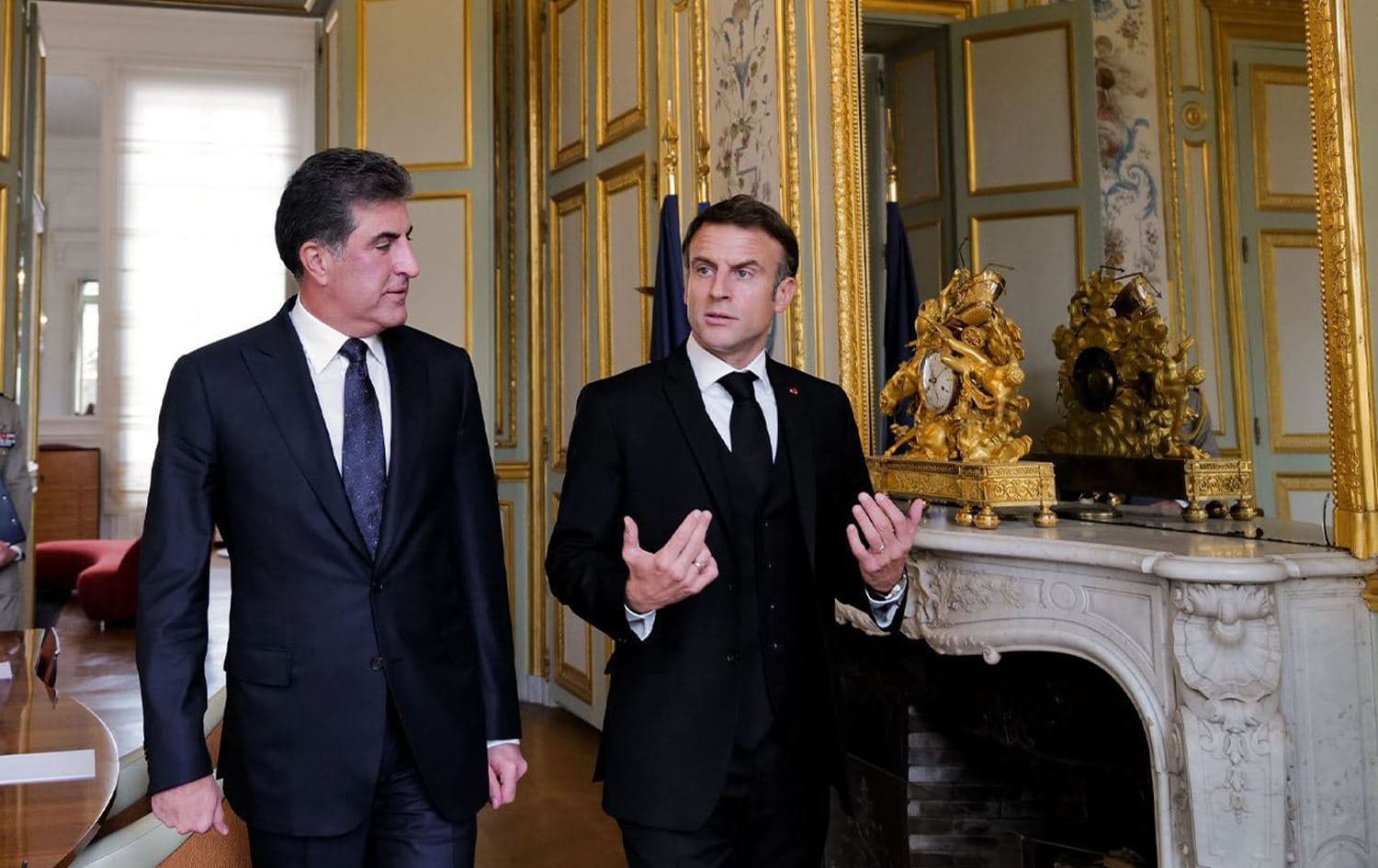

ERBIL, Kurdistan Region - French President Emmanuel Macron held a phone call with Kurdistan Region President Nechirvan Barzani to discuss the latest regional developments amid the escalating conflict between the United States and Israel against Iran.
“During their phone call, the two sides discussed the latest developments in the region, voiced concern over rising tensions, and stressed the importance of preserving peace and stability,” a statement from the Kurdistan Region Presidency read.
The statement added that President Macron and President Barzani also “highlighted the importance of enhancing international efforts to de-escalate the situation and address the issues through peaceful and diplomatic avenues.”
“They also discussed other matters of mutual interest,” the statement noted.
The call came shortly after President Barzani received another phone call from Turkish Foreign Minister Hakan Fidan, during which they discussed similar regional developments following a joint US-Israel attack on Iran that entered its fourth day on Tuesday.
A major war between the United States and Israel on one side and Iran on the other has engulfed the region, with significant repercussions, including for the Kurdistan Region.
The Kurdistan Region, particularly Erbil, has come under numerous drone and missile attacks by Iran and its proxies in Iraq.
“Around 100 drones and missiles have been used in the attacks,” Erbil Governor Omed Xoshnaw told Rudaw on Tuesday.
Xoshnaw added that an “advanced” defense system has been deployed, intercepting all incoming projectiles before they could reach their intended ground targets.
US and Israeli airstrikes targeting Iranian military, security, and missile facilities continued on Tuesday across several cities, including Tehran, Karaj, Isfahan, Qom, Shiraz, the industrial port city of Bandar Abbas, and Bushehr. Powerful explosions were also reported in multiple locations across the country’s western Kurdish region.