


ERBIL, Kurdistan Region - A coordinated drone attack targeted the Kurdish capital Erbil late Friday but was intercepted by US-led coalition forces, the Kurdistan Region’s Counter-Terrorism Service (CTG) reported, as local officials told Rudaw the assault occurred near a high-end hotel and residential compound in the heart of the city.
The attack, reportedly claimed by an Iran-linked shadowy armed group, came shortly after the American embassy in Baghdad warned that areas frequented by foreigners and international officials in the Kurdistan Region were likely to be targeted by Tehran-backed militias.
The assault
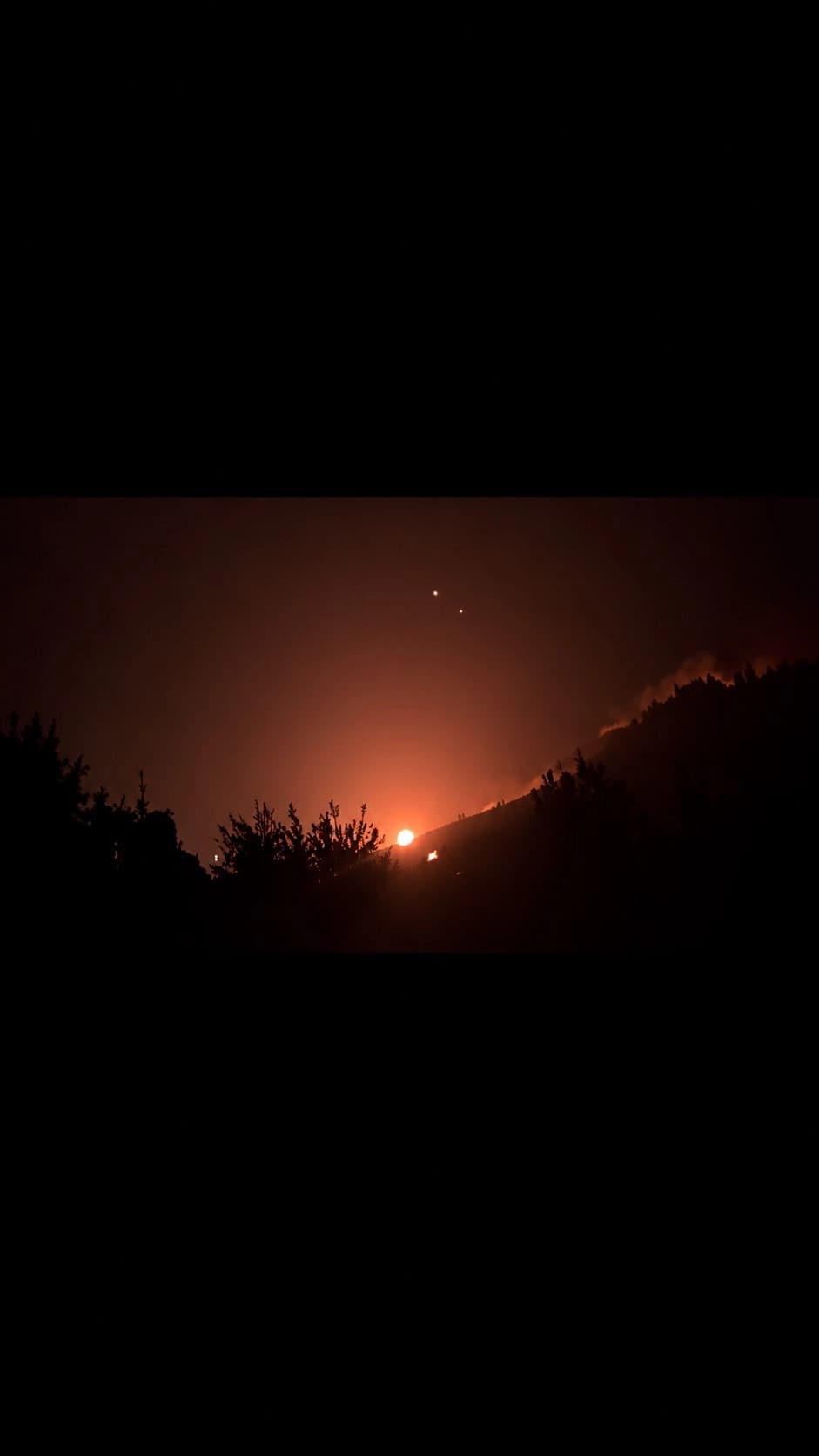
In a statement on Facebook, the CTG reported that at 22:41 local time on Friday, the US-led Global Coalition to Defeat the Islamic State (ISIS) forces “intercepted and shot down four suicide drones in the skies over Erbil.
“Debris from one drone fell in an open area near a hotel; however, no casualties or injuries were reported,” the CTG added.
Meanwhile, Erbil Governor Omed Xoshnaw told Rudaw that the drone fell near the Rotana Arjaan Hotel and Sky Tower residential compound northwest of the city, noting that the drones were “destroyed” before impact.
In a separate statement on Facebook, Xoshnaw said that Erbil has been repeatedly “targeted by groups operating outside the law, seeking to carry out terrorist acts,” despite the city not being “involved in [ongoing regional] conflicts” and the Kurdistan Region’s role as a peaceful and reconciliatory hub in the region.
However, “these lawless groups continue their terrorist activities,” the Erbil governor added, urging Baghdad to promptly “take action” to address these actions.
Xoshnaw further slammed the “treacherous and terrorist actions that target civilians” in the Kurdistan Region, affirming the Kurdistan Regional Government’s (KRG) commitment to “maintaining the security of the land and the people … at the highest level” and to “confronting wrongdoers and terrorists.”
#BREAKING: Smoke rises from a building at Erbil’s Sky Tower residential project after it was hit by a suspected Iranian projectile. pic.twitter.com/PsFVw7Tlg6
— Rudaw English (@RudawEnglish) March 6, 2026
Looming escalation
Importantly, the attack in Erbil took place shortly after the US embassy in Baghdad on Friday warned that Iran-aligned militia groups “may seek to target hotels frequented by foreigners” in the Kurdistan Region. It “strongly encouraged” US citizens to “depart as soon as they are safely able to do so, and reconsider lodging options if choosing not to depart.”
Meanwhile, local media outlets circulated a claim of responsibility attributed to the Ashab al-Kahf militia, a shadowy group that operates under the Islamic Resistance in Iraq (IRI).
Emerging in 2019, Ashab al-Kahf has primarily targeted US interests in Iraq, including the Baghdad embassy. The group has occasionally shown affinity with Asa’ib Ahl al-Haq Iraqi armed group, led by influential Shiite cleric Qais al-Khazali. In late 2020, the group expressed its readiness to take to the streets upon Khazali’s orders, in response to Iraqi authorities’ arrest of an Asa’ib Ahl al-Haq commander.
Since the US and Israel launched a campaign against Iran last Saturday, which saw the killing of longtime Iranian supreme leader Ayatollah Ali Khamenei in an airstrike on Tehran on its first day, the group has intensified attacks on alleged US targets in the Kurdistan Region.
Interestingly, the Iraqi Resistance Coordination Committee (IRCC) - an umbrella organization comprising Shiite armed groups aligned with the Iran-led ‘Axis of Resistance’ - also issued a statement Friday emphasizing that “the entire region is subject to a single equation: either security for all, or no security for anyone.”
The IRCC said the security and stability of Beirut’s southern suburb, Dahieh - a turf of the Iran‑backed Lebanese Hezbollah movement, a key component of the Iran‑led Axis - “are an integral part of the regional security equation” and undermining them “directly affects vital US interests in the Middle East.”
The entity warned that “any attack on the security” of Dahieh “will inevitably be met with threats to the security of the embassies of the aggressor states, whether in Iraq, Bahrain, Kuwait, or Lebanon,” and “will also directly impact the security of major American oil companies operating in the Arabian Peninsula.”
.jpg&w=3840&q=75)