
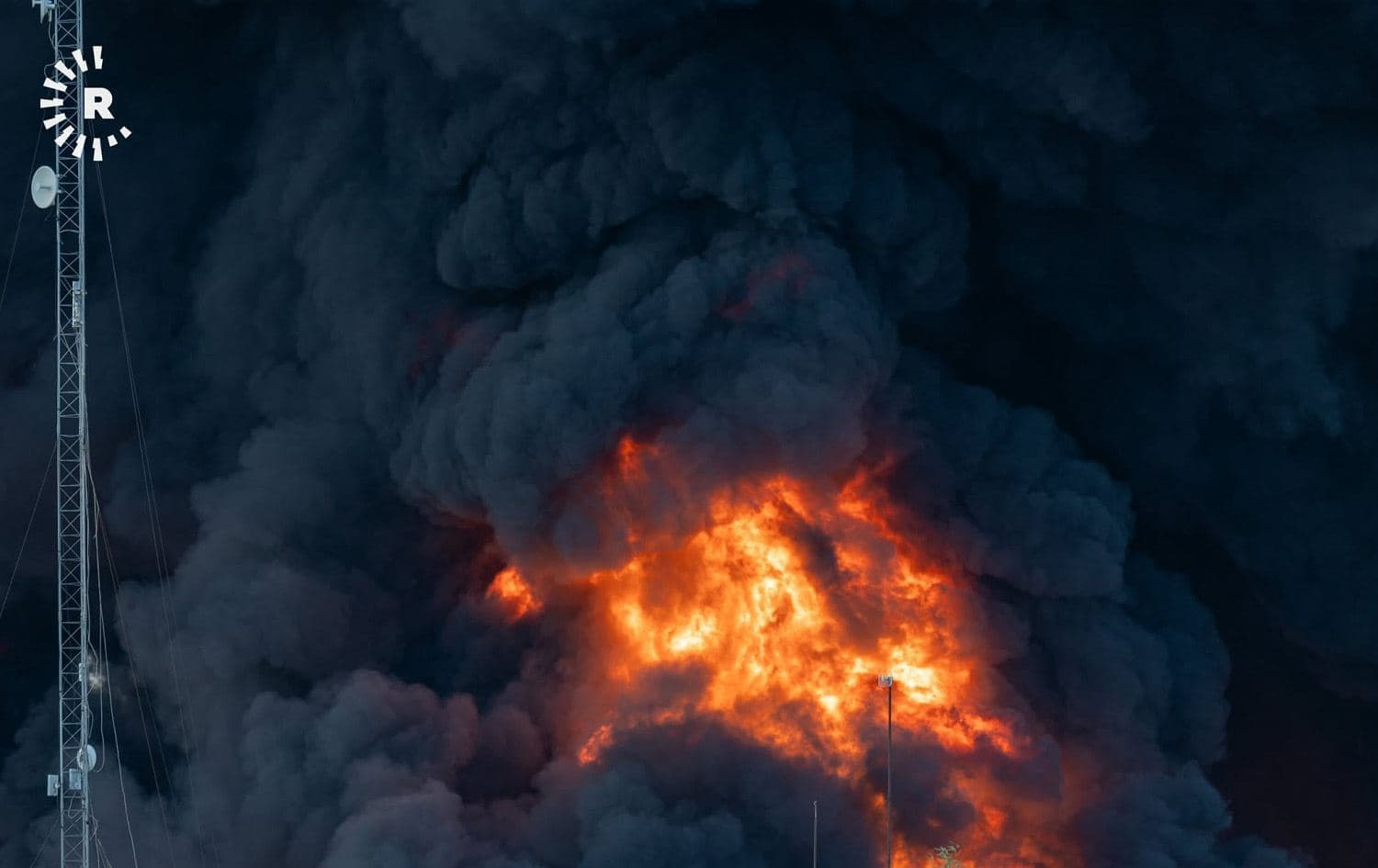

ERBIL, Kurdistan Region - The Kurdistan Region has been targeted by more than 700 drones and missiles since the start of the US-Israel war against Iran on February 28, according to the latest data compiled by Rudaw, released hours after a newly announced ceasefire took effect.
Rudaw’s daily monitoring shows that from February 28 until midday on Wednesday, a total of 703 drones and missiles were launched at the Kurdistan Region, killing 17 people and wounding 92 others.
In the latest wave of attacks, recorded between 11:00 am on Tuesday and early Wednesday, five missiles struck the Region — two in Erbil province, two in Sulaimani province, and one in Duhok.
Additional overnight incidents were also reported across the Region. At around 1:30 am on Wednesday, a drone attack targeted Duhok province, with the drone reportedly detonating midair above a village in the area.
Around 3:00 am the same day, a loud explosion was heard in Sulaimani and its surrounding areas, though it remains unclear whether it was caused by a drone or missile strike.
The majority of the attacks were concentrated in Erbil province, which recorded 560 drones and missiles, followed by Sulaimani with 115, Duhok with 26, and Halabja with two.
The attacks have largely been attributed to Iran-backed armed groups operating in Iraq, who have repeatedly targeted the Kurdistan Region alongside US interests since the outbreak of the war.
The escalation comes amid a broader regional conflict that began on February 28, when the United States and Israel launched a large-scale military campaign against Iran, triggering retaliatory attacks across the region, including in Iraq and the Kurdistan Region.
On Wednesday, Washington and Tehran agreed to a two-week ceasefire, halting nearly 40 days of intense fighting that had pushed the Middle East to the brink of a wider war.
The truce, brokered through international mediation, includes a pause in military operations, though questions remain over whether all armed groups in the region will fully adhere to it.
Soran Hussein contributed to this article from Erbil, Kurdistan Region.
.png&w=3840&q=75)