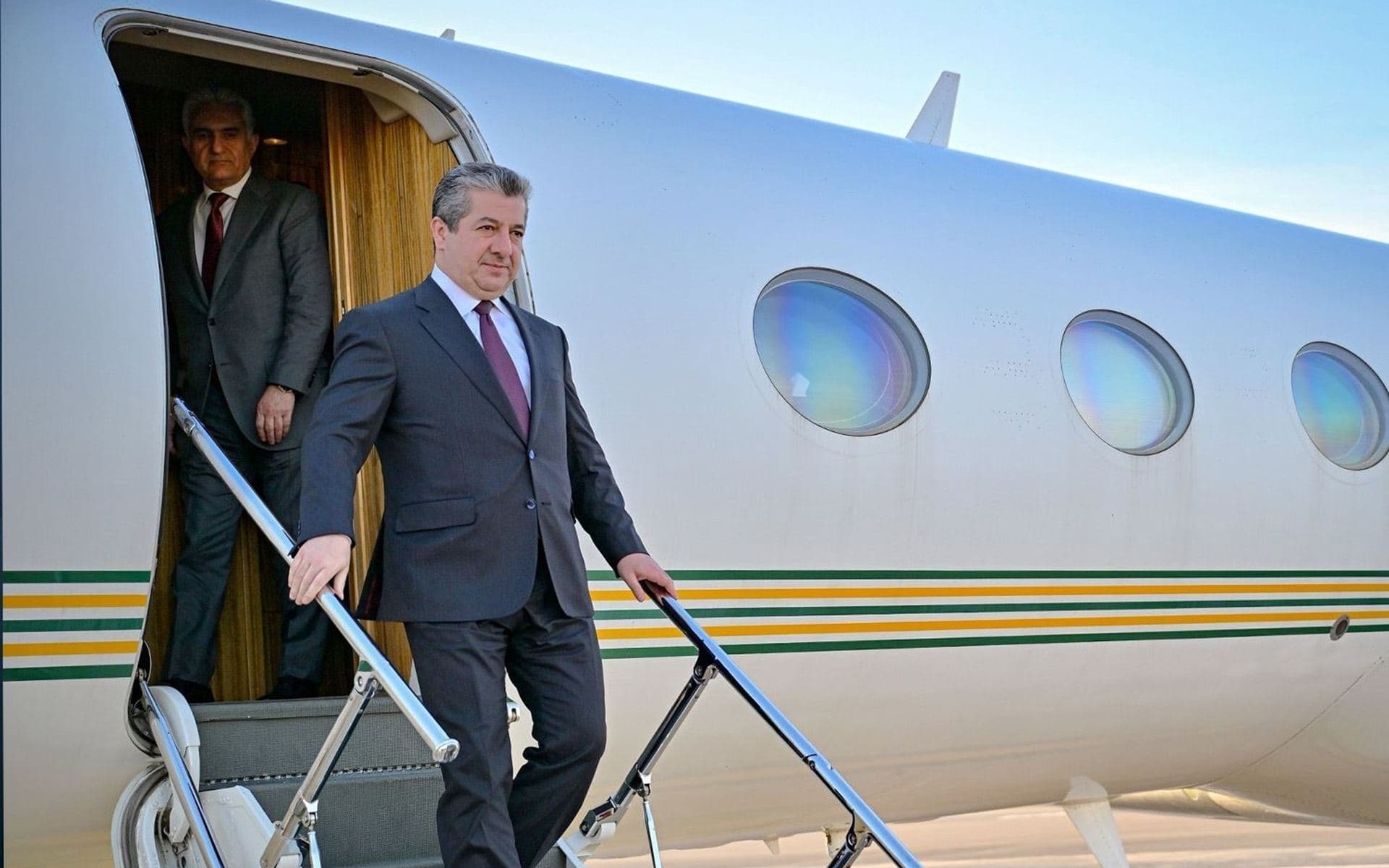
ERBIL, Kurdistan Region - Kurdistan Region Prime Minister Masrour Barzani is scheduled to visit Turkey on Saturday, where he will meet Turkish President Recep Tayyip Erdogan in Istanbul to discuss bilateral relations, regional developments, and the broader situation in Iraq.
Prime Minister Barzani is expected to meet Erdogan at Istanbul’s Dolmabahce Palace in the afternoon, according to a statement from the Kurdistan Regional Government (KRG).
The statement added that Barzani will also hold meetings with Turkish Foreign Minister Hakan Fidan, Energy Minister Alparslan Bayraktar, and several other senior officials.
Kurdistan Region and Turkey enjoy broad political and economic relations.
The visit comes weeks after the meeting of Kurdistan Region President Nechirvan Barzani with Erdogan on the sidelines of Antalya Forum 2026, during which they discussed advancing bilateral relations as well as regional developments.
Erbil heavily relies on Turkish imports for its domestic consumption. Trade volume between them exceeds five billion dollars a year. Turkey also serves as a transit for oil exports from the Kurdistan Region, with more than 250,000 barrels of crude oil a day.
Furthermore, Kurdistan Region accounts for the majority of Turkish investments in Iraq. Over half of the foreign companies doing business in the Kurdistan Region are Turkish.
It also coincides with heightening tensions in and around the Persian Gulf, where the United States and Iran have been engaged in tit-for-tat maritime measures as their fragile ceasefire since April 8 - that ended a nearly six week-long war - is increasingly under strain.
Both Kurdistan Region and Turkey remained neutral during the war, refusing their territories to be used to pose a threat to either of the belligerents. Nevertheless, from the start of the war toward April 20, Kurdistan Region endured more than 800 attacks from Iran and its aligned groups in Iraq, according to data disclosed by the KRG.
Updated at 9:44am