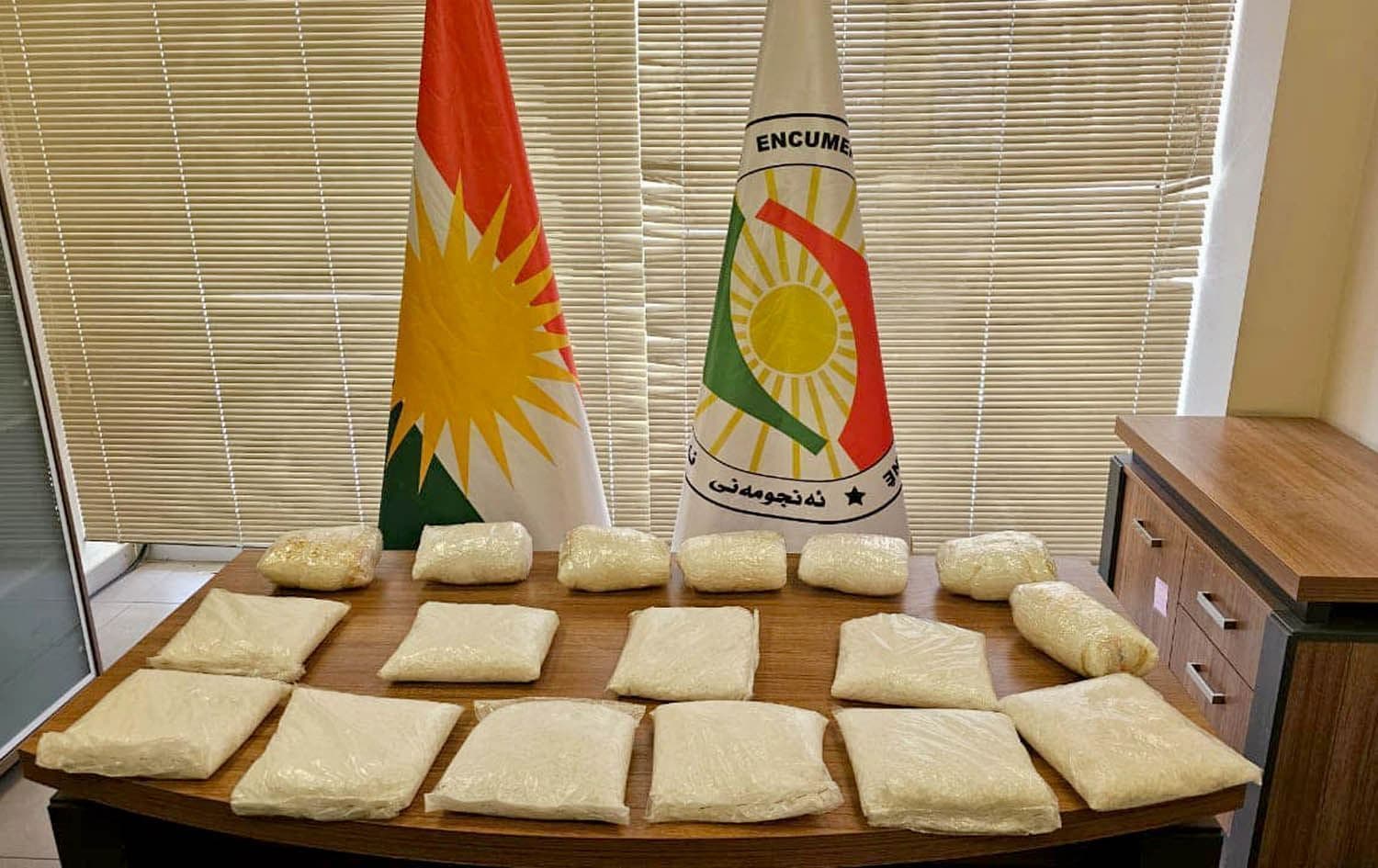
ERBIL, Kurdistan Region - The Kurdistan Region’s security agency announced on Wednesday that its anti-narcotics directorate seized more than 24 kilograms of drugs and arrested three suspected traffickers during the month of January.
“The General Directorate of Anti-Narcotics arrested three suspects involved in local and international drug trafficking operations and seized 24 kilograms of narcotics, including crystal methamphetamine and 11 kilograms of hashish, during three separate raids in January,” the Kurdish Security Agency (KRSA) said in a statement.
The statement added that the suspects were attempting to transfer the narcotics to European countries.
Drug trafficking and drug use have risen sharply in the Kurdistan Region and across Iraq since the fall of former Iraqi dictator Saddam Hussein in 2003. Regional officials have repeatedly warned of the growing spread of narcotics and their damaging social impact.
Of the nearly 6,000 prisoners currently held in the Kurdistan Region, more than 1,500 are incarcerated on drug-related charges, accounting for roughly one-quarter of the total prison population. More than 800 of those inmates are convicted drug dealers or traffickers, according to data obtained by Rudaw from government sources.
The Kurdistan Region and Iraq - particularly areas along their borders with Iran, Turkey, and Syria - are considered major transit routes for illicit drugs destined for European markets.
In October 2023, Kurdistan Region Prime Minister Masrour Barzani said the government was intensifying efforts to combat drug trafficking, urging greater local and international cooperation to address what he described as an “endemic” problem.
In July 2024, a study published by the United Nations Office on Drugs and Crime (UNODC) Regional Office reported that Iraq, including the Kurdistan Region, has experienced a “sharp increase in the trafficking and use of Captagon over the past five years.”