


SULAIMANI, Kurdistan Region – Turmoil in Iraq and Syria, ongoing war with the Islamic State and growing authoritarianism in Turkey have Kurds across the region calling for increased autonomy and reform, according to an expert panel at the Third Annual Forum of the American University of Iraq, Sulaimani.
In a Thursday afternoon panel titled “Emerging Kurdish Dynamics; Regional Implications Turmoil,” journalists, experts and political leaders warned of growing pains and sectarian divides that must be overcome in order to make the Kurdish dream of independence a reality.
“In the beginning of the 21st century, all of humanity, and this region especially, is looking for the freedom of democracy,” said Syrian Kurdish leader Saleh Muslim, co-chair of the Democratic Union Party (PYD), in his opening remarks.
He added that in Rojava, or Syrian Kurdistan, local leadership had no choice but to push for self-governance following the total breakdown of Syrian state institutions and the encroachment of ISIS.
“We established a model in Rojava which is a self-democratic model. We were forced to do it. We had to look out for the rights of our people,” Muslim said. “It should be a model for Syria, and it could be a model for all the Middle East.”
He also said Rojava’s use of female fighters and treatment of women are models of equality the whole region might emulate.
“The women were fighting, the women were beating ISIS,” he said.
Kamaran Qaradaghi, the former chief of staff for former Iraqi President Jalal Talabani, cautioned sectarian divisions could derail a future Kurdish state, and encouraged Kurds to unite behind more than just a common enemy like ISIS.
“If we assume Daesh [an Arabic acronym for ISIS] will be defeated, what afterwards? We only deal with issues when a crisis appears,” he said. “We need a different kind of approach to the future, we need a clear vision.”
Though pessimistic, Qaradaghi praised the Kurdish war effort against ISIS: “The fight against Daesh proves there is a belief among the Kurdish people to defend the country, to defend our lands. [The Peshmerga] are fighting, they are standing firm to defend Kurdistan.”
He added that following a resolution of the ISIS crisis there would be a need for Kurds to “improve relations between Kurds in all parts of Kurdistan.”
“Kurdish parties should respect other parties and they should not interfere in the affairs of other Kurdish parties in other parts of Kurdistan,” Qaradaghi concluded.
The final official speaker in the segment was Amberin Zaman, a Turkish journalist with The Economist, who said the latest political developments in Turkey—which possesses the largest Kurdish population in the region—could soon bring to a head the issue of Kurdish independence.
According to Zaman, the Kurdish-led Peoples' Democratic Party (HDP) in Turkey will seek to form its own parliament for Turkey’s Kurdish region if it is once again denied seats in the central government’s parliament.
She added the HDP has grown strong in recent years because more than just being a Kurdish party, it has drawn the support of many Turks frustrated with the increasingly authoritarian policies of Turkish President Recep Tayyip Erdoğan.
“The Kurds hold the keys to the future of Turkish democracy,” she said, adding that Turkish Kurds were being increasingly drawn into their brethren’s battles against ISIS in neighboring Syria and Iraq.
“There are Kurdish mothers whose sons are dying beyond the Turkish borders fighting for the Kurds,” she said.
Zaman, a self-identified Turk, concluded by saying “beiji Kurdistan,” Kurdish for “long live Kurdistan.” The crowd erupted in whistles and cheers.
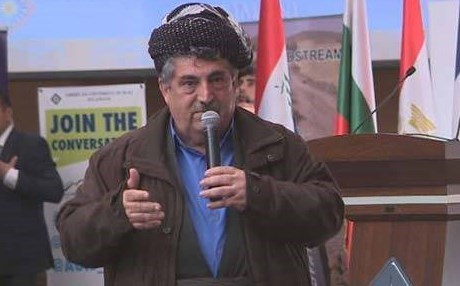
At the end of the presentation, veteran Peshmerga leader Muhammad Haji Mahmoud— a famed local hero known affectionately as Kaka Hama who recently lost a son to an ISIS sniper—rose from the audience to make a statement.
As he stood with a microphone wearing traditional cilî Kurdî and a large head wrap, the crowd rose to its feet and cheered wildly in support.
“We need to get together and find a new formula, a new equation. Federalism might be the only successful method,” he said, drawing more cheers.
“Why does Baghdad still send salaries to Mosul every month? The Kurdish people are defending Iraq along 1500 kilometers instead of the Arabs… and for 40 days the Peshmerga have gone without pay,” Kaka Hama continued. “We as a Kurdish nation have been shedding our blood every day and they send salaries by plane to Mosul.”
“I believe Iraq cannot continue to exist as it is,” he finished as the audience roared.
In a Thursday afternoon panel titled “Emerging Kurdish Dynamics; Regional Implications Turmoil,” journalists, experts and political leaders warned of growing pains and sectarian divides that must be overcome in order to make the Kurdish dream of independence a reality.
“In the beginning of the 21st century, all of humanity, and this region especially, is looking for the freedom of democracy,” said Syrian Kurdish leader Saleh Muslim, co-chair of the Democratic Union Party (PYD), in his opening remarks.
He added that in Rojava, or Syrian Kurdistan, local leadership had no choice but to push for self-governance following the total breakdown of Syrian state institutions and the encroachment of ISIS.
“We established a model in Rojava which is a self-democratic model. We were forced to do it. We had to look out for the rights of our people,” Muslim said. “It should be a model for Syria, and it could be a model for all the Middle East.”
He also said Rojava’s use of female fighters and treatment of women are models of equality the whole region might emulate.
“The women were fighting, the women were beating ISIS,” he said.
Kamaran Qaradaghi, the former chief of staff for former Iraqi President Jalal Talabani, cautioned sectarian divisions could derail a future Kurdish state, and encouraged Kurds to unite behind more than just a common enemy like ISIS.
“If we assume Daesh [an Arabic acronym for ISIS] will be defeated, what afterwards? We only deal with issues when a crisis appears,” he said. “We need a different kind of approach to the future, we need a clear vision.”
Though pessimistic, Qaradaghi praised the Kurdish war effort against ISIS: “The fight against Daesh proves there is a belief among the Kurdish people to defend the country, to defend our lands. [The Peshmerga] are fighting, they are standing firm to defend Kurdistan.”
He added that following a resolution of the ISIS crisis there would be a need for Kurds to “improve relations between Kurds in all parts of Kurdistan.”
“Kurdish parties should respect other parties and they should not interfere in the affairs of other Kurdish parties in other parts of Kurdistan,” Qaradaghi concluded.
The final official speaker in the segment was Amberin Zaman, a Turkish journalist with The Economist, who said the latest political developments in Turkey—which possesses the largest Kurdish population in the region—could soon bring to a head the issue of Kurdish independence.
According to Zaman, the Kurdish-led Peoples' Democratic Party (HDP) in Turkey will seek to form its own parliament for Turkey’s Kurdish region if it is once again denied seats in the central government’s parliament.
She added the HDP has grown strong in recent years because more than just being a Kurdish party, it has drawn the support of many Turks frustrated with the increasingly authoritarian policies of Turkish President Recep Tayyip Erdoğan.
“The Kurds hold the keys to the future of Turkish democracy,” she said, adding that Turkish Kurds were being increasingly drawn into their brethren’s battles against ISIS in neighboring Syria and Iraq.
“There are Kurdish mothers whose sons are dying beyond the Turkish borders fighting for the Kurds,” she said.
Zaman, a self-identified Turk, concluded by saying “beiji Kurdistan,” Kurdish for “long live Kurdistan.” The crowd erupted in whistles and cheers.
At the end of the presentation, veteran Peshmerga leader Muhammad Haji Mahmoud— a famed local hero known affectionately as Kaka Hama who recently lost a son to an ISIS sniper—rose from the audience to make a statement.
As he stood with a microphone wearing traditional cilî Kurdî and a large head wrap, the crowd rose to its feet and cheered wildly in support.
“We need to get together and find a new formula, a new equation. Federalism might be the only successful method,” he said, drawing more cheers.
“Why does Baghdad still send salaries to Mosul every month? The Kurdish people are defending Iraq along 1500 kilometers instead of the Arabs… and for 40 days the Peshmerga have gone without pay,” Kaka Hama continued. “We as a Kurdish nation have been shedding our blood every day and they send salaries by plane to Mosul.”
“I believe Iraq cannot continue to exist as it is,” he finished as the audience roared.
Comments
Rudaw moderates all comments submitted on our website. We welcome comments which are relevant to the article and encourage further discussion about the issues that matter to you. We also welcome constructive criticism about Rudaw.
To be approved for publication, however, your comments must meet our community guidelines.
We will not tolerate the following: profanity, threats, personal attacks, vulgarity, abuse (such as sexism, racism, homophobia or xenophobia), or commercial or personal promotion.
Comments that do not meet our guidelines will be rejected. Comments are not edited – they are either approved or rejected.
Post a comment