


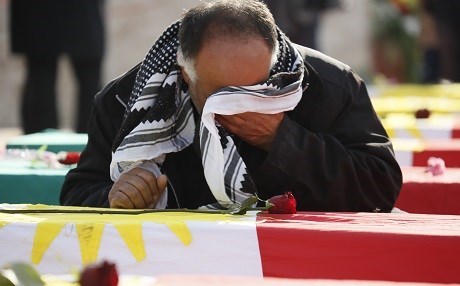
ERBIL, Kurdistan Region – The mentality that led to the genocidal Anfal campaign against Kurds still exists in Iraq, warned the PUK.
“Today we are commemorating the tens of thousands of Anfal victims whose wounds can never be healed in our conscience,” said the Patriotic Union of Kurdistan (PUK) in a statement on the eve of Anfal memorial day.
“The Anfal, chemical attack victims, martyrs and other plights of our nation must become the factor to resolve the problems and reorganizing all the sides, so as to be better prepared to face threats,” the party added.
“The mentality which justified committing the Anfal atrocities still exists,” the PUK warned.
“The environment and grounds for the reoccurrence of genocide is still prevalent as was the case in the middle of 2014 when the barbaric ISIS committed the crime of massacring and cleansing Yezidi Kurds in Shingal,” the statement added.
Anfal, the eighth sura in the Quran, was the codename used by the Baathist regime for the slaughter.
The PUK said the regime’s intention in the Anfal campaign was not only to cause human losses, but also destroy infrastructure by “demolishing five thousand villages and destroying people’s livelihoods.”
Saddam Hussein also wanted to put an end to “the freedom revolution of the Kurdistan nation” through its displacement of Kurds, mass killings, and Arabization.
None of these plots was capable of “undermining the strong will of the Kurdistan nation,” the PUK declared, despite the major damages incurred on the nation.
Marking the 30th anniversary, the PUK criticized authorities in Baghdad for not bringing to court those responsible for Anfal, despite the fact that “the Supreme Iraqi Criminal Tribunal recognized the atrocity as genocide and war crimes against humanity.”
The party also called for the victims to be “compensated morally and materially.”
It stressed that the Iraqi government “must be committed to executing its responsibility with respect to the Anfal atrocity from its legal, administrative and constitutional perspective.”
“Today we are commemorating the tens of thousands of Anfal victims whose wounds can never be healed in our conscience,” said the Patriotic Union of Kurdistan (PUK) in a statement on the eve of Anfal memorial day.
“The Anfal, chemical attack victims, martyrs and other plights of our nation must become the factor to resolve the problems and reorganizing all the sides, so as to be better prepared to face threats,” the party added.
April 14 marks Anfal memorial day in the Kurdistan Region, commemorating the deaths of 182,000 Kurds who were systematically executed by Saddam Hussein's Baath regime. The Anfal campaign took place over eight phases between 1986 and 1989, culminating in the closing weeks of the Iran-Iraq war.
“The mentality which justified committing the Anfal atrocities still exists,” the PUK warned.
“The environment and grounds for the reoccurrence of genocide is still prevalent as was the case in the middle of 2014 when the barbaric ISIS committed the crime of massacring and cleansing Yezidi Kurds in Shingal,” the statement added.
Anfal, the eighth sura in the Quran, was the codename used by the Baathist regime for the slaughter.
The PUK said the regime’s intention in the Anfal campaign was not only to cause human losses, but also destroy infrastructure by “demolishing five thousand villages and destroying people’s livelihoods.”
Saddam Hussein also wanted to put an end to “the freedom revolution of the Kurdistan nation” through its displacement of Kurds, mass killings, and Arabization.
None of these plots was capable of “undermining the strong will of the Kurdistan nation,” the PUK declared, despite the major damages incurred on the nation.
Marking the 30th anniversary, the PUK criticized authorities in Baghdad for not bringing to court those responsible for Anfal, despite the fact that “the Supreme Iraqi Criminal Tribunal recognized the atrocity as genocide and war crimes against humanity.”
The party also called for the victims to be “compensated morally and materially.”
It stressed that the Iraqi government “must be committed to executing its responsibility with respect to the Anfal atrocity from its legal, administrative and constitutional perspective.”
Comments
Rudaw moderates all comments submitted on our website. We welcome comments which are relevant to the article and encourage further discussion about the issues that matter to you. We also welcome constructive criticism about Rudaw.
To be approved for publication, however, your comments must meet our community guidelines.
We will not tolerate the following: profanity, threats, personal attacks, vulgarity, abuse (such as sexism, racism, homophobia or xenophobia), or commercial or personal promotion.
Comments that do not meet our guidelines will be rejected. Comments are not edited – they are either approved or rejected.
Post a comment