



ERBIL, Kurdistan Region – A Swedish journalist, intrigued by a Kurdish woman wearing the hijab in Sweden, visited the region several times, writing one book about her and another about Kurdistan.
Shayma Jalal, 23, is from the Kurdish city of Sulaimani and has been living in Sweden with her family for nine years. She wears the Islamic traditional headscarf, leading a Swedish journalist to spend four years inquiring into her life.
The story begins with a picture of Shayma taken by Swedish journalist Sten Lundberg at a nursing home where she did a summer internship program helping out the elderly with her IT skills.
Sten contacted Shayma through Facebook after seeing the picture.
“I was wearing a veil in the picture which drew Sten’s attention compelling him to know who I am and why I appear the way I do in the photograph. The picture prompted him to find out about the way I live. He asked me a series of questions about the photograph,” said Shayma.
He was curious about her and Kurdish culture.
“I am a Kurd from the Kurdistan Region. I wear this veil because I am a Muslim – we therefore should wear it,” Shayma replied to Sten’s queries.
“To me, Kurdistan is just like an old man. This is how it appears to me. It appears to me as a dark place whose people I don’t know. I want to know more about the place you are talking about,” reads Sten’s reply to her.
Thus Sten began a search to learn more about Kurdistan, beginning with meeting Shayma’s family.
“I invited him to visit out family to know more about our life and culture,” Shayma said.
But this visit did not satisfy his curiosity about the Kurds. He finally arranged to visit the Kurdistan Region with Shayma to get better acquainted with Kurdish culture.
They visited Kurdistan together in June 2014.
Together, with a Kurdish women-affairs activist from Sulaimani named Tavan Ako, they visited a number of places in Kurdistan, including a women Peshmerga force which is run by the 70th Unit of the Peshmerga.
Sten and Shayma stayed in the Kurdistan Region for two weeks.
Sten returned to Kurdistan four more times, taking photographs which he published with a book he collaborated on with Tavan Ako, titled Att riskera allt: feminism i Kurdistan (Risking Everything: Feminism in Kurdistan).
The book, published in 2016, addresses Kurds and the role of women in the Kurdistan Region. According to Shayma, the preliminary parts of the book talk about her photograph and her family.
Sten also put on an exhibition of his photographs, selling them and sending the money to support the refugees and internally displaced people the Kurdistan Region is hosting.
Sten wrote a second book focusing on Shayma’s life, titled Håller jag på att bli svensk, eller ? (Am I being Swedish, or ?).
“In the book, he asks why I wear the veil, why I worship an invisible God, how I became a Swedish citizen, how my parents are with me, why I have not gotten married yet, and what people think of me,” Shayma detailed.
“I wanted to know why she was wearing the veil and what it meant,” Sten told Rudaw about his book and the photograph that drew him to his journey of discovery.
The picture that drew Sten’s attention in the first place is now the cover of the book. “Sten talks about my religion and culture in the book. He also talks about my disabled brother. The book also covers the story of our journey to Sweden and how we became Swedish citizens,” Shayma said.
Shayma is hoping to work for women in the future. “Sweden has been very rewarding for me. I would have gotten married by now if I were in Kurdistan,” she said.
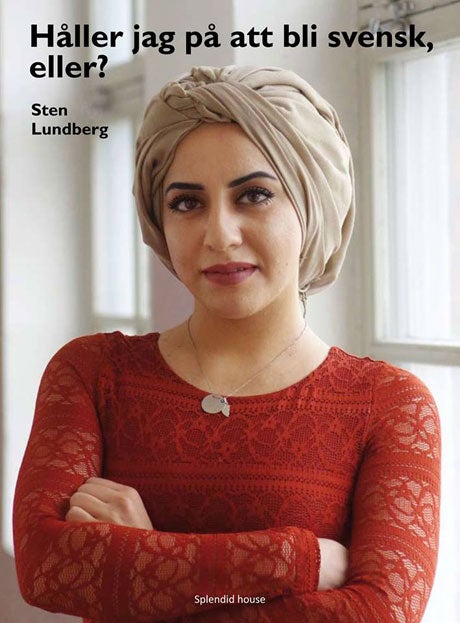
Shayma Jalal, 23, is from the Kurdish city of Sulaimani and has been living in Sweden with her family for nine years. She wears the Islamic traditional headscarf, leading a Swedish journalist to spend four years inquiring into her life.
The story begins with a picture of Shayma taken by Swedish journalist Sten Lundberg at a nursing home where she did a summer internship program helping out the elderly with her IT skills.
Sten contacted Shayma through Facebook after seeing the picture.
“I was wearing a veil in the picture which drew Sten’s attention compelling him to know who I am and why I appear the way I do in the photograph. The picture prompted him to find out about the way I live. He asked me a series of questions about the photograph,” said Shayma.
He was curious about her and Kurdish culture.
“I am a Kurd from the Kurdistan Region. I wear this veil because I am a Muslim – we therefore should wear it,” Shayma replied to Sten’s queries.
“To me, Kurdistan is just like an old man. This is how it appears to me. It appears to me as a dark place whose people I don’t know. I want to know more about the place you are talking about,” reads Sten’s reply to her.
Thus Sten began a search to learn more about Kurdistan, beginning with meeting Shayma’s family.
“I invited him to visit out family to know more about our life and culture,” Shayma said.
But this visit did not satisfy his curiosity about the Kurds. He finally arranged to visit the Kurdistan Region with Shayma to get better acquainted with Kurdish culture.
They visited Kurdistan together in June 2014.
Together, with a Kurdish women-affairs activist from Sulaimani named Tavan Ako, they visited a number of places in Kurdistan, including a women Peshmerga force which is run by the 70th Unit of the Peshmerga.
Sten and Shayma stayed in the Kurdistan Region for two weeks.
Sten returned to Kurdistan four more times, taking photographs which he published with a book he collaborated on with Tavan Ako, titled Att riskera allt: feminism i Kurdistan (Risking Everything: Feminism in Kurdistan).
The book, published in 2016, addresses Kurds and the role of women in the Kurdistan Region. According to Shayma, the preliminary parts of the book talk about her photograph and her family.
Sten also put on an exhibition of his photographs, selling them and sending the money to support the refugees and internally displaced people the Kurdistan Region is hosting.
Sten wrote a second book focusing on Shayma’s life, titled Håller jag på att bli svensk, eller ? (Am I being Swedish, or ?).
“In the book, he asks why I wear the veil, why I worship an invisible God, how I became a Swedish citizen, how my parents are with me, why I have not gotten married yet, and what people think of me,” Shayma detailed.
“I wanted to know why she was wearing the veil and what it meant,” Sten told Rudaw about his book and the photograph that drew him to his journey of discovery.
The picture that drew Sten’s attention in the first place is now the cover of the book. “Sten talks about my religion and culture in the book. He also talks about my disabled brother. The book also covers the story of our journey to Sweden and how we became Swedish citizens,” Shayma said.
Shayma is hoping to work for women in the future. “Sweden has been very rewarding for me. I would have gotten married by now if I were in Kurdistan,” she said.
Comments
Rudaw moderates all comments submitted on our website. We welcome comments which are relevant to the article and encourage further discussion about the issues that matter to you. We also welcome constructive criticism about Rudaw.
To be approved for publication, however, your comments must meet our community guidelines.
We will not tolerate the following: profanity, threats, personal attacks, vulgarity, abuse (such as sexism, racism, homophobia or xenophobia), or commercial or personal promotion.
Comments that do not meet our guidelines will be rejected. Comments are not edited – they are either approved or rejected.
Post a comment