


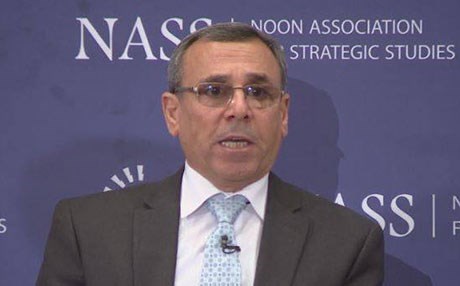
ERBIL, Kurdistan Region – Peshmerga forces should be based in Tal Afar to prevent “sectarian tensions” once ISIS has been driven out of the predominantly Turkmen town of Tal Afar north of Mosul, an Iraqi MP suggests.
Nabil Harbo, a Turkmen himself, also said that another possible way to avoid possible sectarian or ethnic clashes is to divide the town into two zones, one for Sunni Turkmen and the other for Shiite Turkmen.
“Tal Afar should be divided into two zones between the Sunni and Shiite Turkmen,” Harbo said Monday at a panel titled “The Future of Mosul,” which was organized by the Rudaw Research Center.
“There was also a similar proposal in 2007 and 2008 to place concrete barriers between Shiite and Sunni Turkmen neighborhoods and each side administers itself independently, militarily and socially,” he explained.
Harbo believes that after ISIS is pushed out of Tal Afar there is great likelihood of sectarian conflict there. He said that stationing Peshmerga forces there could guarantee security.
“We want an international protection force to be based in Tal Afar after its liberation. This move is to find a proper solution for the town,” he said. “If that idea does not work, then we want the Peshmerga to be stationed in the town in order to prevent one sectarian force from attacking another.”
He also warned of revenge and destruction at the hands of Shiite Hashd al-Shaabi forces, against the town’s population, who are now just a few kilometers away.
“We are in the midst of the liberation of Nineveh province and in this context Tal Afar is going to face several challenges. One of them is the central government’s insistence that Hashd al-Shaabi and federal force have to liberate Tal Afar,” he said.
“This means Tal Afar will suffer revenge by the conflicting parties, mass killings, destruction of houses, temples and human rights violations,” he warned, adding that this would ultimately lead to “long-term hostility” between the rival parties.
Earlier this month, Iraqi Prime Minister Haider al-Abadi assured a delegation of tribal leaders from the Turkmen town that Hashd al-Shaabi forces would not enter the town. He said official Iraqi forces will take that responsibility, according to an Iraqi MP who attended the meeting.
The Shiite militia launched an offensive to the west of Mosul earlier this month with the aim of liberating areas west of the city from ISIS, in particular the town of Tal Afar.
Habro also warned that any conflict in Tal Afar “will lead to instability, not in Nineveh province alone, but the whole of Iraq, as it might become the center of sectarian and ethnic conflicts.”
Another challenge that the population of Tal Afar is going to face is a possible return of the Sunni Turkmen who had joined ISIS and committed crimes against Yezidis and Christian residents of Mosul, he said.
The third challenge that the Turkmen are afraid of is that “the city may be turned into a battlefield by the regional powers, including Turkey and Iran, especially if the Kurdistan Workers Party (PKK) and Hashd al-Shaabi enter the town.”
That way, he warned, “the Turks could justify their military interventions in Tal Afar.”
He further warned that “the central government of Baghdad will most probably connect Tal Afar directly to Baghdad, separating it from Mosul, as it had initially planned long before the town fell to ISIS.”
Nabil Harbo, a Turkmen himself, also said that another possible way to avoid possible sectarian or ethnic clashes is to divide the town into two zones, one for Sunni Turkmen and the other for Shiite Turkmen.
“Tal Afar should be divided into two zones between the Sunni and Shiite Turkmen,” Harbo said Monday at a panel titled “The Future of Mosul,” which was organized by the Rudaw Research Center.
“There was also a similar proposal in 2007 and 2008 to place concrete barriers between Shiite and Sunni Turkmen neighborhoods and each side administers itself independently, militarily and socially,” he explained.
Harbo believes that after ISIS is pushed out of Tal Afar there is great likelihood of sectarian conflict there. He said that stationing Peshmerga forces there could guarantee security.
“We want an international protection force to be based in Tal Afar after its liberation. This move is to find a proper solution for the town,” he said. “If that idea does not work, then we want the Peshmerga to be stationed in the town in order to prevent one sectarian force from attacking another.”
He also warned of revenge and destruction at the hands of Shiite Hashd al-Shaabi forces, against the town’s population, who are now just a few kilometers away.
“We are in the midst of the liberation of Nineveh province and in this context Tal Afar is going to face several challenges. One of them is the central government’s insistence that Hashd al-Shaabi and federal force have to liberate Tal Afar,” he said.
“This means Tal Afar will suffer revenge by the conflicting parties, mass killings, destruction of houses, temples and human rights violations,” he warned, adding that this would ultimately lead to “long-term hostility” between the rival parties.
Earlier this month, Iraqi Prime Minister Haider al-Abadi assured a delegation of tribal leaders from the Turkmen town that Hashd al-Shaabi forces would not enter the town. He said official Iraqi forces will take that responsibility, according to an Iraqi MP who attended the meeting.
The Shiite militia launched an offensive to the west of Mosul earlier this month with the aim of liberating areas west of the city from ISIS, in particular the town of Tal Afar.
Habro also warned that any conflict in Tal Afar “will lead to instability, not in Nineveh province alone, but the whole of Iraq, as it might become the center of sectarian and ethnic conflicts.”
Another challenge that the population of Tal Afar is going to face is a possible return of the Sunni Turkmen who had joined ISIS and committed crimes against Yezidis and Christian residents of Mosul, he said.
The third challenge that the Turkmen are afraid of is that “the city may be turned into a battlefield by the regional powers, including Turkey and Iran, especially if the Kurdistan Workers Party (PKK) and Hashd al-Shaabi enter the town.”
That way, he warned, “the Turks could justify their military interventions in Tal Afar.”
He further warned that “the central government of Baghdad will most probably connect Tal Afar directly to Baghdad, separating it from Mosul, as it had initially planned long before the town fell to ISIS.”
Comments
Rudaw moderates all comments submitted on our website. We welcome comments which are relevant to the article and encourage further discussion about the issues that matter to you. We also welcome constructive criticism about Rudaw.
To be approved for publication, however, your comments must meet our community guidelines.
We will not tolerate the following: profanity, threats, personal attacks, vulgarity, abuse (such as sexism, racism, homophobia or xenophobia), or commercial or personal promotion.
Comments that do not meet our guidelines will be rejected. Comments are not edited – they are either approved or rejected.
Post a comment