


Error occured during this request! Please try again later.
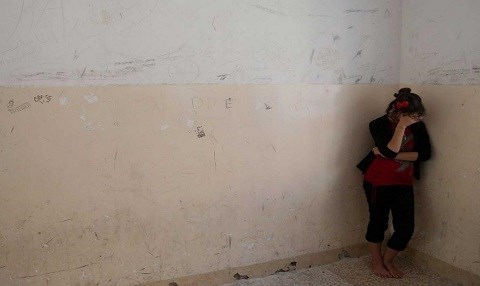
A Kurdish-language Protocol which aims to bring accountability for violent sex crimes perpetrated in the region was introduced by Britain’s Consulate-General in Erbil on Tuesday.
Speaking with Kurdish representatives in Erbil’s Rotana Hotel, the Consulate-General of the United Kingdom, Angus McKee, outlined the significance of the new Kurdish version of the International Protocol on the Documentation and Investigation of Sexual Violence in Conflict.
The Protocol was launched with the cooperation of the Kurdistan Region (KRG) and the High Council for Women’s Affairs.
The main aim of the Protocol is to bring accountability for crimes of sexual violence perpetrated in war zones by achieving three priorities: challenging harmful attitudes to sexual violence and working to end the stigma experienced by survivors, delivering justice for survivors as well as better access to healthcare and psycho-social support, and improving how security forces around the world respond to and combat these crimes.
The UK, McKee said, supports Iraq’s National Action Plan for women, police and security, by providing it with aid through its own Conflict, Security and Stability Fund. Additionally the UK has provided $100 million worth of humanitarian aid aimed at helping displaced persons in Iraq and training Kurdish security forces to effectively deal with acts of sexual violence.
McKee underscored the main purpose of the Protocol, which is “to promote accountability for crimes of sexual violence under international law. It does this by setting out basic principles of documenting crimes,” he explained.
“It is not legally binding but it is a practical tool to support people on the ground in areas of conflict through the documentation and investigation of crimes of rape and other sexual violence,” he added.
Giving greater capacity to those who work in the justice, law, humanitarian, medical, and security professions to adequately document such crimes will eventually see prosecutors amassing the necessary evidence needed to bring justice to victims.
“In Bosnia this work contributed to the recent successful convictions and landmark judgments,” McKee explained.
The idea to launch a Kurdish version of the Protocol was sparked in November 2015 when UK Foreign Office Minister Baroness Joyce Anelay visited Erbil following a launch of the Arabic version in Baghdad.
During her visit to Erbil, Anelay met with displaced persons and government representatives, activists and human rights defenders. They explained to her that without a Kurdish version of the Protocol, they had communication issues which hindered their work.
Anelay recently met Nadia Murad, a 21-year-old Yezidi girl who was raped and tortured by Islamic State (ISIS) militants and is now leading an international campaign to bring justice to survivors. Anelay said that she believes, “the International Protocol can help both those who managed to flee and those still trapped in these dire circumstances.”
McKee oversaw a panel of Kurds who spoke of the significance of the inception of the Protocol’s Kurdish version.
Having the Protocol in their own language will increase capacity building mechanisms for the Kurds and, as McKee emphasized, “It will help us defeat Daesh by ensuring their crimes against humanity are recorded and ensuring those responsible for crimes of sexual violence, war crimes, and crimes against humanity are finally held accountable.”
“The UK stands shoulder-to-shoulder with people of Iraq, Kurdistan Region. We are essential partners together in the fight against Daesh [ISIS]. We work together to support the millions of displaced; we deplore the horrific crimes against humanity committed by Daesh. We must defeat Daesh and we must support survivors of its crimes,” McKee declared. “Only if we ensure that there is no impunity for the perpetrators will it be possible for survivors to heal.”
Paul Iddon is a Rudaw reporter based in Erbil, Kurdistan Region.
Speaking with Kurdish representatives in Erbil’s Rotana Hotel, the Consulate-General of the United Kingdom, Angus McKee, outlined the significance of the new Kurdish version of the International Protocol on the Documentation and Investigation of Sexual Violence in Conflict.
The Protocol was launched with the cooperation of the Kurdistan Region (KRG) and the High Council for Women’s Affairs.
The main aim of the Protocol is to bring accountability for crimes of sexual violence perpetrated in war zones by achieving three priorities: challenging harmful attitudes to sexual violence and working to end the stigma experienced by survivors, delivering justice for survivors as well as better access to healthcare and psycho-social support, and improving how security forces around the world respond to and combat these crimes.
The UK, McKee said, supports Iraq’s National Action Plan for women, police and security, by providing it with aid through its own Conflict, Security and Stability Fund. Additionally the UK has provided $100 million worth of humanitarian aid aimed at helping displaced persons in Iraq and training Kurdish security forces to effectively deal with acts of sexual violence.
McKee underscored the main purpose of the Protocol, which is “to promote accountability for crimes of sexual violence under international law. It does this by setting out basic principles of documenting crimes,” he explained.
“It is not legally binding but it is a practical tool to support people on the ground in areas of conflict through the documentation and investigation of crimes of rape and other sexual violence,” he added.
Giving greater capacity to those who work in the justice, law, humanitarian, medical, and security professions to adequately document such crimes will eventually see prosecutors amassing the necessary evidence needed to bring justice to victims.
“In Bosnia this work contributed to the recent successful convictions and landmark judgments,” McKee explained.
The idea to launch a Kurdish version of the Protocol was sparked in November 2015 when UK Foreign Office Minister Baroness Joyce Anelay visited Erbil following a launch of the Arabic version in Baghdad.
During her visit to Erbil, Anelay met with displaced persons and government representatives, activists and human rights defenders. They explained to her that without a Kurdish version of the Protocol, they had communication issues which hindered their work.
Anelay recently met Nadia Murad, a 21-year-old Yezidi girl who was raped and tortured by Islamic State (ISIS) militants and is now leading an international campaign to bring justice to survivors. Anelay said that she believes, “the International Protocol can help both those who managed to flee and those still trapped in these dire circumstances.”
McKee oversaw a panel of Kurds who spoke of the significance of the inception of the Protocol’s Kurdish version.
Having the Protocol in their own language will increase capacity building mechanisms for the Kurds and, as McKee emphasized, “It will help us defeat Daesh by ensuring their crimes against humanity are recorded and ensuring those responsible for crimes of sexual violence, war crimes, and crimes against humanity are finally held accountable.”
“The UK stands shoulder-to-shoulder with people of Iraq, Kurdistan Region. We are essential partners together in the fight against Daesh [ISIS]. We work together to support the millions of displaced; we deplore the horrific crimes against humanity committed by Daesh. We must defeat Daesh and we must support survivors of its crimes,” McKee declared. “Only if we ensure that there is no impunity for the perpetrators will it be possible for survivors to heal.”
Paul Iddon is a Rudaw reporter based in Erbil, Kurdistan Region.
Comments
Rudaw moderates all comments submitted on our website. We welcome comments which are relevant to the article and encourage further discussion about the issues that matter to you. We also welcome constructive criticism about Rudaw.
To be approved for publication, however, your comments must meet our community guidelines.
We will not tolerate the following: profanity, threats, personal attacks, vulgarity, abuse (such as sexism, racism, homophobia or xenophobia), or commercial or personal promotion.
Comments that do not meet our guidelines will be rejected. Comments are not edited – they are either approved or rejected.
Post a comment