



Error occured during this request! Please try again later.
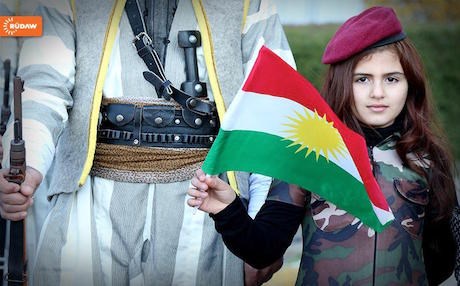
Support for the independence of Iraq Kurdistan has received a major shot in the arm with the publication of a strong editorial on 'Kurdistan’s right to secede' by the global and highly respected newspaper, The Economist.
The Economist, widely seen as essential reading for business and political leaders, argues in its current edition that since the fall of Mosul 'Kurdistan has crept towards de facto independence, with its capital in Erbil. While Islamic State’s maniacs are howling at the gates of Baghdad, a divorce cannot take place. But in due course separation would give the Kurds international protection from any violent Iraqi Arab attempt to reassert control. The Kurds want a country of their own. They have earned it.'
These articles bear the hallmarks of a writer with extensive experience and understanding of Kurdish politics. The editorial surveys the history of the Kurds, who 'have twice come close to fulfilling their dream, once after the first world war and the Ottoman empire’s collapse, when they were promised a state by the treaty of Sèvres, and again after the second world war, when for ten brief months the Kurdish republic of Mahabad rose up in what is now north-western Iran.'
The editorial concludes that the Kurdistan Region is Iraq's 'only fully functioning part. Since 1991, when the West began to protect it from Saddam Hussein, it has thrived. In due course, it deserves its place in the community of independent nations.'
Drawing inspiration from the principle, promoted by America’s President Woodrow Wilson a century ago, that nations should have the 'unmolested opportunity of autonomous development, it says that a 'country should be able to gain independence if it can stand on its own feet, has democratic credentials and respects its own minorities. To qualify, Iraq’s Kurds should confirm (again) in a vote that they want their own homeland. As well as being economically and democratically viable, the new state must be militarily defensible and disavow any intention to create a Greater Kurdistan by biting chunks off Turkey, Iran and Syria. It needs its neighbours’ endorsement. And it must settle terms with Iraq’s government, including where to draw its boundary.'
It also argues that 'a sustainable economy is within the Kurds’ grasp,' given increasing oil exports which could reach 800,000 barrels a day, worth $17 billion a year at today’s prices. As for internal politics, the Economist opines that 'Democracy is established, though still rough-edged. Iraqi Kurdistan has regular elections, a boisterous parliament, an array of political parties and a raucous media. Certainly its courts are weak, its leaders’ habits feudal, its journalists sometimes harassed and its human-rights record far from spotless. But it is more democratic than most of the region—and far safer than the rest of Iraq, even though the fanatics of Islamic State press against its long border. Suicide-bombings and atrocities of the sort committed by sectarian militias in Baghdad and elsewhere in Arab Iraq are mercifully rare.'
It concedes that the 'regional politics are trickier' because Turkey and Iran have long opposed to an independent Kurdistan carved out of Iraq. But Syria is 'hardly in a position to object to secession for Iraq’s Kurds,' and 'Iran has forged a pragmatic relationship with them.' It adds that KRG relations with Turkey 'have warmed remarkably' and given that the Kurds of Turkey 'seem genuinely to have forsaken their desire for a separate state, seeking autonomy instead' that Turkey might accept an independent Kurdistan.
It further argues that 'landlocked Iraqi Kurdistan will need access to markets for its oil, making it all the more vital that it is on decent terms with its neighbours, especially Turkey. Western countries should make plain that an independent Kurdistan will get no help if it stirs up secessionist Kurds across its border.'
It pulls no punches in assessing Arab Iraq: 'the longer they fail to govern their bit of the country the less right they have to stop the Kurds governing theirs,' but Iraqi Kurds know they must work with Baghdad and go through a difficult negotiation over oil. It also argues that eventual separation would give the Kurds 'international protection from any violent Iraqi Arab attempt to reassert control.'
This heavyweight advocacy of Kurdish nationhood follows hard on the heels of the historic report of the British parliament's foreign affairs committee which broke the taboo on the country's traditional preference for a One Iraq policy by arguing that Kurdish independence is a medium term possibility that should be accepted and respected by the great powers in certain conditions.
Iraq is being held together by the common threat of Daish. That will fade as Daish is isolated, and eventually defeated. Recreating Iraq is almost certainly impossible. Kurdish independence will be seen as both feasible and desirable by those who believe that it will be a decent model of moderation in the Middle East.
Comments
Rudaw moderates all comments submitted on our website. We welcome comments which are relevant to the article and encourage further discussion about the issues that matter to you. We also welcome constructive criticism about Rudaw.
To be approved for publication, however, your comments must meet our community guidelines.
We will not tolerate the following: profanity, threats, personal attacks, vulgarity, abuse (such as sexism, racism, homophobia or xenophobia), or commercial or personal promotion.
Comments that do not meet our guidelines will be rejected. Comments are not edited – they are either approved or rejected.
Post a comment