


Kurdistan

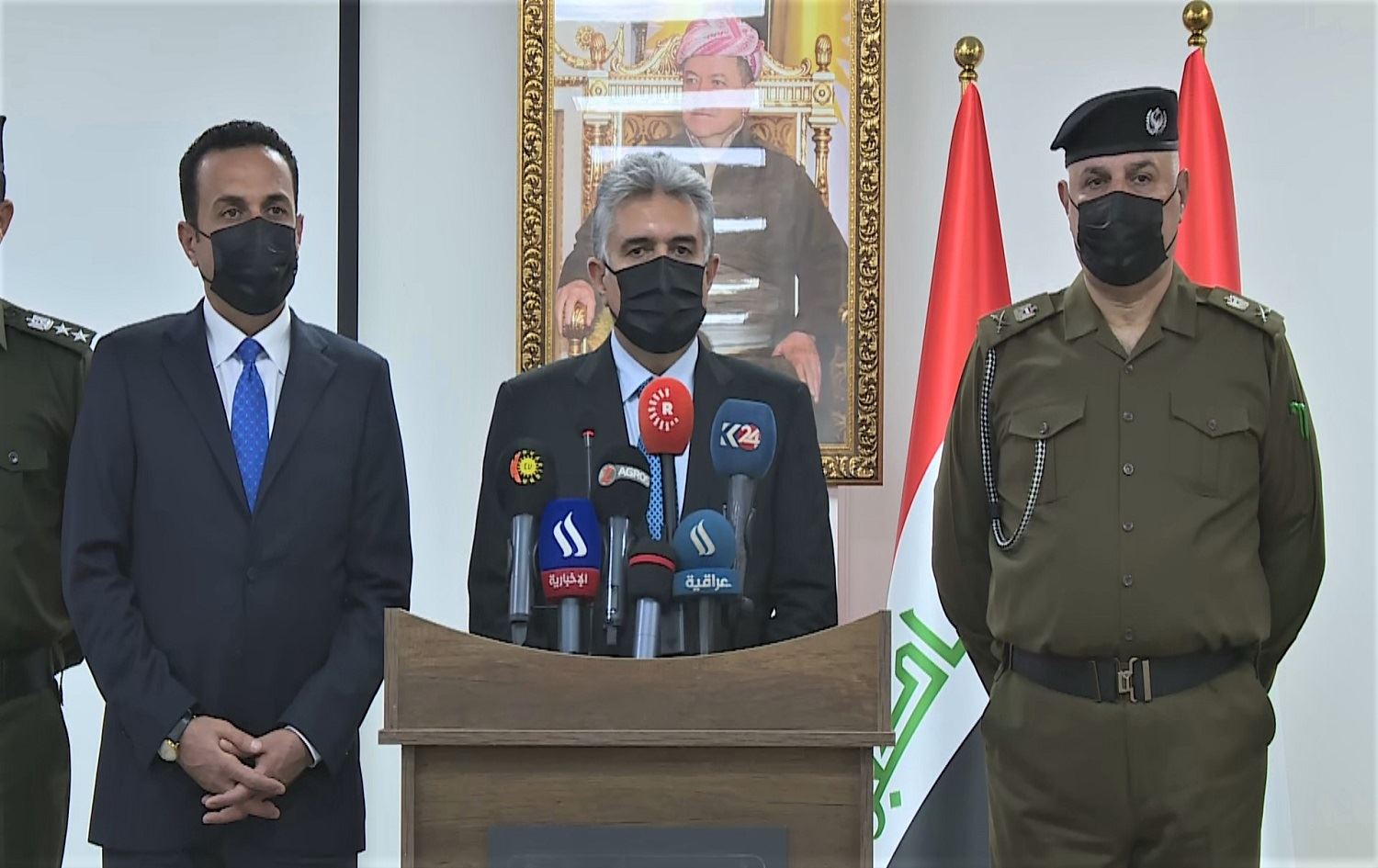
Kurdistan Region Minister of Interior Reber Ahmed (middle) in a press conference on April 20, 2021. Photo: screenshot / Rudaw
ERBIL, Kurdistan Region — Security gap between Kurdish and Iraqi forces have made it “easy” for groups to target the Kurdistan Region, the minister of interior said on Tuesday, less than a week after an attack took place in Erbil.
“Unfortunately the [security] gap that exists between Peshmerga forces and Iraqi forces has made it easy for terrorists and all the other groups that operate like terrorists to target the Kurdistan region, Peshmerga and Iraqi forces,” Reber Ahmed said during a press conference on Tuesday.
“We are in direct talks with relevant parties, especially Peshmerga and interior ministries with the federal government, there has been good development in talks but nothing has been implemented so far,” he added.
Ahmed added that a joint investigation board is formed with the federal government to “limit those movements so that the Kurdistan region no longer becomes the victim for the existing conflict in Iraq,” saying the perpetrators are not within the borders of the Kurdistan Region.
Iran’s most senior economic official in Iraq, Hassan Danaeifar, said on Monday that the US will still face attacks in Iraq, even if they “concentrate their troops more in the Kurdistan Region” claiming that Iraqi youth do not want foreign troops to be present in the country.
Rocket attacks widely blamed by pro-Iran militias take place frequently across Iraq. Although the Kurdistan Region is considered safer, it is still targeted – with two attacks on Erbil in recent months.
Erbil International Airport was hit by an explosives-laden drone on April 14. Rockets also hit Balad Air Base in Iraq's Salahaddin province on Sunday night, injuring two members of Iraq’s security forces.
Jabar Yawar, the Peshmerga ministry’s chief of staff, previously told Rudaw that “the threat of the groups that are not under the command of Iraqi forces and have breached the law” is serious.
“Unfortunately the [security] gap that exists between Peshmerga forces and Iraqi forces has made it easy for terrorists and all the other groups that operate like terrorists to target the Kurdistan region, Peshmerga and Iraqi forces,” Reber Ahmed said during a press conference on Tuesday.
“We are in direct talks with relevant parties, especially Peshmerga and interior ministries with the federal government, there has been good development in talks but nothing has been implemented so far,” he added.
Ahmed added that a joint investigation board is formed with the federal government to “limit those movements so that the Kurdistan region no longer becomes the victim for the existing conflict in Iraq,” saying the perpetrators are not within the borders of the Kurdistan Region.
Iran’s most senior economic official in Iraq, Hassan Danaeifar, said on Monday that the US will still face attacks in Iraq, even if they “concentrate their troops more in the Kurdistan Region” claiming that Iraqi youth do not want foreign troops to be present in the country.
Rocket attacks widely blamed by pro-Iran militias take place frequently across Iraq. Although the Kurdistan Region is considered safer, it is still targeted – with two attacks on Erbil in recent months.
Erbil International Airport was hit by an explosives-laden drone on April 14. Rockets also hit Balad Air Base in Iraq's Salahaddin province on Sunday night, injuring two members of Iraq’s security forces.
Jabar Yawar, the Peshmerga ministry’s chief of staff, previously told Rudaw that “the threat of the groups that are not under the command of Iraqi forces and have breached the law” is serious.


Comments
Rudaw moderates all comments submitted on our website. We welcome comments which are relevant to the article and encourage further discussion about the issues that matter to you. We also welcome constructive criticism about Rudaw.
To be approved for publication, however, your comments must meet our community guidelines.
We will not tolerate the following: profanity, threats, personal attacks, vulgarity, abuse (such as sexism, racism, homophobia or xenophobia), or commercial or personal promotion.
Comments that do not meet our guidelines will be rejected. Comments are not edited – they are either approved or rejected.
Post a comment