


Kurdistan

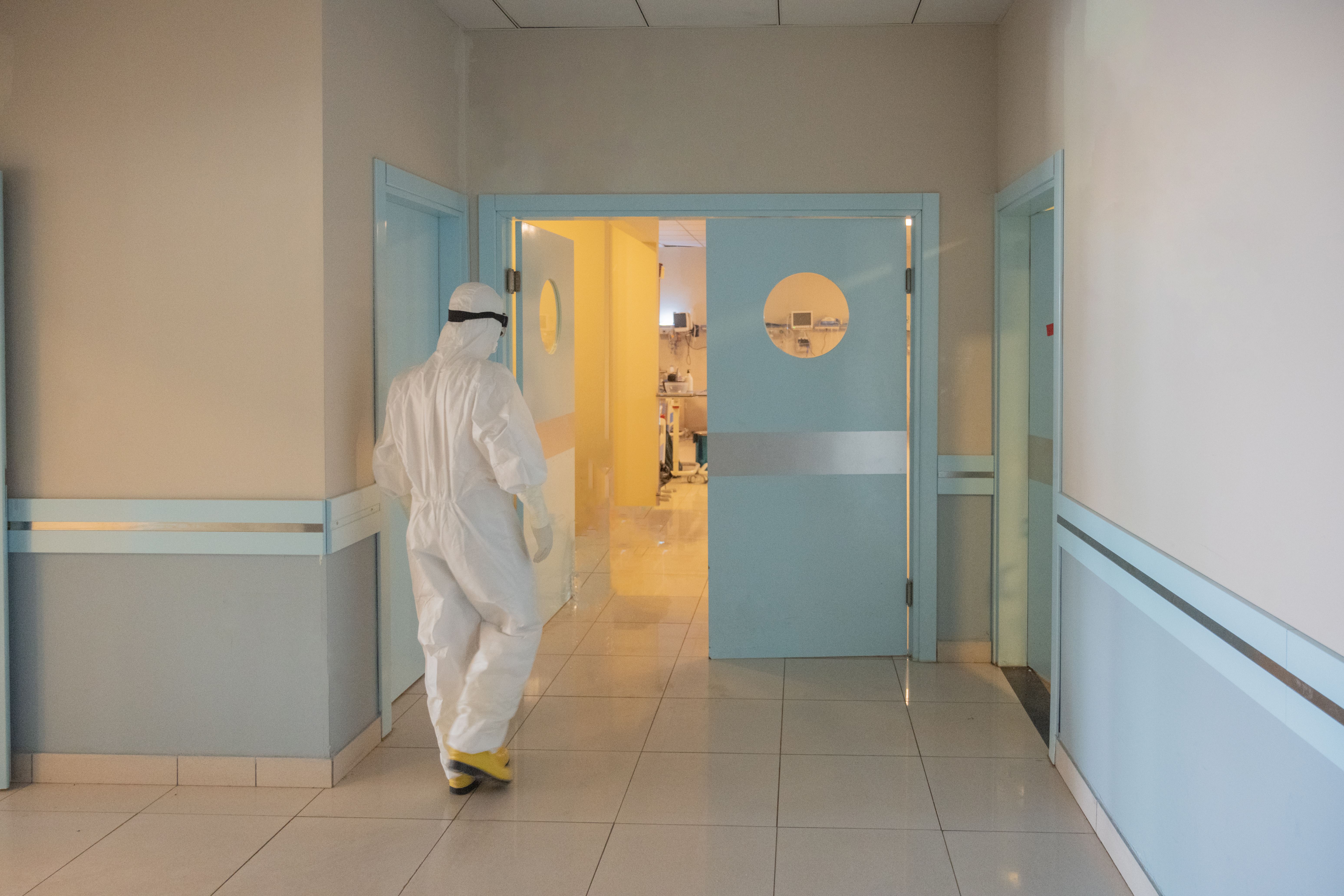
A medical worker at the Emirates Hospital in Erbil, Kurdistan Region. July 5, 2020. Photo: Bilind T. Abdullah
ERBIL, Kurdistan Region — Five cases of a new coronavirus variant were confirmed in Erbil on Sunday, health officials told Rudaw, after having identified “suspected” cases on Saturday.
After three rounds of testing at Erbil’s central lab, the five suspected cases recorded on Saturday were identified as the new UK variant on Sunday, a senior health official told Rudaw’s Sangar Abdulrahman. The official added that the people are in stable health at their homes.
“They are different ages and genders,” Erbil’s central lab directorate, Mohsen Kak Ahmed, told Rudaw’s Farhad Dolamari on Sunday. “We are investigating to know who they had contact with, and whether they came from abroad or from Baghdad.”
Experts believe the UK variant, which emerged in September, may be up to 70% more transmissible or infectious. Newer research by Public Health England puts it between 30% and 50%.
“There is no need for fear. It’s just important for us to diagnose it soon,” added Ahmed.
A spike in cases led Iraqi authorities to decide last week on a partial curfew, which began on Thursday. A few days after the announcement, Iraq’s health ministry said that it had registered several cases of the UK coronavirus variant for the first time.
The Kurdistan Regional Government (KRG) has not announced a new curfew as of Sunday.
Health officials in the Kurdistan Region have offered differing takes on whether regulations similar to those in the rest of Iraq will be imposed.
“I don’t think quarantine will be announced again in Sulaimani,” Sabah Hawrami, the head of Sulaimani’s health department said in a press conference on Saturday.
But the head of Erbil’s health department told Rudaw Radio’s Rebwar Ali that health guidelines to curb the spread of the virus need to be imposed more strictly.
“Due to the decrease of infections previously, people were adhering less to the guidelines – that’s why we need to double down on the guidelines,” health department head Dlovan Mohammed said.
“The data tells us the numbers are increasing, and the vaccine has not arrived yet. Even if it does arrive, medical teams and the elderly will receive it first, that’s why it’s important to be careful and adhere to the guidelines,” he added.
“It’s necessary that the guidelines be enforced more strictly at the checkpoints between the cities so that the spread can be controlled that way,” Mohammed said later at a press conference on Sunday.
Neighboring Iran has also begun limiting travels to Iraq and the Kurdistan Region through multiple border crossings, including Parvizkhan, Khosraw, Haji Omeran, Shoshme, Sumar and Sheikh Sla.
After three rounds of testing at Erbil’s central lab, the five suspected cases recorded on Saturday were identified as the new UK variant on Sunday, a senior health official told Rudaw’s Sangar Abdulrahman. The official added that the people are in stable health at their homes.
“They are different ages and genders,” Erbil’s central lab directorate, Mohsen Kak Ahmed, told Rudaw’s Farhad Dolamari on Sunday. “We are investigating to know who they had contact with, and whether they came from abroad or from Baghdad.”
Experts believe the UK variant, which emerged in September, may be up to 70% more transmissible or infectious. Newer research by Public Health England puts it between 30% and 50%.
“There is no need for fear. It’s just important for us to diagnose it soon,” added Ahmed.
A spike in cases led Iraqi authorities to decide last week on a partial curfew, which began on Thursday. A few days after the announcement, Iraq’s health ministry said that it had registered several cases of the UK coronavirus variant for the first time.
The Kurdistan Regional Government (KRG) has not announced a new curfew as of Sunday.
Health officials in the Kurdistan Region have offered differing takes on whether regulations similar to those in the rest of Iraq will be imposed.
“I don’t think quarantine will be announced again in Sulaimani,” Sabah Hawrami, the head of Sulaimani’s health department said in a press conference on Saturday.
But the head of Erbil’s health department told Rudaw Radio’s Rebwar Ali that health guidelines to curb the spread of the virus need to be imposed more strictly.
“Due to the decrease of infections previously, people were adhering less to the guidelines – that’s why we need to double down on the guidelines,” health department head Dlovan Mohammed said.
“The data tells us the numbers are increasing, and the vaccine has not arrived yet. Even if it does arrive, medical teams and the elderly will receive it first, that’s why it’s important to be careful and adhere to the guidelines,” he added.
“It’s necessary that the guidelines be enforced more strictly at the checkpoints between the cities so that the spread can be controlled that way,” Mohammed said later at a press conference on Sunday.
Neighboring Iran has also begun limiting travels to Iraq and the Kurdistan Region through multiple border crossings, including Parvizkhan, Khosraw, Haji Omeran, Shoshme, Sumar and Sheikh Sla.


Comments
Rudaw moderates all comments submitted on our website. We welcome comments which are relevant to the article and encourage further discussion about the issues that matter to you. We also welcome constructive criticism about Rudaw.
To be approved for publication, however, your comments must meet our community guidelines.
We will not tolerate the following: profanity, threats, personal attacks, vulgarity, abuse (such as sexism, racism, homophobia or xenophobia), or commercial or personal promotion.
Comments that do not meet our guidelines will be rejected. Comments are not edited – they are either approved or rejected.
Post a comment