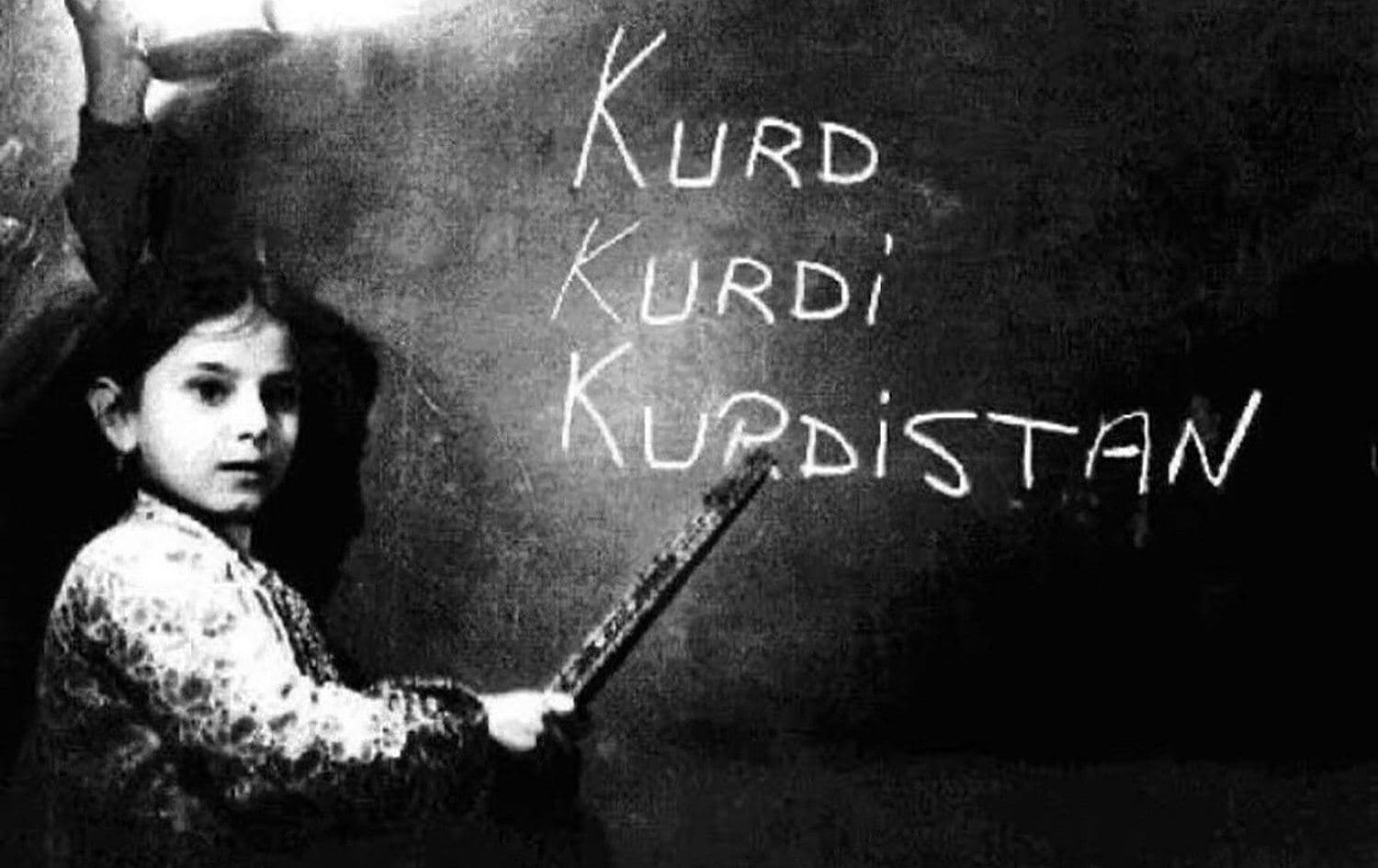

ERBIL, Kurdistan Region - On International Mother Language Day, Kurdish leaders across the political spectrum underscored the importance of promoting and safeguarding the Kurdish language, describing it as central to Kurdish culture, coexistence, and national unity.
Kurdistan Region President Nechirvan Barzani said on Saturday that the Kurdistan Region is a “cradle” of diverse ethnic, religious, and cultural communities living together in harmony.
“We are proud that the Kurdistan Region is a cradle of diversity, where different ethnic, religious, and cultural communities coexist,” Barzani said.
“Preserving the mother tongue is preserving Kurdistan’s rich identity and history,” he added.
Barzani reaffirmed his commitment to promoting mother languages for all communities in the region, including Kurdish as well as Turkmen, Syriac, and Armenian.
Since 1999, UNESCO has recognized February 21 as International Mother Language Day, highlighting the importance of linguistic and cultural diversity worldwide.
For his part, Masrour Barzani also extended his congratulations to the people of the Kurdistan Region.
“The Kurdistan Region is a source of pride, rich in diverse languages and cultures, where all communities are free to speak and learn in their mother tongue,” the prime minister said.
The day holds particular significance for Kurdish speakers, for whom language remains a cornerstone of cultural identity. UNESCO emphasizes that fostering sustainable development requires learners to have access to education in both their mother tongue and other languages.
Meanwhile, Masoud Barzani stressed the duty to safeguard native languages.
“The mother tongue is the foundation of authenticity, identity, awareness, and national solidarity. Safeguarding it is a national duty. I extend my warmest wishes to all beloved Kurdistanis on Mother Language Day,” he said.
Kurdish is considered the 59th most widely spoken language globally and is spoken across the four parts of Kurdistan, spanning areas of Turkey, Syria, Iraq, and Iran. The global Kurdish population is estimated at over 30 million, with roughly half residing in Turkey, around six million in Iran, more than five million in Iraq, and fewer than two million in Syria prior to the civil war. Significant Kurdish diaspora communities also live in Armenia, Azerbaijan, Germany, and across Europe and North America.
Surrounded by larger Arab, Turkish, and Persian populations, Kurds have historically faced challenges in preserving their language, which belongs to the Indo-European family. In Iraq, Kurdish is officially recognized as the country’s second language, and the Kurdistan Regional Government uses it in education and public administration.
In a Facebook post, Bafel Talabani, leader of the Patriotic Union of Kurdistan (PUK), urged Kurds to protect “this valuable asset.”
“The sweet Kurdish language is proudly ours and a sign of our national identity,” Talabani wrote. “It is our duty to protect this valuable asset that we have inherited from our ancestors.”
The state of the Kurdish language in Syria
Marking International Mother Language Day, Mazloum Abdi, commander-in-chief of the Kurdish-led Syrian Democratic Forces (SDF), announced an upcoming “important” meeting between Rojava’s education authority and Syria’s Ministry of Education.
The discussions will focus on mechanisms for adopting Kurdish as a language of instruction, following a presidential decree recognizing it as a national language.
“The presidential decree recognizing the Kurdish language as a national language in Syria is an achievement and a significant and positive step, but it is not enough,” Abdi said.
He noted that in recent years, thousands of students have studied in Kurdish at schools and universities, stressing that “the level we have reached in the Kurdish language must be taken into consideration in the practical implementation of the presidential decree.”
The SDF serves as the de facto military force in northeast Syria and has been the primary ground partner of the U.S.-led Global Coalition to Defeat the Islamic State in the fight against ISIS.
Updated at 02:11pm

.jpg&w=3840&q=75)