Kurdistan
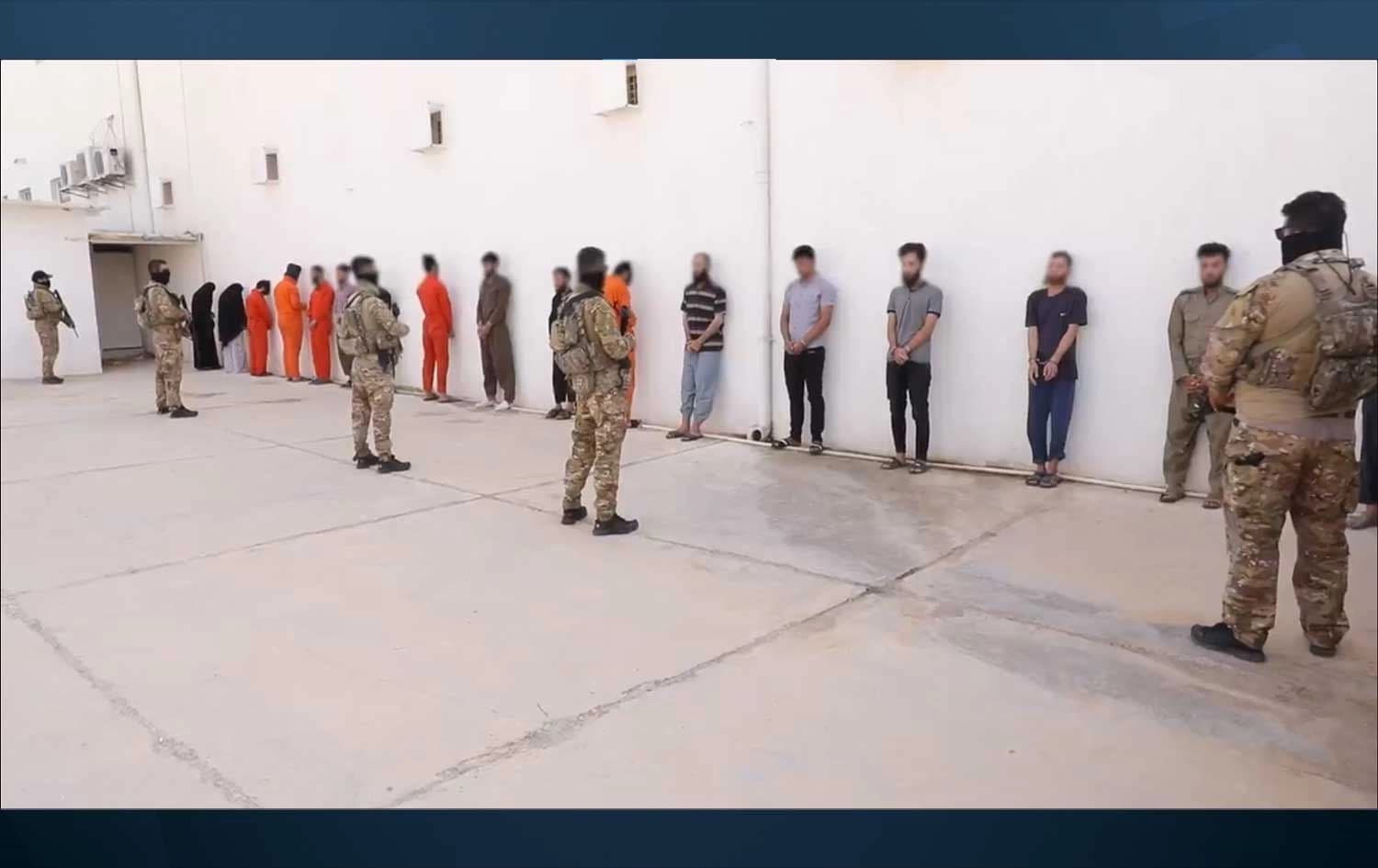
The suspected ISIS members who were recently arrested by Asayish in Sulaimani province. Photo: Sulaimani Asayish
ERBIL, Kurdistan Region - The security forces in Sulaimani on Tuesday announced the arrest of 17 suspected members of the Islamic State (ISIS) who “confessed” to have planned to assassinate prominent clergymen and Peshmerga commanders. They also published ISIS propaganda.
Sulaimani internal security forces (Asayish) said in a statement late Tuesday that they recently observed the activities of a group of people who “planned to assassinate a number of top Peshmerga commanders and clergymen.”
Asayish said they arrested two members of the ISIS-affiliated group in a busy place in Sulaimani downtown on August 14 but a civilian, Ahmed Shawkat, was killed during the clash that ensued. His death was announced by the Kurdish force the same day.
Other five members of the group were arrested in the following days, including two women.
Another group of suspected ISIS members, who had links with the first group, were monitored by Asayish. Before their arrest, some of them tried to join ISIS fighters in the disputed areas, according to Asayish.
Another five suspects were arrested too but their identities will be revealed later as they are still being interrogated.
The ethnicity of the arrestees was not mentioned in the Asayish statement, but those who “confessed” their ISIS link in a video shared by the security forces spoke in Kurdish.
Some of the suspects said in their “confessions” that they joined ISIS through social media platforms, with some later publishing the terror group’s propaganda on social media.
“I learnt about the Islamic State ideology through social media in 2017. Later, I met a number of people who had done the same, “ said the 32-year-old Mohammed Ibrahim, one of the arrestees, in the Asayish video.
Some of them are also accused of damaging shrines they deem unacceptable and distorting the Kurdistan flag.
ISIS seized control of swathes of Iraqi land in 2014. While the group has been devoid of territorial control since 2017, it continues to pose a serious security threat to the country through bombings, hit-and-run attacks, and abductions, particularly in areas disputed between Erbil and Baghdad.
Sulaimani internal security forces (Asayish) said in a statement late Tuesday that they recently observed the activities of a group of people who “planned to assassinate a number of top Peshmerga commanders and clergymen.”
Asayish said they arrested two members of the ISIS-affiliated group in a busy place in Sulaimani downtown on August 14 but a civilian, Ahmed Shawkat, was killed during the clash that ensued. His death was announced by the Kurdish force the same day.
Other five members of the group were arrested in the following days, including two women.
Another group of suspected ISIS members, who had links with the first group, were monitored by Asayish. Before their arrest, some of them tried to join ISIS fighters in the disputed areas, according to Asayish.
Another five suspects were arrested too but their identities will be revealed later as they are still being interrogated.
The ethnicity of the arrestees was not mentioned in the Asayish statement, but those who “confessed” their ISIS link in a video shared by the security forces spoke in Kurdish.
Some of the suspects said in their “confessions” that they joined ISIS through social media platforms, with some later publishing the terror group’s propaganda on social media.
“I learnt about the Islamic State ideology through social media in 2017. Later, I met a number of people who had done the same, “ said the 32-year-old Mohammed Ibrahim, one of the arrestees, in the Asayish video.
Some of them are also accused of damaging shrines they deem unacceptable and distorting the Kurdistan flag.
ISIS seized control of swathes of Iraqi land in 2014. While the group has been devoid of territorial control since 2017, it continues to pose a serious security threat to the country through bombings, hit-and-run attacks, and abductions, particularly in areas disputed between Erbil and Baghdad.
Comments
Rudaw moderates all comments submitted on our website. We welcome comments which are relevant to the article and encourage further discussion about the issues that matter to you. We also welcome constructive criticism about Rudaw.
To be approved for publication, however, your comments must meet our community guidelines.
We will not tolerate the following: profanity, threats, personal attacks, vulgarity, abuse (such as sexism, racism, homophobia or xenophobia), or commercial or personal promotion.
Comments that do not meet our guidelines will be rejected. Comments are not edited – they are either approved or rejected.
Post a comment