

16 Photos
Photo Gallery
Kurdistan
Kurdish artist opens art exhibition in Erbil
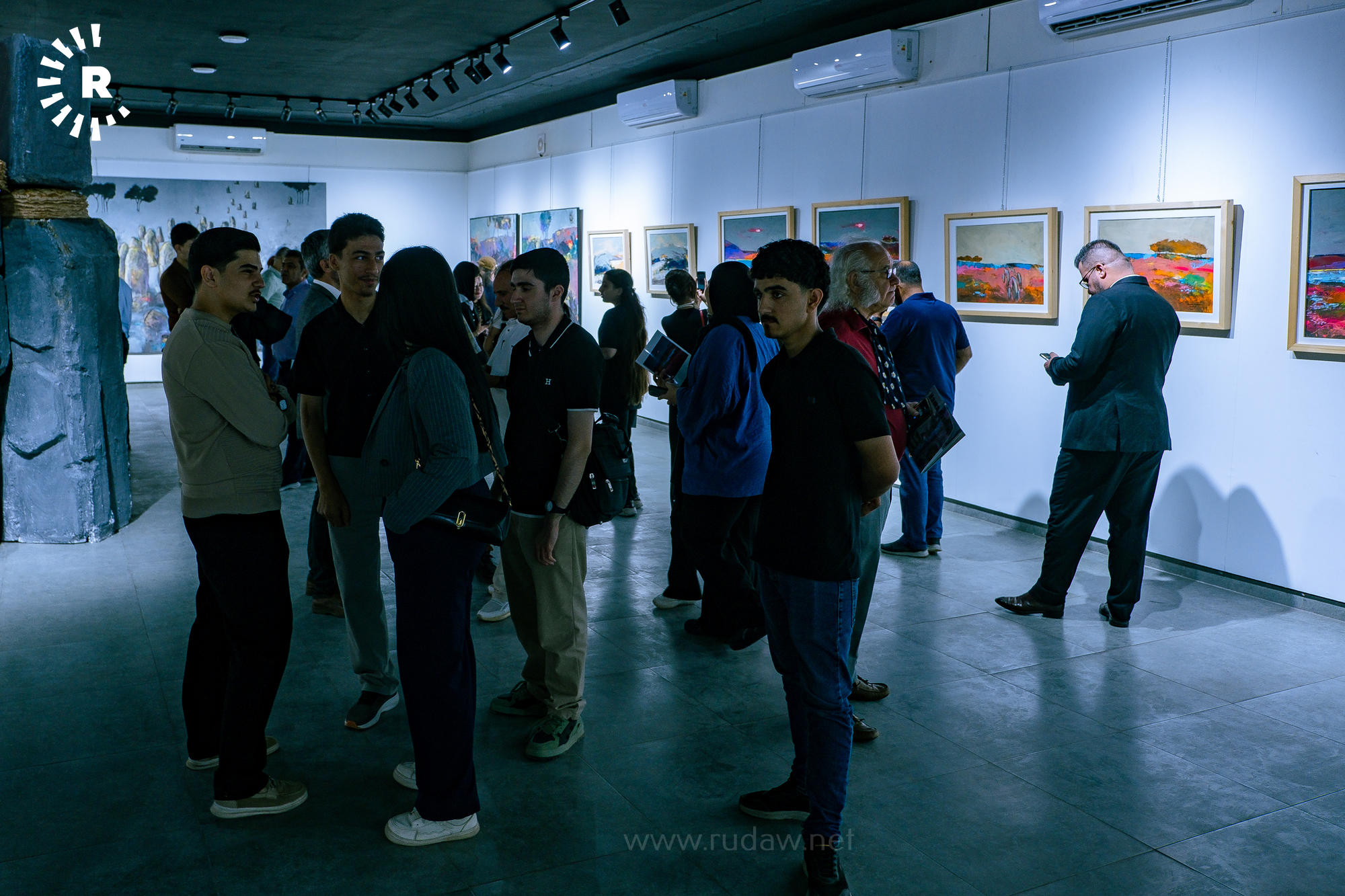
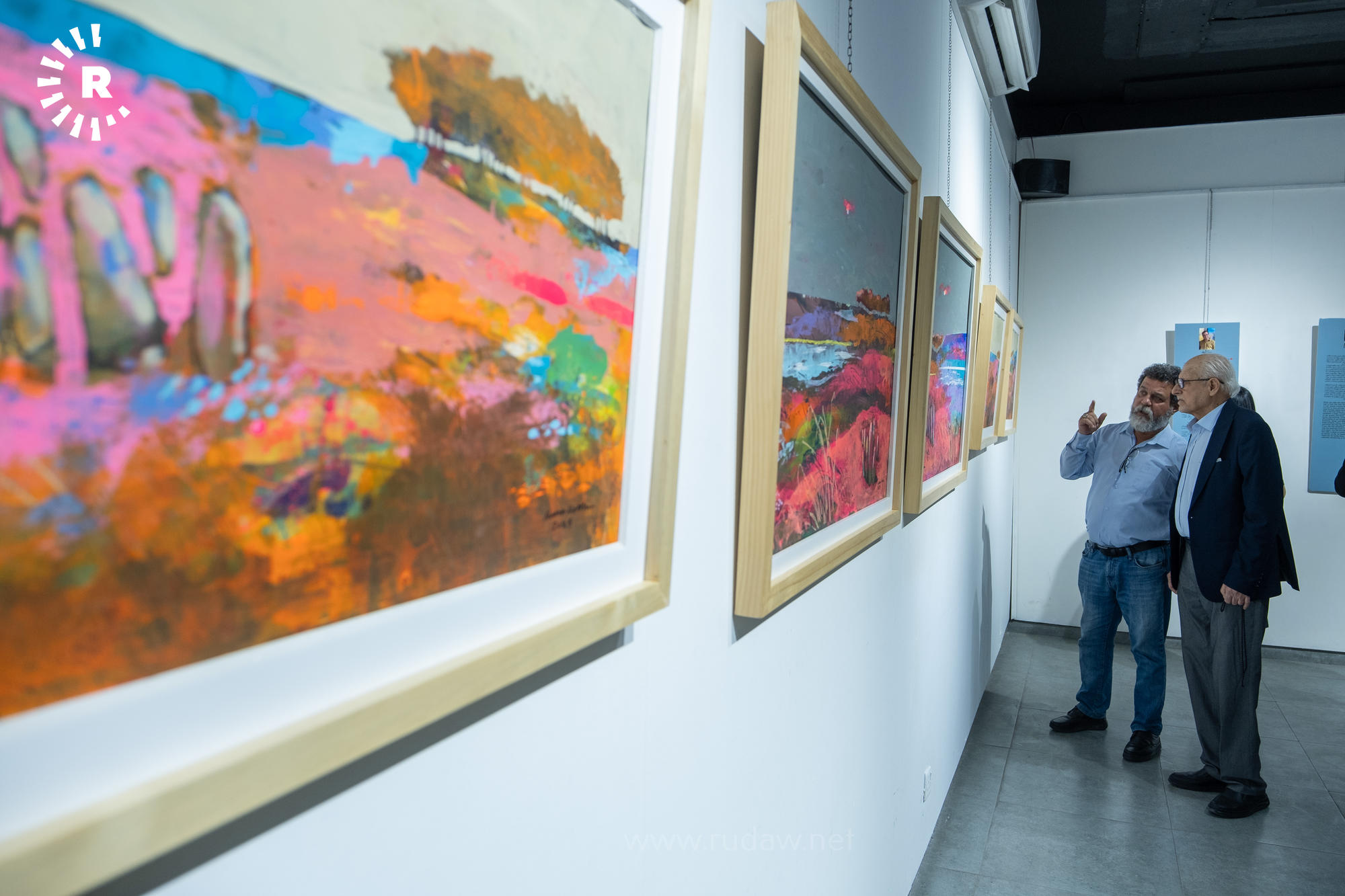
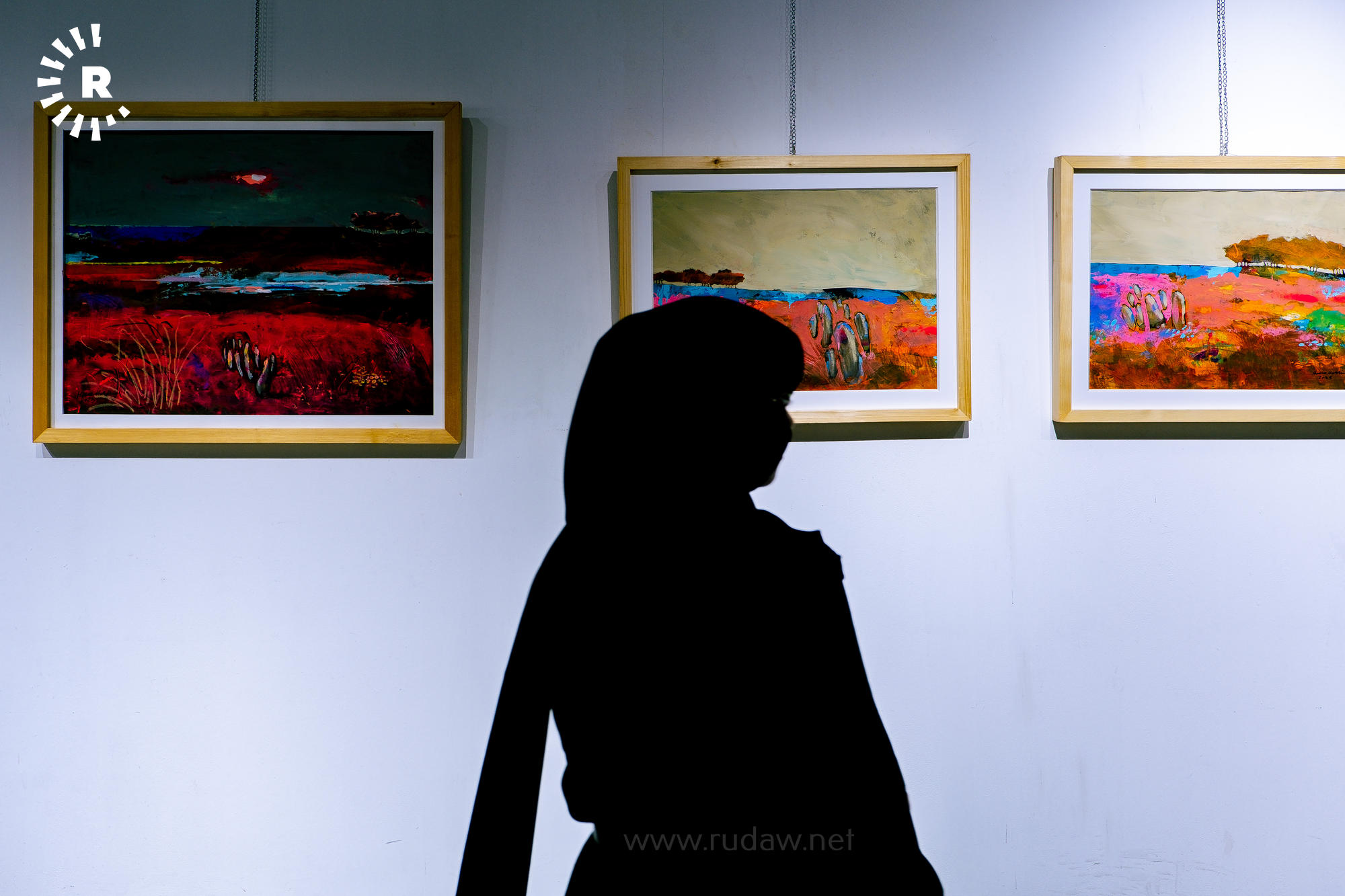
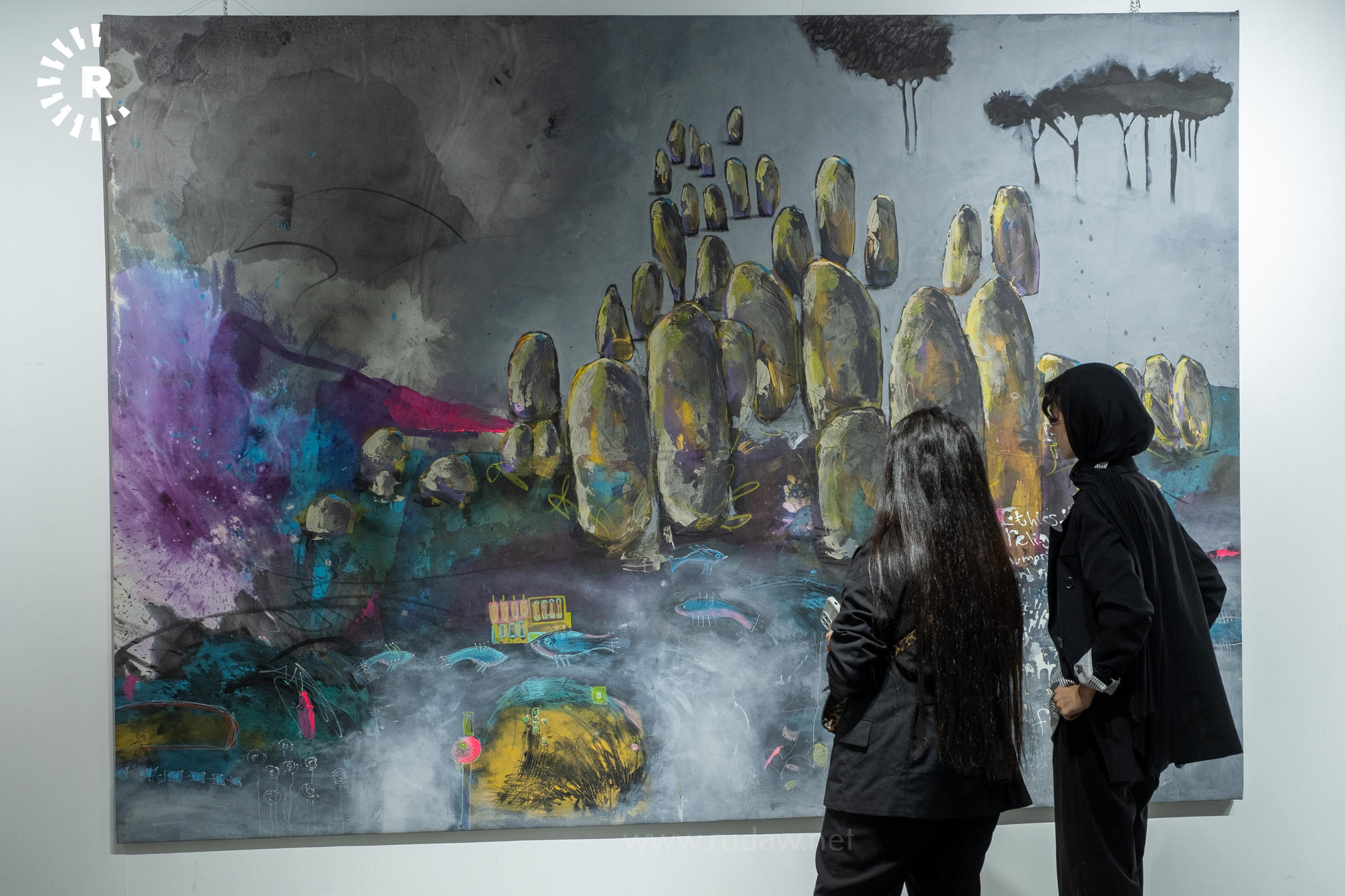
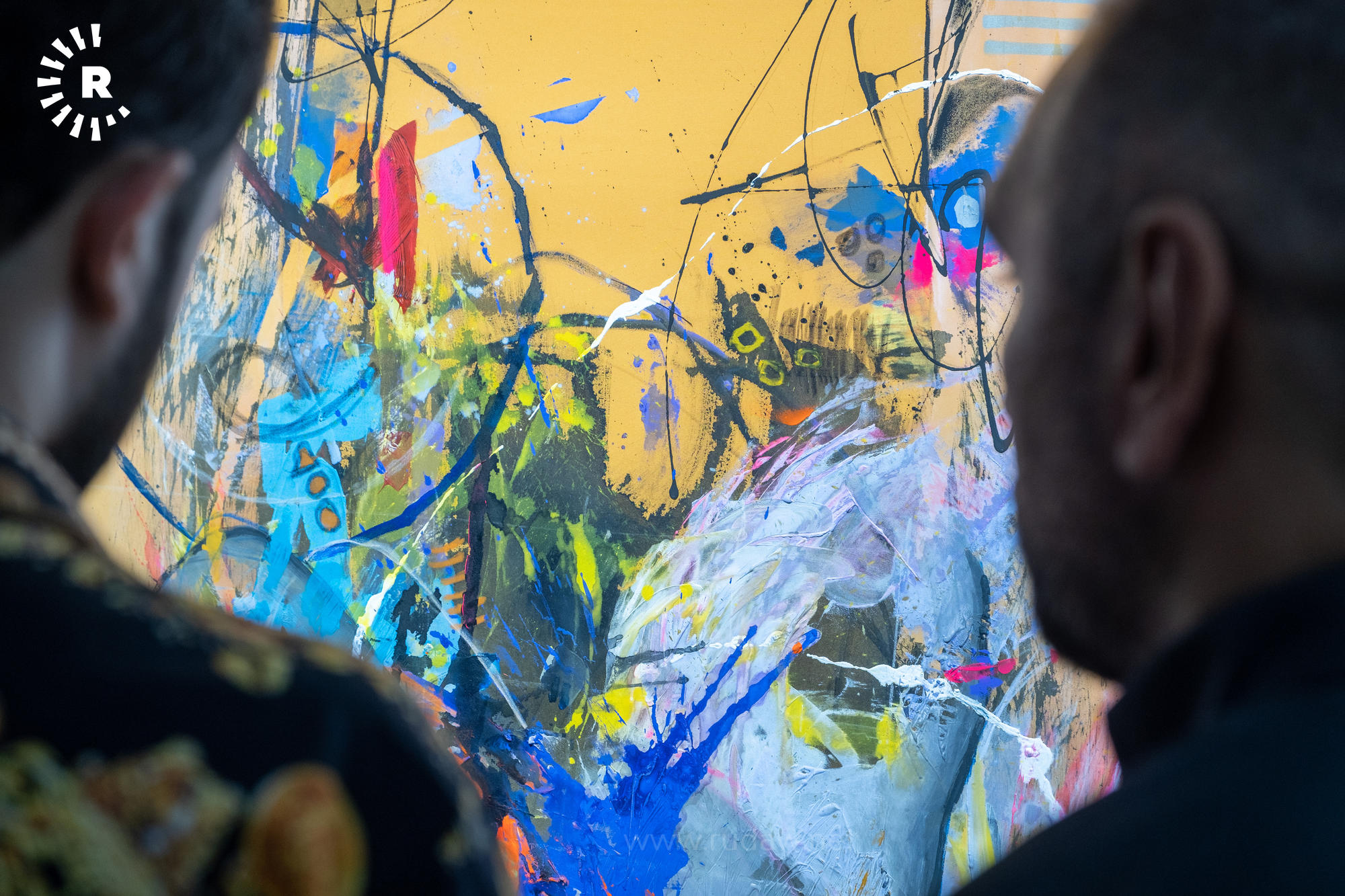
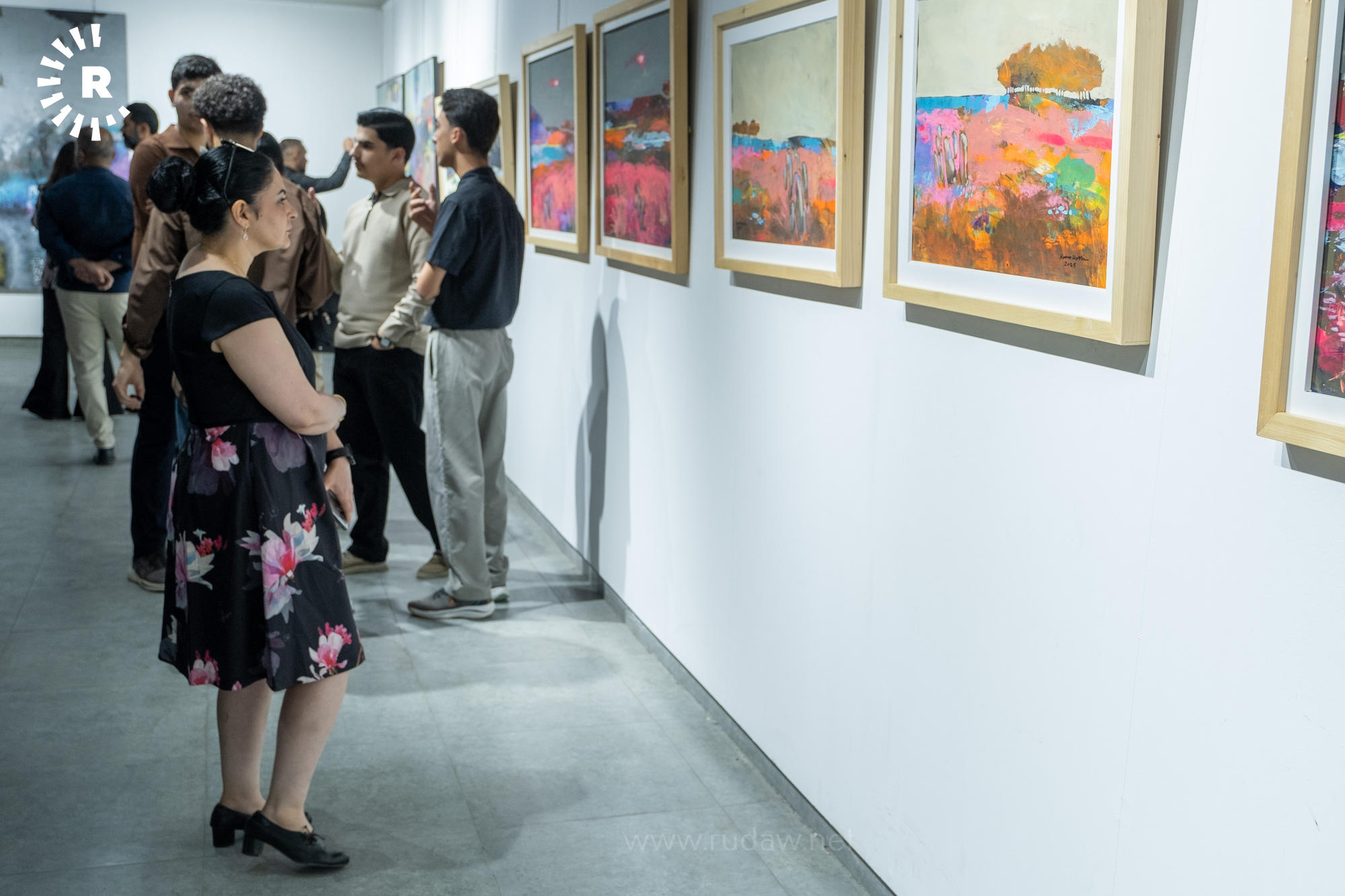
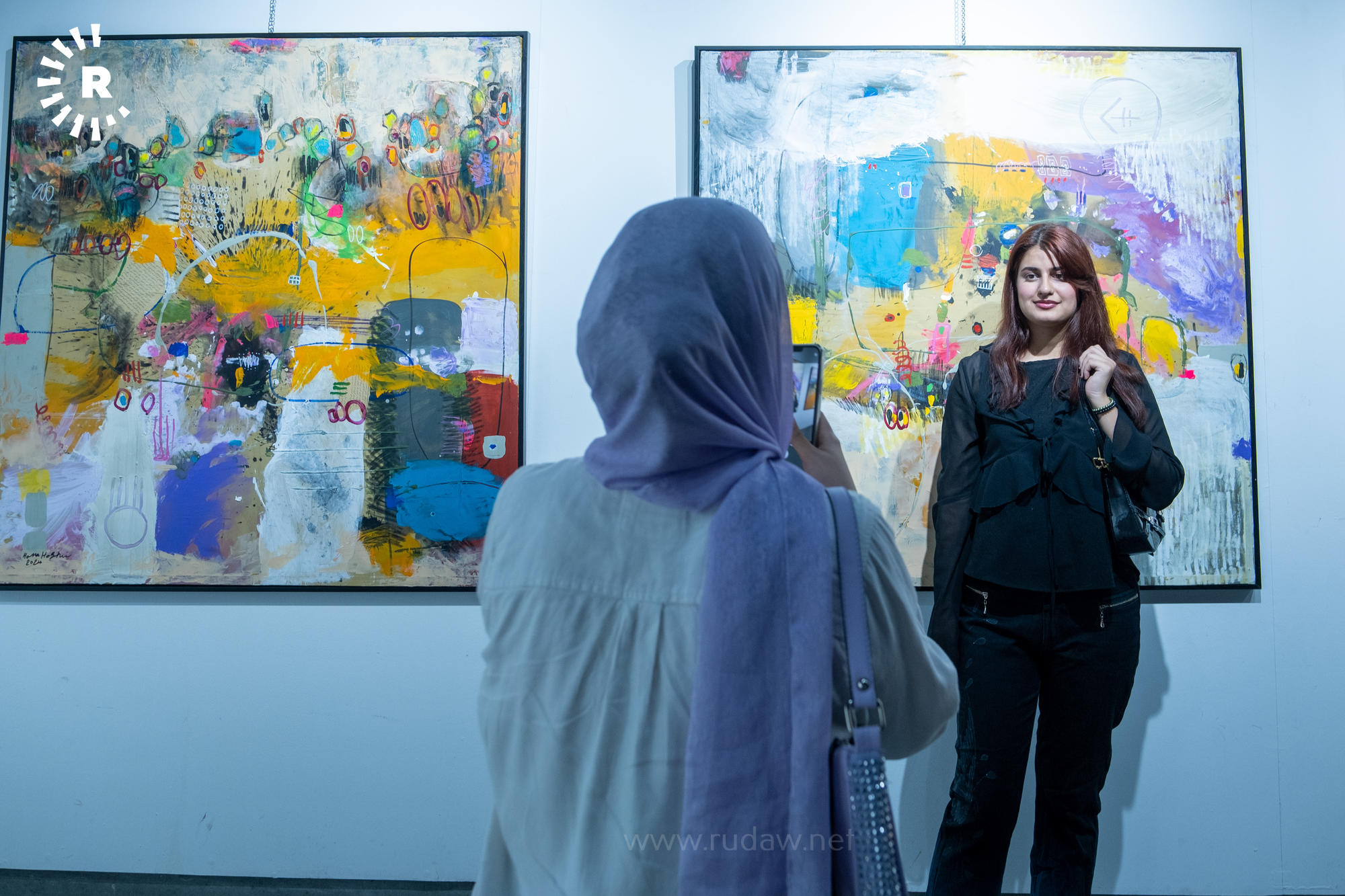
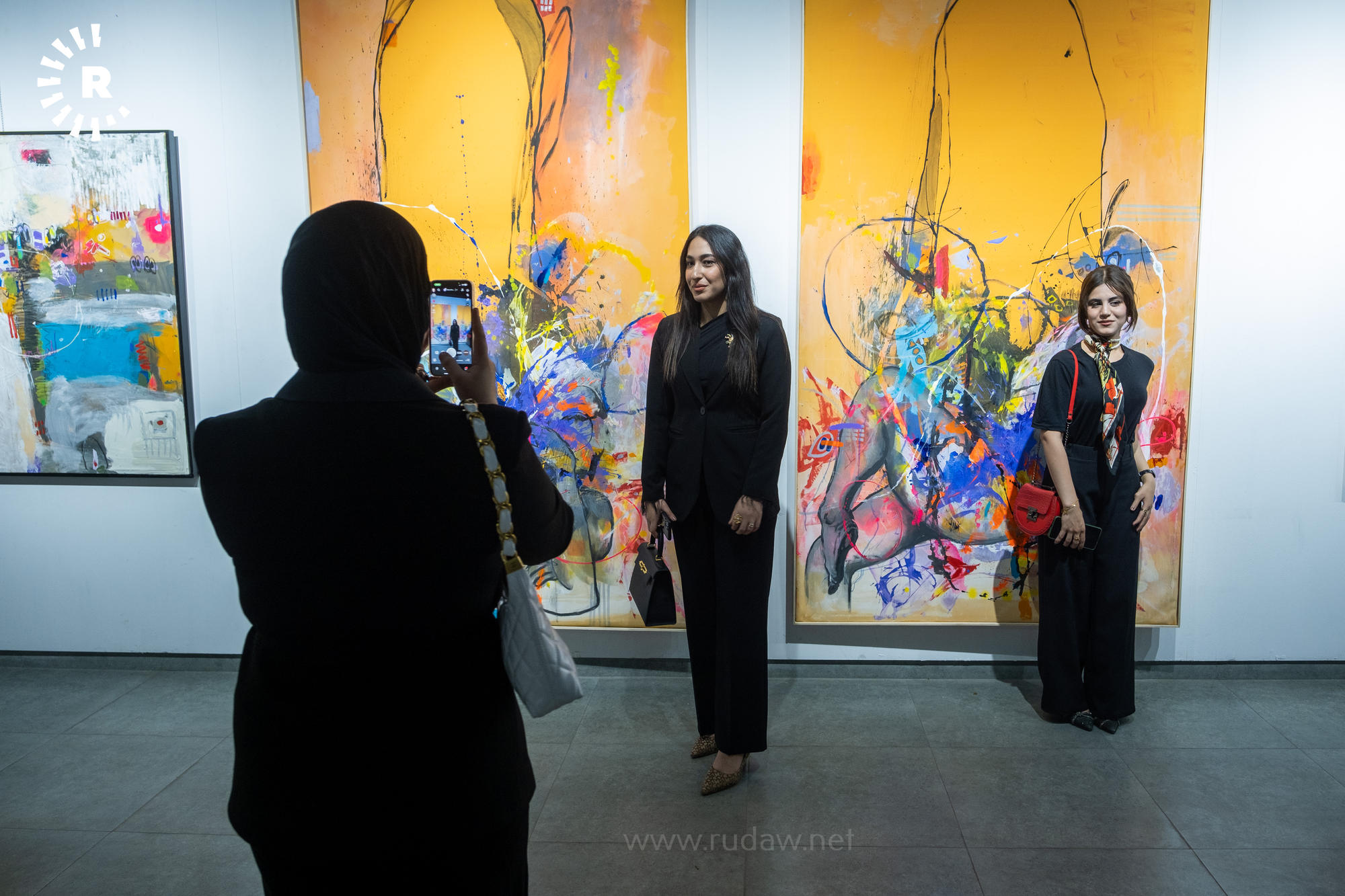
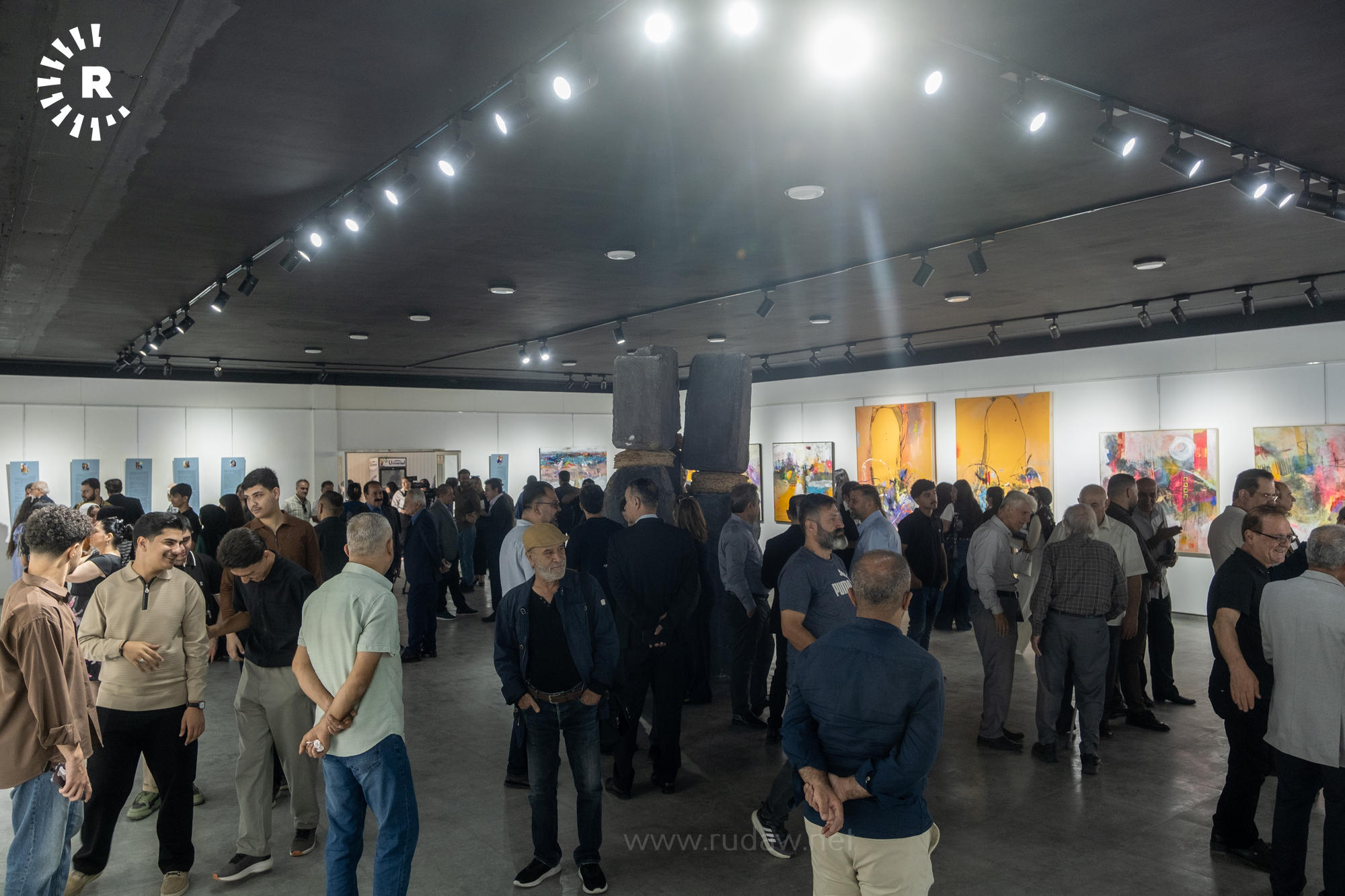
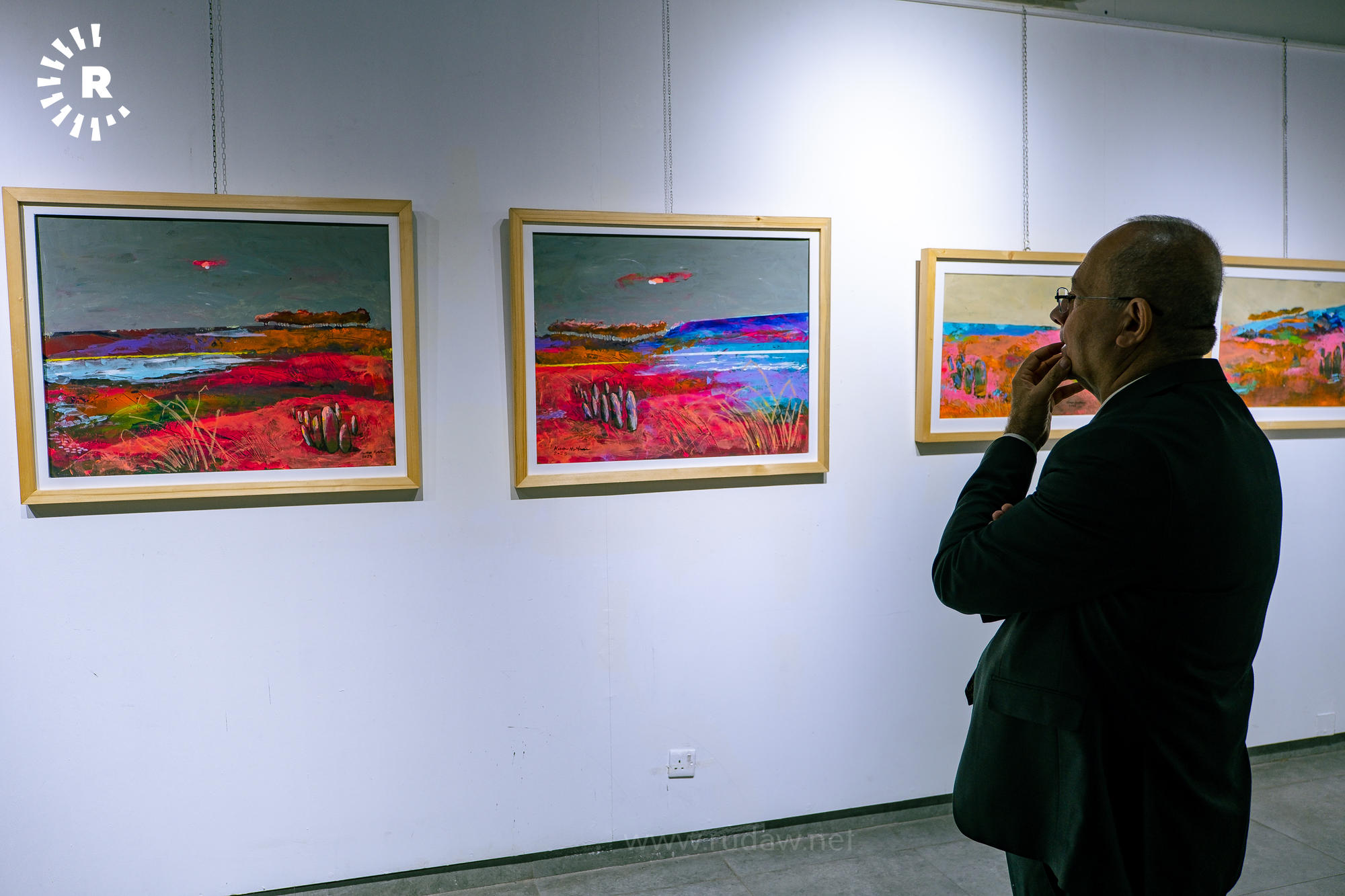
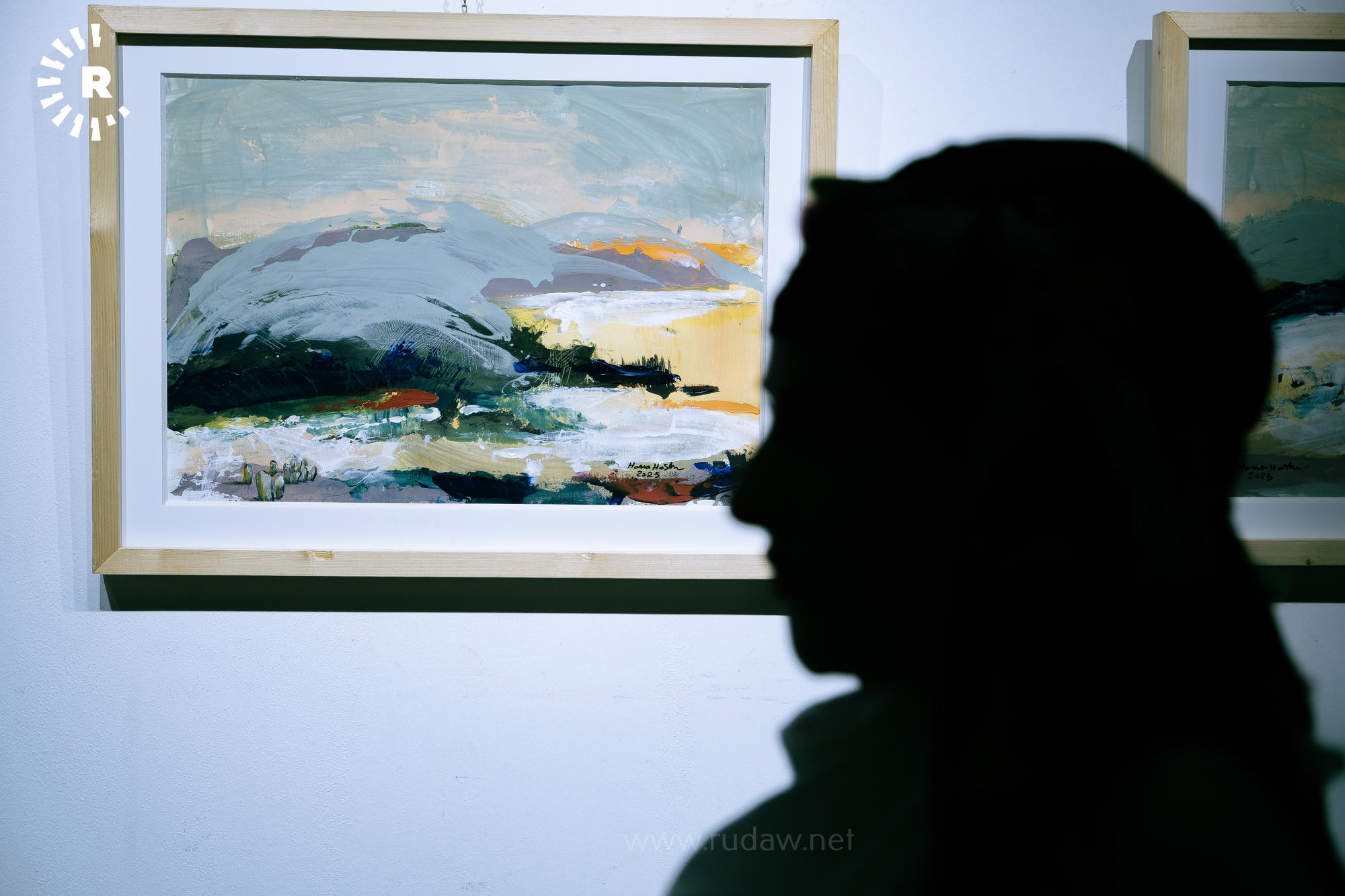
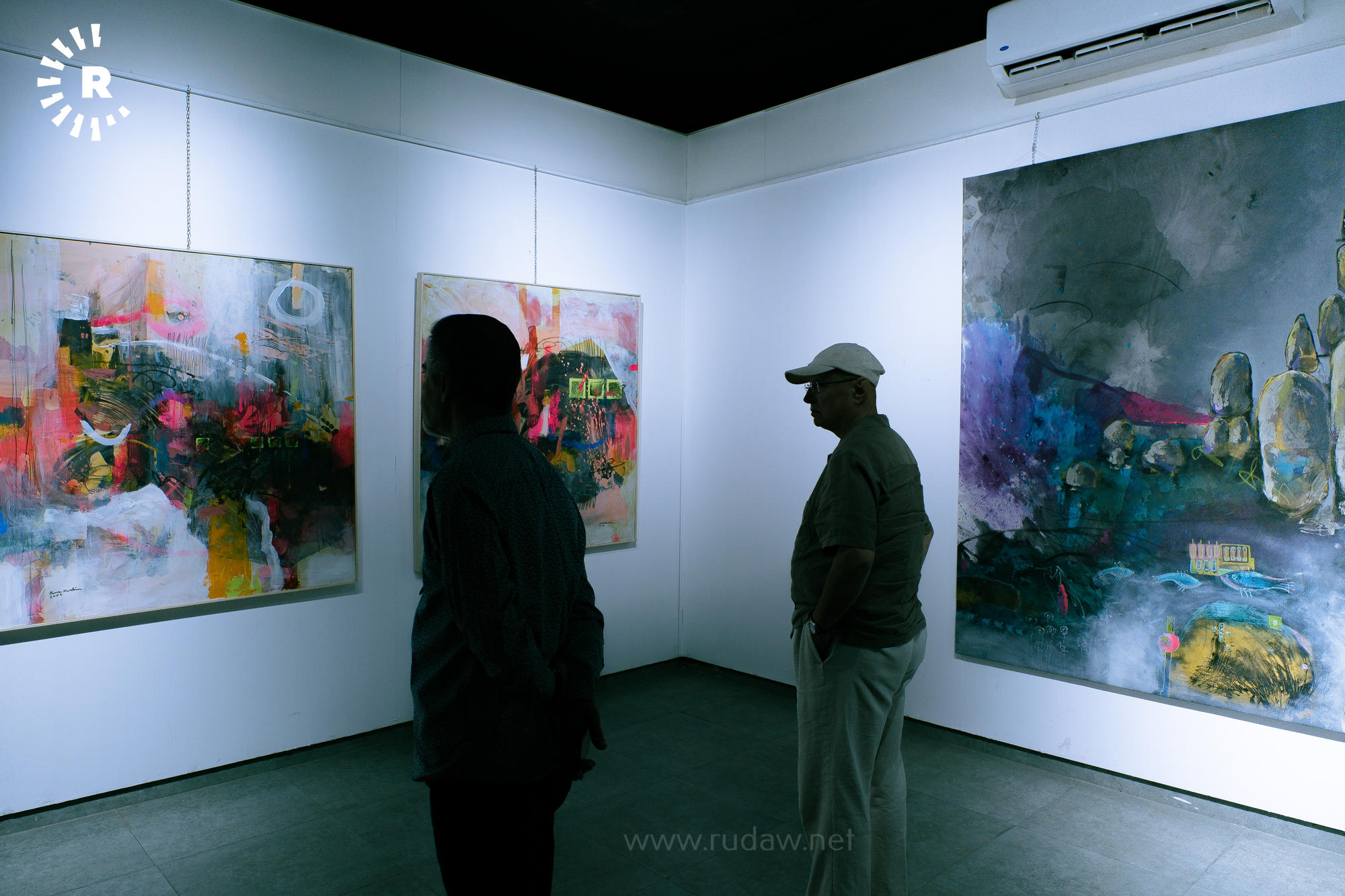
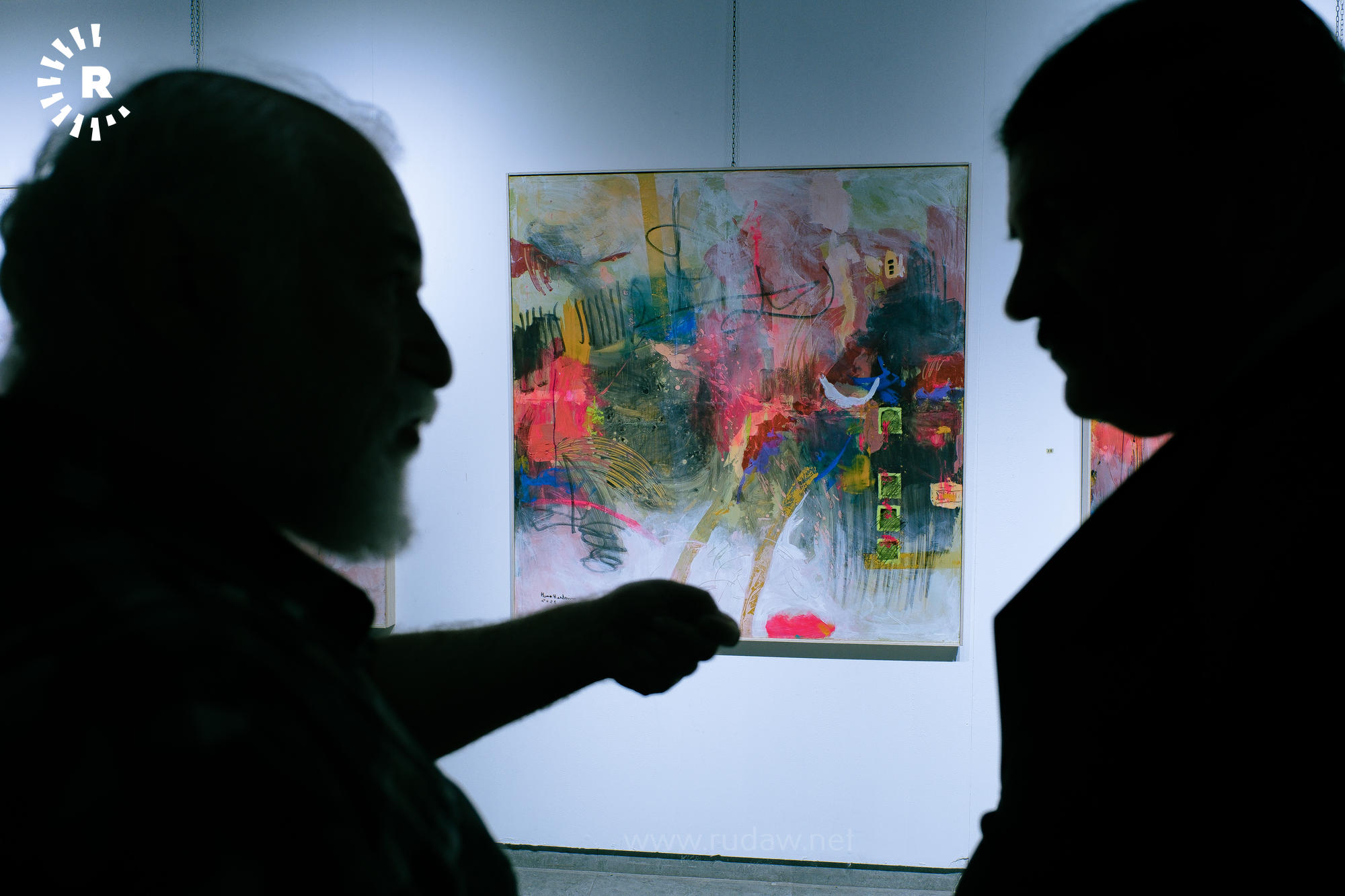
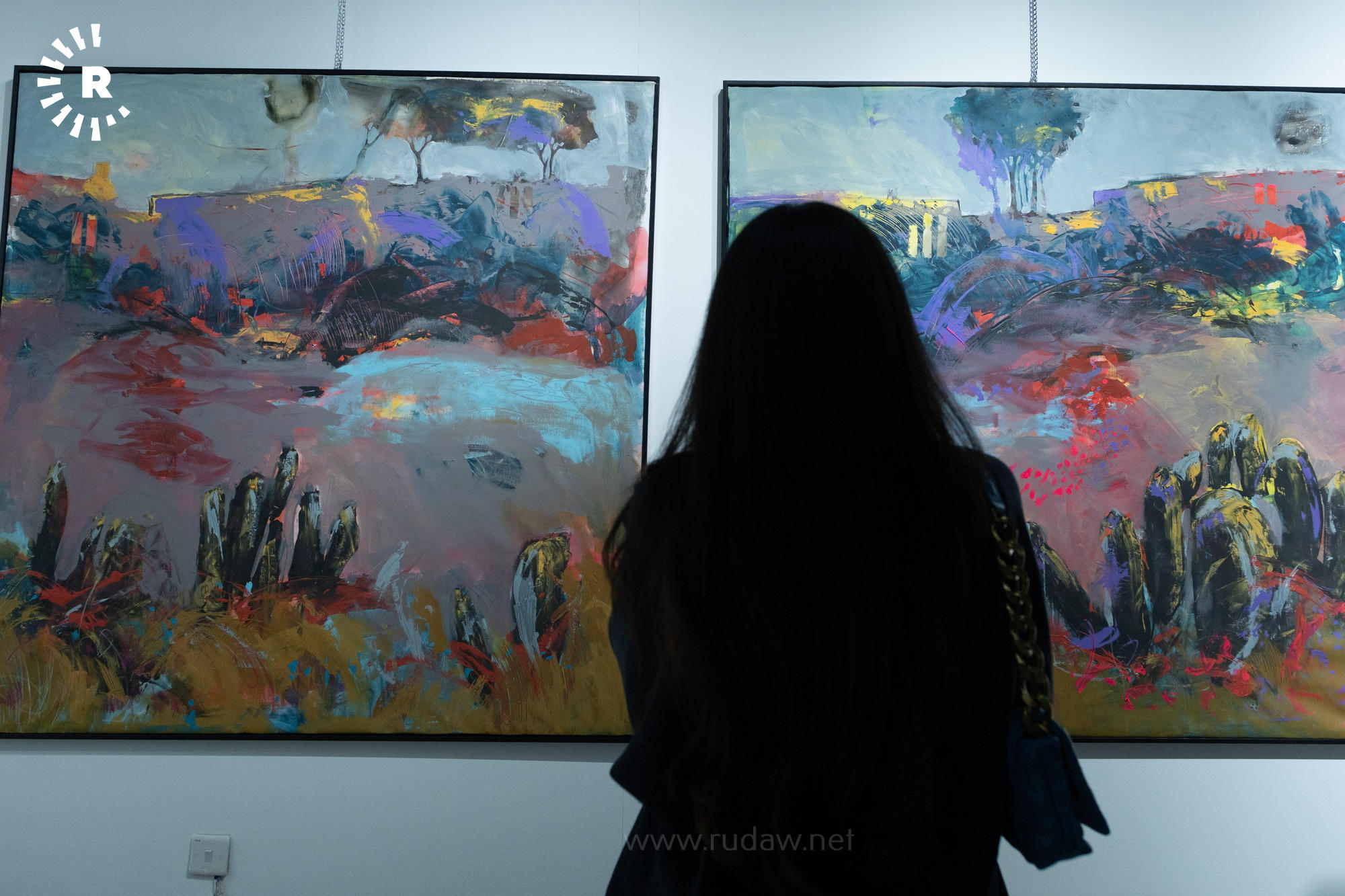
ERBIL, Kurdistan Region - Kurdish artist and writer Hama Hashim has opened his latest exhibition, Memories of Stone, at Erbil Media Hall. The show will run for 10 days, featuring 24 large-format paintings and one installation that together convey a powerful message about painful memories and the victims of society.
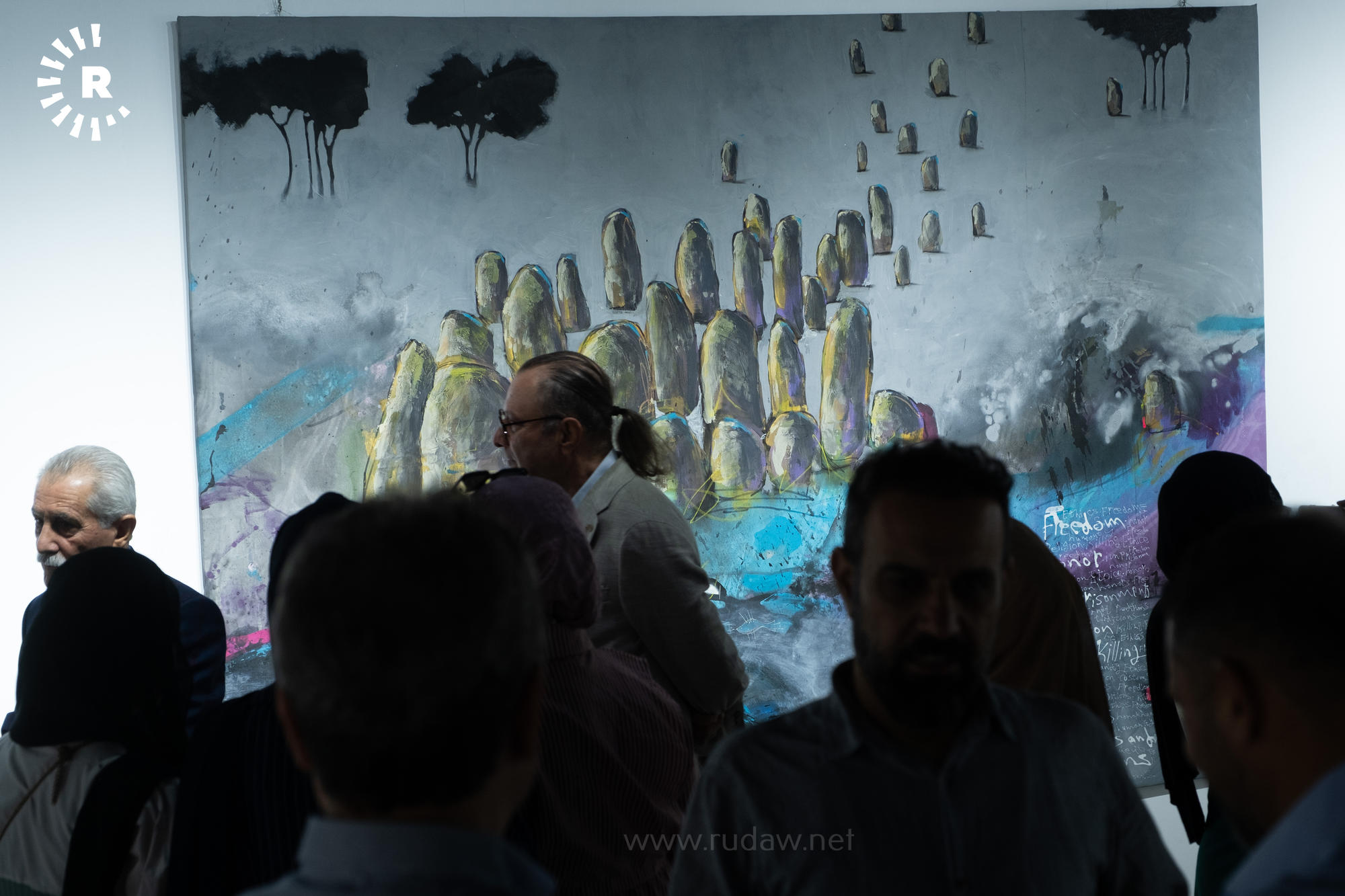
“I used stone as an identity that holds a collection of stories of misery and pain in human memory,” Hashim told Rudaw.
The exhibition, which opened on Tuesday, centers on the themes of loss, dignity, and remembrance. One of its main focuses is the victims of violence against women, particularly girls killed in the name of honor and tradition.
“I want to restore dignity to those people who are killed for nothing - as a monument and tribute, to return their glory between color, paintings, and beauty,” he said.
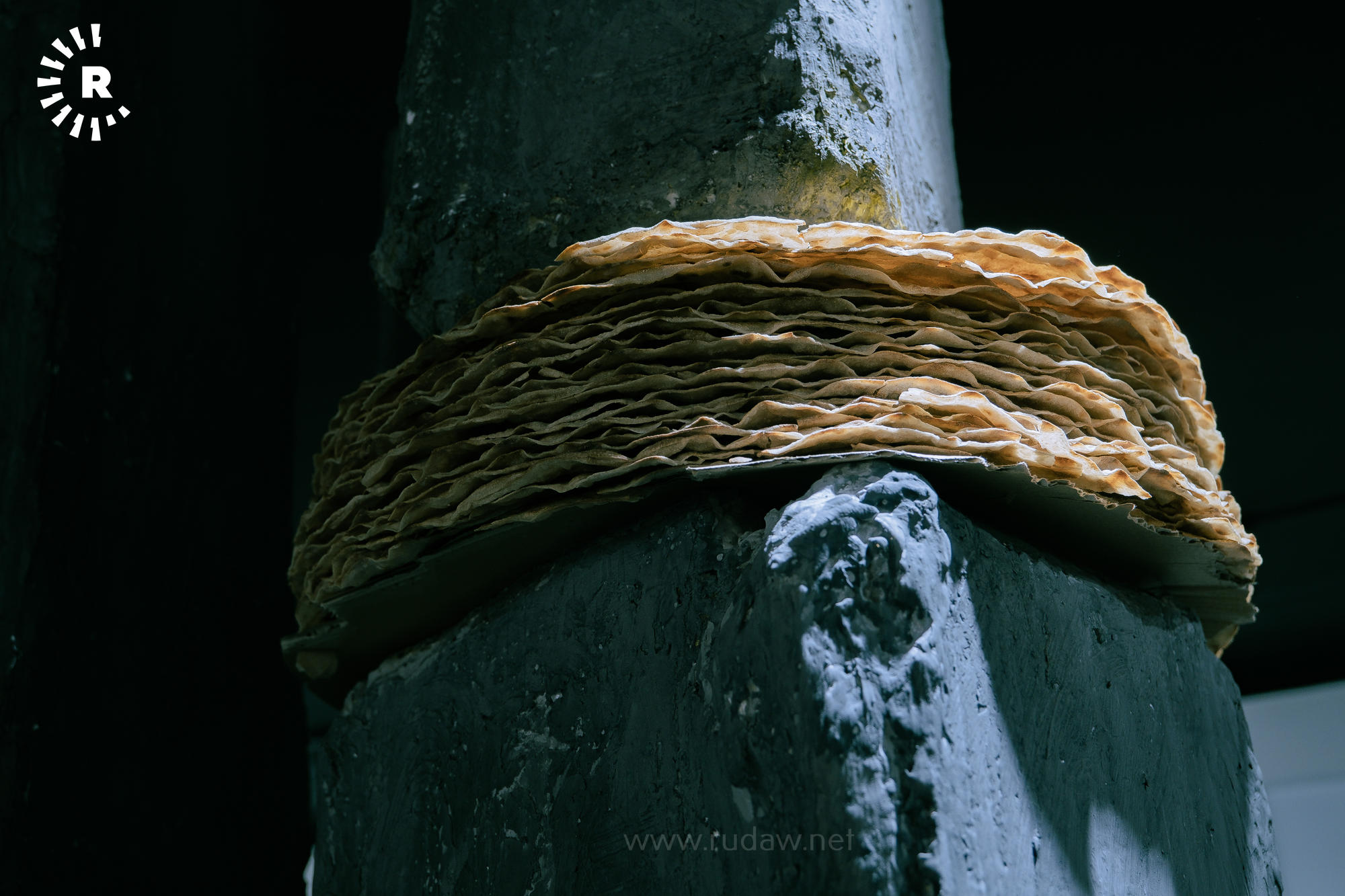
Another section of the exhibition pays tribute to construction workers, especially those who lost their lives while providing for their families. Several of Hashim’s works incorporate large pieces of concrete with bread placed within them, symbolizing the struggles and sacrifices of the working class.
Hashim emphasized that artists must take responsibility for reflecting on the events and injustices around them. He said this sense of duty drives his art and that he aims to communicate these ideas beautifully and accessibly so that viewers can easily understand the message behind his work.
Born in Koya in 1973, Hashim graduated from Erbil’s Institute of Fine Arts. He has held 16 solo exhibitions and participated in more than 100 group shows. In addition to his artistic career, he has written 10 books on painting, sculpture, and abstract art.
Hashim, in April, also published three new books about painting and continues to advocate for the development of Kurdish art literature. At the time, he told Rudaw that he had published History of Art: History of Humanity, Modern Sculpture, and The Art of Postmodernism.
He noted that the Kurdish library remains limited in art resources, particularly books on painting written in Kurdish. He said the growing number of art academies and institutes in the Kurdistan Region makes it essential to expand these sources for students and teachers pursuing higher studies in painting. Publishing the three books, he added, is part of his effort to serve and enrich Kurdish art.
“I used stone as an identity that holds a collection of stories of misery and pain in human memory,” Hashim told Rudaw.
The exhibition, which opened on Tuesday, centers on the themes of loss, dignity, and remembrance. One of its main focuses is the victims of violence against women, particularly girls killed in the name of honor and tradition.
“I want to restore dignity to those people who are killed for nothing - as a monument and tribute, to return their glory between color, paintings, and beauty,” he said.
Another section of the exhibition pays tribute to construction workers, especially those who lost their lives while providing for their families. Several of Hashim’s works incorporate large pieces of concrete with bread placed within them, symbolizing the struggles and sacrifices of the working class.
Hashim emphasized that artists must take responsibility for reflecting on the events and injustices around them. He said this sense of duty drives his art and that he aims to communicate these ideas beautifully and accessibly so that viewers can easily understand the message behind his work.
Born in Koya in 1973, Hashim graduated from Erbil’s Institute of Fine Arts. He has held 16 solo exhibitions and participated in more than 100 group shows. In addition to his artistic career, he has written 10 books on painting, sculpture, and abstract art.
Hashim, in April, also published three new books about painting and continues to advocate for the development of Kurdish art literature. At the time, he told Rudaw that he had published History of Art: History of Humanity, Modern Sculpture, and The Art of Postmodernism.
He noted that the Kurdish library remains limited in art resources, particularly books on painting written in Kurdish. He said the growing number of art academies and institutes in the Kurdistan Region makes it essential to expand these sources for students and teachers pursuing higher studies in painting. Publishing the three books, he added, is part of his effort to serve and enrich Kurdish art.
21-10-2025 2
21-10-2025 3
21-10-2025 4
21-10-2025 5
21-10-2025 6
21-10-2025 7
21-10-2025 8
21-10-2025 9
21-10-2025 10
21-10-2025 11
21-10-2025 12
21-10-2025 13
21-10-2025 14
21-10-2025 15
21-10-2025 16
21-10-2025 17
Kurdish artist opens art exhibition in Erbil
Kurdish artist opens art exhibition in Erbil
Kurdish artist opens art exhibition in Erbil
Kurdish artist opens art exhibition in Erbil
Kurdish artist opens art exhibition in Erbil
Kurdish artist opens art exhibition in Erbil
Kurdish artist opens art exhibition in Erbil
Kurdish artist opens art exhibition in Erbil
Kurdish artist opens art exhibition in Erbil
Kurdish artist opens art exhibition in Erbil
Kurdish artist opens art exhibition in Erbil
Kurdish artist opens art exhibition in Erbil
Kurdish artist opens art exhibition in Erbil
Kurdish artist opens art exhibition in Erbil
Kurdish artist opens art exhibition in Erbil