



Error occured during this request! Please try again later.
Kurdistan

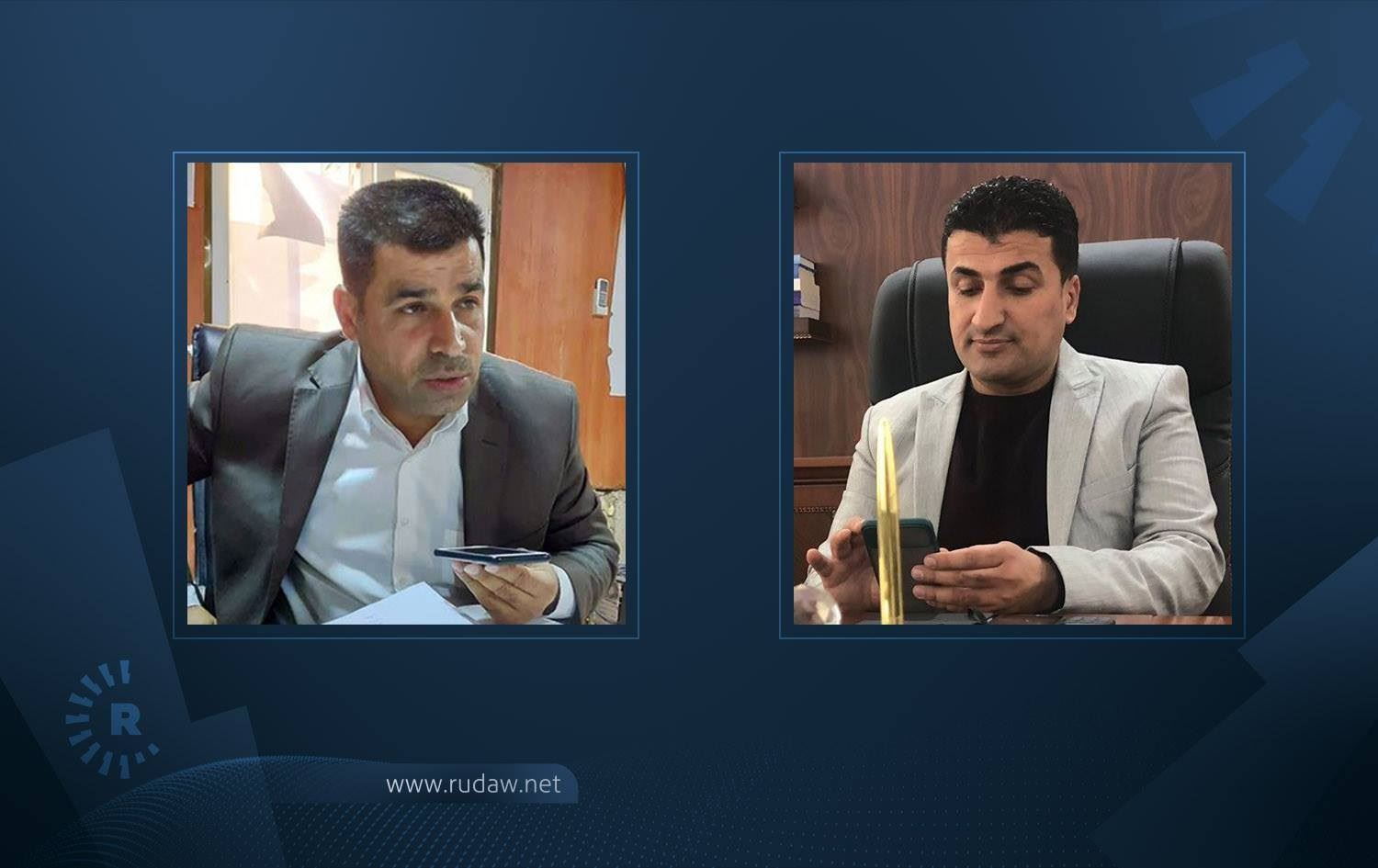
Ali Tofiq, head of the Parvizkhan border crossing with Iran, and Hussein Ahmad, the head of Garmian directorate customs office were arrested on Sunday. Photo: Rudaw
ERBIL, Kurdistan Region — Two border crossing officials in the Garmiyan administration were arrested on Sunday on what they claim to be unreasonable charges over a quality control incident last year.
Ali Tofiq, head of the Parvizkhan border crossing with Iran, and Hussein Ahmad, the head of Garmian directorate customs office were arrested after appearing in front of an investigative court in Quratu on Sunday.
According to Tofiq, the arrests were made due to the officials not notifying the court of a quality control case last year.
Upon the order of the Ministry of Finance, the Garmiyan administration customs office sent back 83 cars, that were meant to enter the Kurdistan Region from Iran through the Parviskhan border crossing, for not passing quality control standards set by the Ministry of Interior, which bans the entry of older and damaged cars.
Tofiq says the court says the cases should have been brought to them, despite receiving orders from the Ministry of Finance.
“The allegations against us are unreasonable. We have previously proved everything to the court and have clarified the case,” Tofiq told Rudaw English from Kalar prison on Sunday. “We sent back these cars by the order of the ministry. This is not the court’s job and we have no obligation to send all our files to the court every time something happens.”
“We do not even know why exactly we are arrested, they told us we should have brought all the cases to the court, but we have already clarified and explained all the process to the court. Besides, this was ordered from the ministry,” he added.
“This arrest was only to ruin our reputation,” Tofiq added. “Ever since we were arrested earlier today, word has been spreading that we were arrested for corruption and smuggling, and this are far from true.”
The Kurdistan Region has three official border crossings with Iran - Haji Omaran in Erbil province, Bashmakh in Sulaimani province, and Parvizkhan in the Garmiyan administration. There are also many other unofficial border points.
Goods are often smuggled through Parviskhan.
“The problem is that the leadership of the Kurdistan Region is also part of the ongoing smuggling going on in the region,” Change Movement (Gorran) MP in the Kurdistan Parliament Ali Hama Saleh told Rudaw English on Sunday.
“As we speak, all different kinds of goods are being smuggled into the Kurdistan Region through the border crossing and no one sheds light on them,” he added.
A court in Sulaimani province’s town of Penjwen filed a request in mid-December to the Kurdistan Region parliament, asking the legislative body to strip Gorran MPs Ali Hama Saleh and Daban Mohamad of their parliamentary immunity, according to documents shared on January 11.
The request came after officials from one of the Region’s border crossings with Iran, Bashmakh, filed a defamation suit against the MPs, claiming they had unjustly harmed the reputation of the institution by accusing it of being a site of cross-border smuggling.
In September 2020, a network that smuggled hundreds of millions of dinars' worth of goods into the Kurdistan Region through the Parvizkhan crossing was uncovered after an investigation by the Region's finance ministry and customs directorate.
Three weeks later, the spokesperson for the Kurdistan Region’s deputy prime minister Qubad Talabani announced that the government had formed a committee to study the issue of smuggling "in detail."
"This so-called smuggling definitely exists at border crossings – not at one specific border crossing, but all those present in Iraq and the Kurdistan Region,” spokesperson Samir Hawrami said.
The KRG’s interior and Peshmerga ministries were tasked by Prime Minister Masrour Barzani on January 7 with forming a new, joint force to prevent “violations and illegal movement” at the Kurdistan Region’s border crossings.


Comments
Rudaw moderates all comments submitted on our website. We welcome comments which are relevant to the article and encourage further discussion about the issues that matter to you. We also welcome constructive criticism about Rudaw.
To be approved for publication, however, your comments must meet our community guidelines.
We will not tolerate the following: profanity, threats, personal attacks, vulgarity, abuse (such as sexism, racism, homophobia or xenophobia), or commercial or personal promotion.
Comments that do not meet our guidelines will be rejected. Comments are not edited – they are either approved or rejected.
Post a comment