


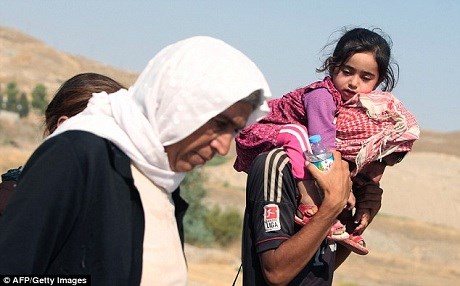
ERBIL, Kurdistan Region – Tens of thousands of victims of the Islamic State, many women and children, have been left abandoned after their suffering. Society’s attitude towards the victims needs to change, activists and experts warned at the Women: A Gate to Freedom conference in the Kurdistan Region on Sunday.
“The society doesn’t accept the victim as a normal person. This is especially true for the women who have been raped by Daesh gunmen,” psychologist Yusuf Othman told Rudaw English.
He further explained how individuals judge victims while imagining their own scenario of what might have happened to people under ISIS rule, including rape, torture, and sexual enslaving of female victims.
Othman said that women who escaped from ISIS continue to be victimized.
“People don’t see us anymore they don’t want to hear us, they are just curious about the terrorists. That hurts my feelings,” he quoted one of the victims saying during a therapy session.
Othman explained that the victim said she was sick of the questions her family, relatives, friends, and even media ask her.
“They all want to know how many men have raped me and how they treated me,” he quoted her as saying. She complained to him that people continue to ask her about the ISIS militants more than asking about her own feelings.
The lack of comprehensive and systematic support programs to help war victims, according to the Kurdish psychologist, will hamper the development of Kurdish society as a whole.
“We have studied historical cases of nations and communities that have been affected by war,” Othman explained. “We need to do a lot more to limit the harm of a war that already occurred and changed people’s lives.”
One aim of today’s conference in Erbil was to raise awareness.
Local and international humanitarian aid agencies and non-governmental organizations (NGOs) have been offering healing programs, including medical and psychological treatment, and workshops to the victims of war inside the refugee camps. Their services have especially focused on the Yezidi women who have been used as sex slaves by ISIS since the radical fighters went on a rampage of murder, looting, rape, and abduction of girls and women after attacking the Yezidi town of Shingal in August 2014.
Activists believe the aid programs are far from enough.
An Erbil women’s organization, Twanasazi (Enhancing Women), that organized Sunday’s conference in cooperation with the Jordanian Women Against Violence Association, told Rudaw that it has offered a 2-year program in Khanke, a Yezidi refugee camp in Duhok, most of whose residents were held captive by ISIS for months, some more than a year.
The services, according to program manager Jwan Pshtiwan, include humanitarian, social, legal, and medical help, but she revealed that much of the aid has been halted due to the financial crisis the Kurdistan Region is currently facing.
Dr. Othman laments that although NGOs, local organizations, and activists all are trying to help the victims, there is no systematic centralized body or mechanism to offer long-term support to the war victims.
He also believes that society needs more educational programs to teach people how to deal with victims of war violence.
“We must start with teaching our children in schools how to understand and accept the victims,” Othman explained. “The main obstacle is the society and not the victim.”
Khzer Doumli, a scholar and activist working on Yezidi cases, shared similar concerns.
“Unfortunately aid programs for war victims and rescued Yezidi women are for a limited, short term, while we are in great need of long-term physical and mental programs,” Doumli said.
Another problem, Doumli noted, is the gap that has been created between the victims and humanitarian organizations as many of the aid programs were put on hold.
Speaking about children who experienced the brutality of ISIS, Doumli said there has not been a single program that would deal with only children’s problems and would consider them as victims of the war.
Kurdish Yezidi lawmaker Vian Khalil, said in a tweet on April 22 that so far, “We have 2745 orphans since #ISIL attacked the Yezidis in 2014 & over 1000 children still in ISILs brainwashing camps.”
She also noted that at least 500,000 Yezidi men, women, and children have been displaced and become refugees since 2014.
According to Doumli, at least 2000 Yezidi women are still in captivity, held by Islamic State militants; more than 1600 women have so far managed to escape ISIS.
“The society doesn’t accept the victim as a normal person. This is especially true for the women who have been raped by Daesh gunmen,” psychologist Yusuf Othman told Rudaw English.
He further explained how individuals judge victims while imagining their own scenario of what might have happened to people under ISIS rule, including rape, torture, and sexual enslaving of female victims.
Othman said that women who escaped from ISIS continue to be victimized.
“People don’t see us anymore they don’t want to hear us, they are just curious about the terrorists. That hurts my feelings,” he quoted one of the victims saying during a therapy session.
Othman explained that the victim said she was sick of the questions her family, relatives, friends, and even media ask her.
“They all want to know how many men have raped me and how they treated me,” he quoted her as saying. She complained to him that people continue to ask her about the ISIS militants more than asking about her own feelings.
The lack of comprehensive and systematic support programs to help war victims, according to the Kurdish psychologist, will hamper the development of Kurdish society as a whole.
“We have studied historical cases of nations and communities that have been affected by war,” Othman explained. “We need to do a lot more to limit the harm of a war that already occurred and changed people’s lives.”
One aim of today’s conference in Erbil was to raise awareness.
Local and international humanitarian aid agencies and non-governmental organizations (NGOs) have been offering healing programs, including medical and psychological treatment, and workshops to the victims of war inside the refugee camps. Their services have especially focused on the Yezidi women who have been used as sex slaves by ISIS since the radical fighters went on a rampage of murder, looting, rape, and abduction of girls and women after attacking the Yezidi town of Shingal in August 2014.
Activists believe the aid programs are far from enough.
An Erbil women’s organization, Twanasazi (Enhancing Women), that organized Sunday’s conference in cooperation with the Jordanian Women Against Violence Association, told Rudaw that it has offered a 2-year program in Khanke, a Yezidi refugee camp in Duhok, most of whose residents were held captive by ISIS for months, some more than a year.
The services, according to program manager Jwan Pshtiwan, include humanitarian, social, legal, and medical help, but she revealed that much of the aid has been halted due to the financial crisis the Kurdistan Region is currently facing.
Dr. Othman laments that although NGOs, local organizations, and activists all are trying to help the victims, there is no systematic centralized body or mechanism to offer long-term support to the war victims.
He also believes that society needs more educational programs to teach people how to deal with victims of war violence.
“We must start with teaching our children in schools how to understand and accept the victims,” Othman explained. “The main obstacle is the society and not the victim.”
Khzer Doumli, a scholar and activist working on Yezidi cases, shared similar concerns.
“Unfortunately aid programs for war victims and rescued Yezidi women are for a limited, short term, while we are in great need of long-term physical and mental programs,” Doumli said.
Another problem, Doumli noted, is the gap that has been created between the victims and humanitarian organizations as many of the aid programs were put on hold.
Speaking about children who experienced the brutality of ISIS, Doumli said there has not been a single program that would deal with only children’s problems and would consider them as victims of the war.
Kurdish Yezidi lawmaker Vian Khalil, said in a tweet on April 22 that so far, “We have 2745 orphans since #ISIL attacked the Yezidis in 2014 & over 1000 children still in ISILs brainwashing camps.”
She also noted that at least 500,000 Yezidi men, women, and children have been displaced and become refugees since 2014.
According to Doumli, at least 2000 Yezidi women are still in captivity, held by Islamic State militants; more than 1600 women have so far managed to escape ISIS.
Comments
Rudaw moderates all comments submitted on our website. We welcome comments which are relevant to the article and encourage further discussion about the issues that matter to you. We also welcome constructive criticism about Rudaw.
To be approved for publication, however, your comments must meet our community guidelines.
We will not tolerate the following: profanity, threats, personal attacks, vulgarity, abuse (such as sexism, racism, homophobia or xenophobia), or commercial or personal promotion.
Comments that do not meet our guidelines will be rejected. Comments are not edited – they are either approved or rejected.
Post a comment