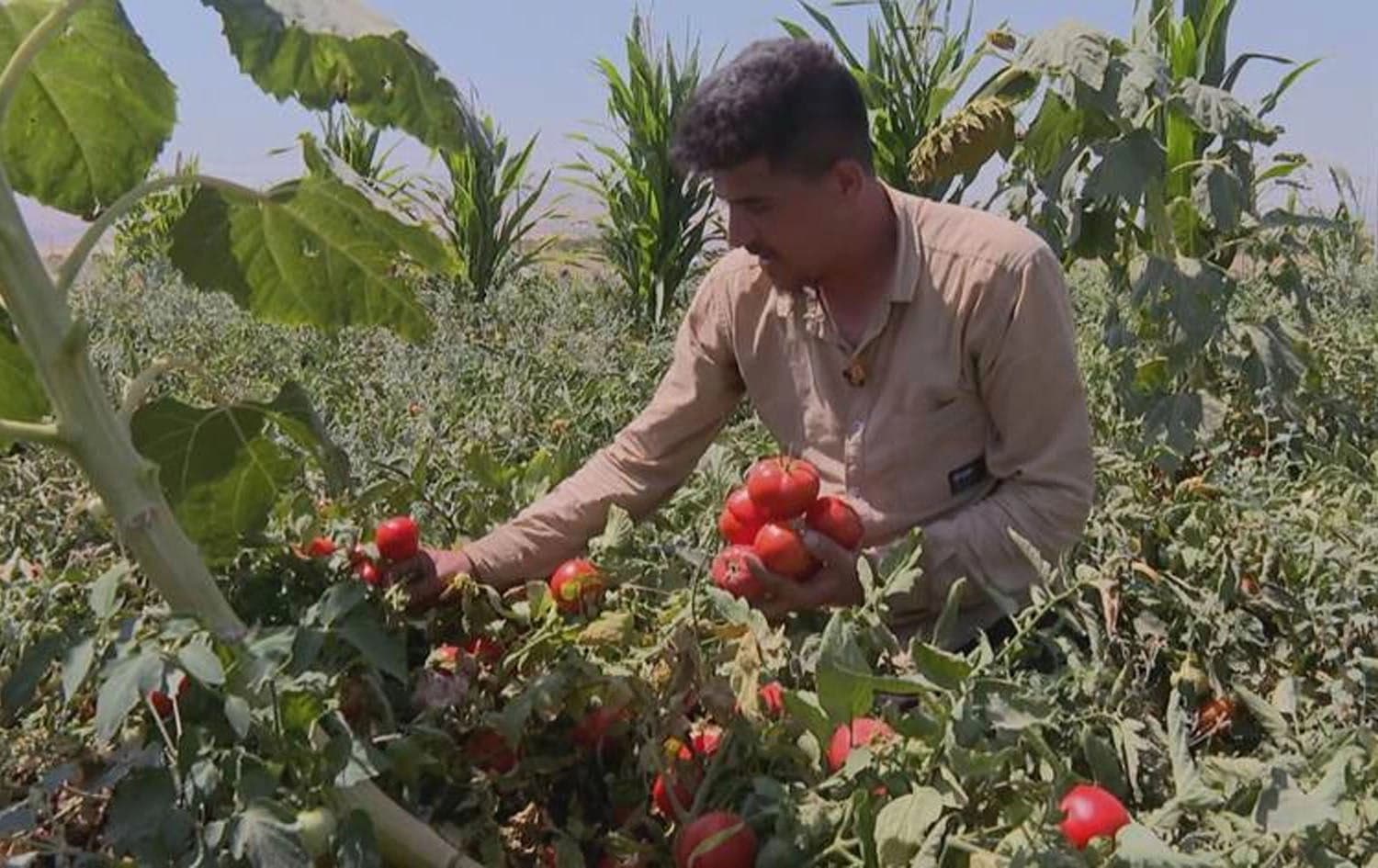

ERBIL, Kurdistan Region - Faced with plunging prices, rising costs and cheap imports, tomato farmers in Halabja province say they are once again facing financial ruin.
Marwan Irfan, a farmer from Bakraw village in Halabja province who planted six dunams of tomatoes, said selling locally barely covers packaging costs.
“Our produce sells for 100 dinars per kilogram in the market, which is what it costs just for the crates,” Irfan told Rudaw on Thursday. “We ask the government to help us sell our produce. Sending to Sulaimani’s market doesn’t pay, and Kalar has its own supply. Without what we’ve spent on cultivation, all expenses become losses and we will go bankrupt.”
Some farmers have turned to the tomato paste factory in Sulaimani province’s Sharazur, where prices are slightly higher at around 150 dinars per kilogram.
“Yesterday I had over two tons in Sulaimani and brought back just 25,000 dinars. I was in the market from 9 am until evening just to make 10 dinars more, but it didn’t work,” said Rizgar Jalal, another farmer, complaining that there is no market for his produce.
“We say let’s not let it rot, so we bring it to the factory,” he said.
The Sharazur tomato paste factory - established in 2014 as Iraq’s first - can process 10 to 12 tons of tomatoes per hour.
“If the government helps us by providing long-term loans or fuel, we could receive more,” said factory owner Kamaran Mohammed. “We get tomatoes from Kalar, Sharazur, and Erbil. We wanted to take from Duhok too, but couldn’t because of transportation costs. Our doors are open from 4 am, and depending on the quality, we pay higher prices.”
Sattar Mahmoud, director general of agriculture in Halabja, said tomato production in the Kurdistan Region continues to grow each year, but farmers’ biggest challenge remains the lack of markets. Better exports and coordinated planning, he noted, could help farmers sell their crops more effectively.
On several occasions, Kurdish farmers, forced to sell at a loss due to low prices, have destroyed their crops in protest.