


ERBIL, Kurdistan Region—Do you know that you -- as an Iraqi Kurd or foreigner -- have the legal right to demand information and documents from the Kurdistan Regional Government? Do you know you could make the same demand of any company, organization, or political party that also receives government funding? Do you know that you can sue any such institution that refuses your request?
If the answer is no, you are not alone. The Kurdish press is also largely unaware of its own rights.
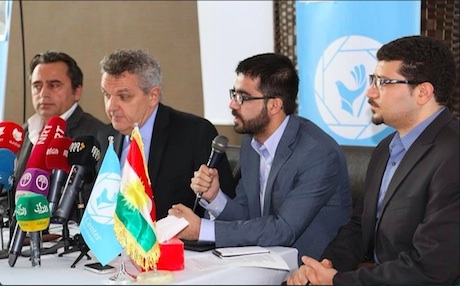
On May 15th, members of the press, parliament, and the diplomatic community gathered at the German Consulate General in Erbil to (belatedly) celebrate World Press Freedom Day. The event could have been a self-congratulatory cocktail party, but it turned out to be a scorching indictment of the region’s journalists.
Discussion focused on the Right to Access Information Law, which quietly passed in the Kurdistan Regional Government (KRG) parliament seven months ago. This so-called “sunshine law” was designed to cast light on government activity. Although there are limitations to the information citizens can request, the law formalizes the right of access to a range of information from publically funded entities, mandating they respond to requests in a timely manner or face fines.
The Media Academy of Iraq, co-organizers of the event with the German Consulate, distributed copies of the law, with translations for foreigners. The parliamentarians responsible for passing it walked the audience through each of its articles and fielded questions. The law hasn’t been implemented, they determined, because journalists haven’t yet exercised their newfound rights.
Much attention has been paid to violence against Kurdish journalists, most recently in a detailed Committee to Protect Journalists report by Rudaw’s Namo Abdulla. It indicates that the nearly 700 attacks on journalists in the region over the last years have led to self-censorship in the media.
“Journalists are still being killed in Kurdistan,” admits Dana Asaad of Media Academy Iraq. But he stresses that journalists are rightly “accused of being unprofessional because they frequently publish false information and rely on anonymous sources.” If there is a lack of transparency in the country, lazy and unethical journalism is a big part of the problem.
Parliamentarian Sardar Harki explains that the media does not do enough research before taking a position. “There is a general problem with a lack of awareness about new laws,” he says. “The media responded to the Right to Access Information Law by picking it apart. They were overwhelmingly critical, and they didn’t even read it!”
Officials at the Independent Commission for Human Rights in Kurdistan, the body overseeing the law’s implementation, confirmed that not a single journalist has appealed the denial of information.
“The media was unrelenting of their criticism of the law before it was even implemented,” says Diya Butros, President of the Commission. According to him, journalists should understand that they have a role to play in the implementation process. They must establish a precedent by insisting upon their rights. They should also act as a watchdog, calling attention to any non-compliance.
Butros notes that other actors have not helped. Requests for institutions to name dedicated “information officers,” individuals accountable for processing information requests, have been frequently ignored.
Setting up an effective sunshine law can be difficult, even in advanced democracies.
“In Germany we introduced something similar only in 2006,” says German Consul General Alfred Simms-Protz. “I have to admit that government officials like me don’t always like these laws. It makes our lives a lot harder and gives us a lot of extra work. Governments respond by charging for basic information—that’s one of the ways they try to discourage the public.” He looks into the crowd. “I would encourage you to make your governments adhere to this law as strictly as possible.”
Paradoxically, the countries with the best sunshine laws are not always the healthiest democracies. Often they are new democracies transitioning from periods of conflict. Nonprofits Access to Info Europe and the Centre for Law and Democracy put together a right to information (RTI) index. Serbia has the highest score in the world, and Liberia, El Salvador and Sierra Leone come in fourth, fifth, and sixth respectively. Austria is at the bottom of the list.
Index trends offer hope for Kurdistan. Top scorers are usually countries with new laws that reflect the latest international standards. At the same time, the will to implement the legislation is what really matters: Slovenia, India, and Mexico have been standout successes.
Comments
Rudaw moderates all comments submitted on our website. We welcome comments which are relevant to the article and encourage further discussion about the issues that matter to you. We also welcome constructive criticism about Rudaw.
To be approved for publication, however, your comments must meet our community guidelines.
We will not tolerate the following: profanity, threats, personal attacks, vulgarity, abuse (such as sexism, racism, homophobia or xenophobia), or commercial or personal promotion.
Comments that do not meet our guidelines will be rejected. Comments are not edited – they are either approved or rejected.
Post a comment