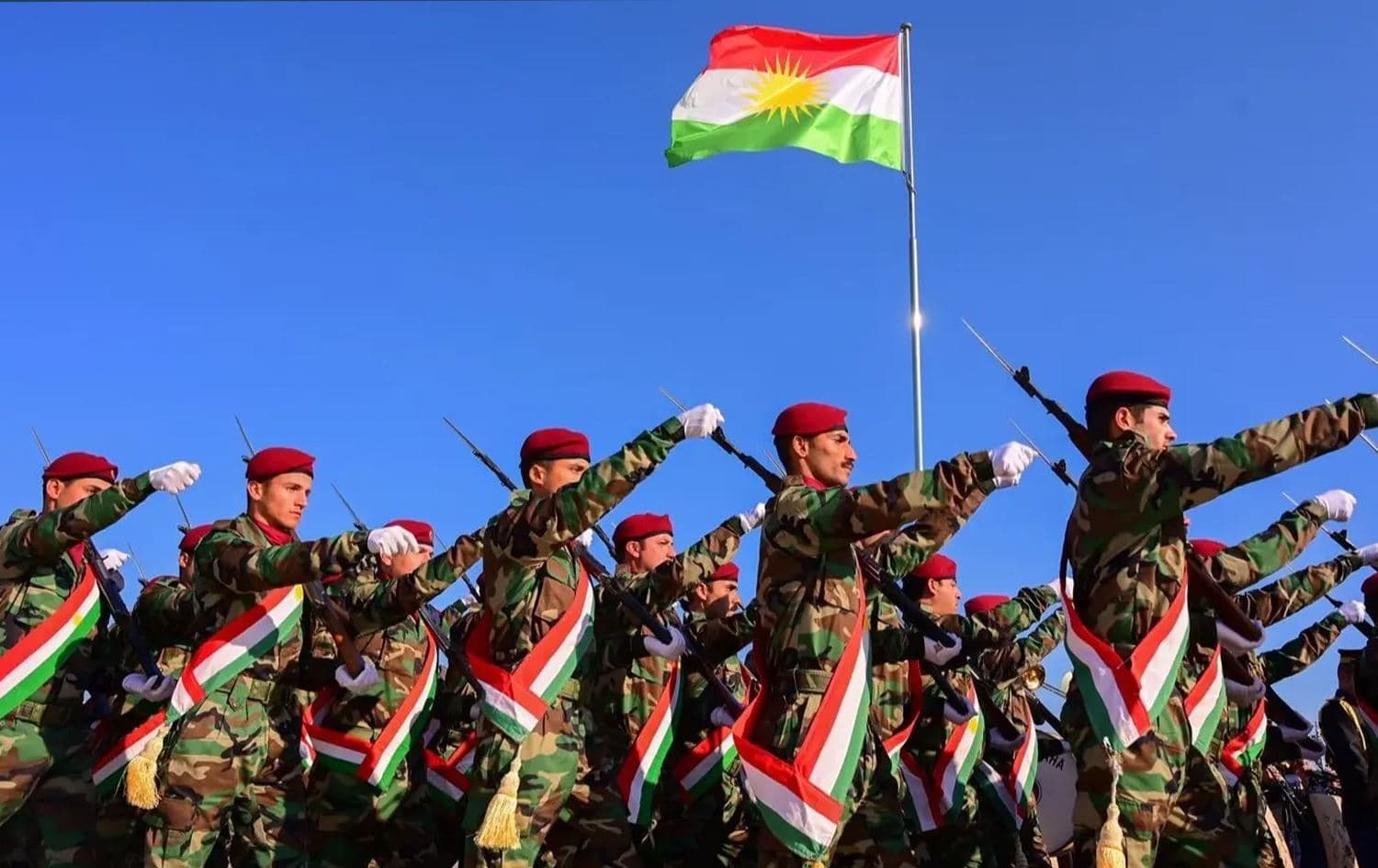
ERBIL, Kurdistan Region - A significant step toward unifying the Peshmerga forces was taken on Thursday as Kurdistan Region Prime Minister Masrour Barzani signed a decree placing the Peshmerga forces, that were previously under the command of the ruling political parties, under the Ministry of Peshmerga Affairs.
The decree outlines the administrative, legal, and financial authorities of corps and division commands operating under the ministry. The move is intended to advance the reunification and reorganization of the Peshmerga in accordance with Reform Law No. 2 of 2020.
The milestone marks a substantial step toward consolidating all Peshmerga units under a unified command structure. Central to the effort is the integration of Unit 70 and Unit 80 - forces affiliated with the Patriotic Union of Kurdistan (PUK) and the Kurdistan Democratic Party (KDP), respectively - into a single chain of command. Together, the two units comprise the majority of the Peshmerga forces, totaling more than 100,000 personnel.
Units 70 and 80 will now operate under Regional Command 1 and Regional Command 2.
“Following the signing of the authorities of the Regional Commands by Kurdistan Region President Nechirvan Barzani and the prime minister, a major step has now been taken toward unifying the Peshmerga,” Brig. Gen. Bakhtyar Mohammed, secretary-general of the Ministry of Peshmerga Affairs, told Rudaw.
The move follows a decree signed by President Nechirvan Barzani authorizing the powers of the Regional Commands. Prime Minister Masrour Barzani subsequently issued an executive order defining the commands’ budgetary and legal responsibilities.
“What has been done is not the final step toward uniting the Peshmerga, but it is a big and important one, because unification itself is a complex and significant issue,” Mohammed said.
He added: “From now on, the forces of the regional commands will no longer be party-based as before, and their partisan character will gradually fade."
The Kurdistan Regional Government (KRG) has pursued military unification for years, seeking to establish a professional, depoliticized national force free from partisan control.
The initiative has received consistent backing from international allies, particularly the United States and the US-led Global Coalition against the Islamic State (ISIS).
Despite sustained international support, the unification process had faced repeated setbacks. Between 2010 and 2013, approximately 42,000 Peshmerga from Units 70 and 80 were merged into 14 brigades. However, progress stalled amid internal political tensions and the outbreak of war against ISIS in 2014.