


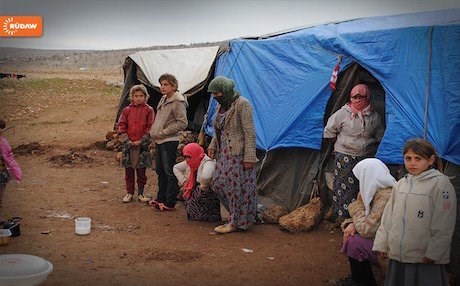
ERBIL, Kurdistan Region – At least 3,735 Yezidis are still under Islamic State (ISIS) captivity, said an official, noting that efforts are ongoing to free them from the radical group.
“The number of those who have not escaped is 3,735 persons. Our efforts are to free all of them from ISIS,” Khairi Bozani, head of Yezidi affairs in the Kurdistan Regional Government's religious affairs ministry, told Rudaw.
When ISIS attacked and controlled Shingal in August 2014, it took 6,413 Yezidis captive, including women, children, and the elderly, and killed hundreds of their men.
Of the 6,413, Bozani revealed, 3,443 were women and girls.
“Around 2,678 have been freed or escaped, including 971 women, 327 men, 690 boys and 690 girls.”
In the beginning, many Yezidis managed to escape on their own. But as time passed, escape became more difficult, so many rescue networks were set up in the Kurdistan Region to free them.
Many were freed from ISIS via payment of ransoms.
The United Nations reported in June that ISIS had earned some $45 million from ransoms paid for Yezidi captives by their families, suggesting that the money families paid end up in the coffers of the organization.
At the time, Bozani disputed the report and asked UN Secretary General Ban Ki-moon to clarify where this money had come from and where it had gone. The UN then issued a clarification, stating that the figure also included estimates of external donations to the terrorist group in addition to ransoms paid by families of hostages.
To run the affairs of the Yezidi escapees, the KRG set up an office for them in Duhok.
Nadia Murad, who was one of the victims of the ISIS atrocities against the Yezidis and was held captive by the group, became the voice of all the Yezidis after she was appointed goodwill ambassador for the United Nations.
Comments
Rudaw moderates all comments submitted on our website. We welcome comments which are relevant to the article and encourage further discussion about the issues that matter to you. We also welcome constructive criticism about Rudaw.
To be approved for publication, however, your comments must meet our community guidelines.
We will not tolerate the following: profanity, threats, personal attacks, vulgarity, abuse (such as sexism, racism, homophobia or xenophobia), or commercial or personal promotion.
Comments that do not meet our guidelines will be rejected. Comments are not edited – they are either approved or rejected.
Post a comment