


ERBIL, Kurdistan Region – Saudi Arabia is ready to support Internally Displaced People (IDPs) in the Kurdistan Region and strengthen its business and economic ties, said a KRG statement.
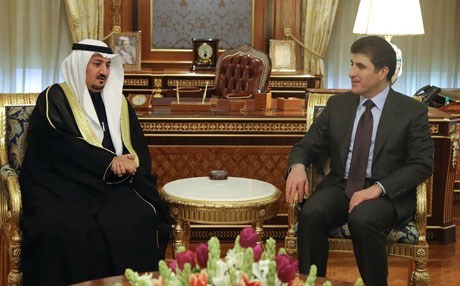
The Consul General of Saudi Arabia in Erbil, Abdulerhman Salih Mahmood discussed bilateral relations and economic ties on Sunday with Kurdish Prime Minister Nechirvan Barzani.
He praised the role of Kurdish Peshmerga forces battling Islamic State.
Mahmood said increasing trade and Saudi investment in Kurdistan Region will be a priority for the newly-opened Saudi consulate in Erbil.
He also promised of Saudi help for the IDPs who have been sheltered in Kurdistan Region, and said that they are in contact with Kurdish officials on this issue.
Saudi Arabia officially opened its consulate in the Kurdistan Region capital of Erbil earlier this month, paving the way for closer ties with Riyadh, the Middle East’s economic powerhouse.
With the Saudi Consul General Abdulmunam Abdulerhman Salih Mahmood officially taking on his post it is believed that Erbil will also open a representative office in Riyadh.
The Consul General of Saudi Arabia in Erbil, Abdulerhman Salih Mahmood discussed bilateral relations and economic ties on Sunday with Kurdish Prime Minister Nechirvan Barzani.
He praised the role of Kurdish Peshmerga forces battling Islamic State.
Mahmood said increasing trade and Saudi investment in Kurdistan Region will be a priority for the newly-opened Saudi consulate in Erbil.
He also promised of Saudi help for the IDPs who have been sheltered in Kurdistan Region, and said that they are in contact with Kurdish officials on this issue.
Saudi Arabia officially opened its consulate in the Kurdistan Region capital of Erbil earlier this month, paving the way for closer ties with Riyadh, the Middle East’s economic powerhouse.
With the Saudi Consul General Abdulmunam Abdulerhman Salih Mahmood officially taking on his post it is believed that Erbil will also open a representative office in Riyadh.
Comments
Rudaw moderates all comments submitted on our website. We welcome comments which are relevant to the article and encourage further discussion about the issues that matter to you. We also welcome constructive criticism about Rudaw.
To be approved for publication, however, your comments must meet our community guidelines.
We will not tolerate the following: profanity, threats, personal attacks, vulgarity, abuse (such as sexism, racism, homophobia or xenophobia), or commercial or personal promotion.
Comments that do not meet our guidelines will be rejected. Comments are not edited – they are either approved or rejected.
Post a comment