


Kurdistan

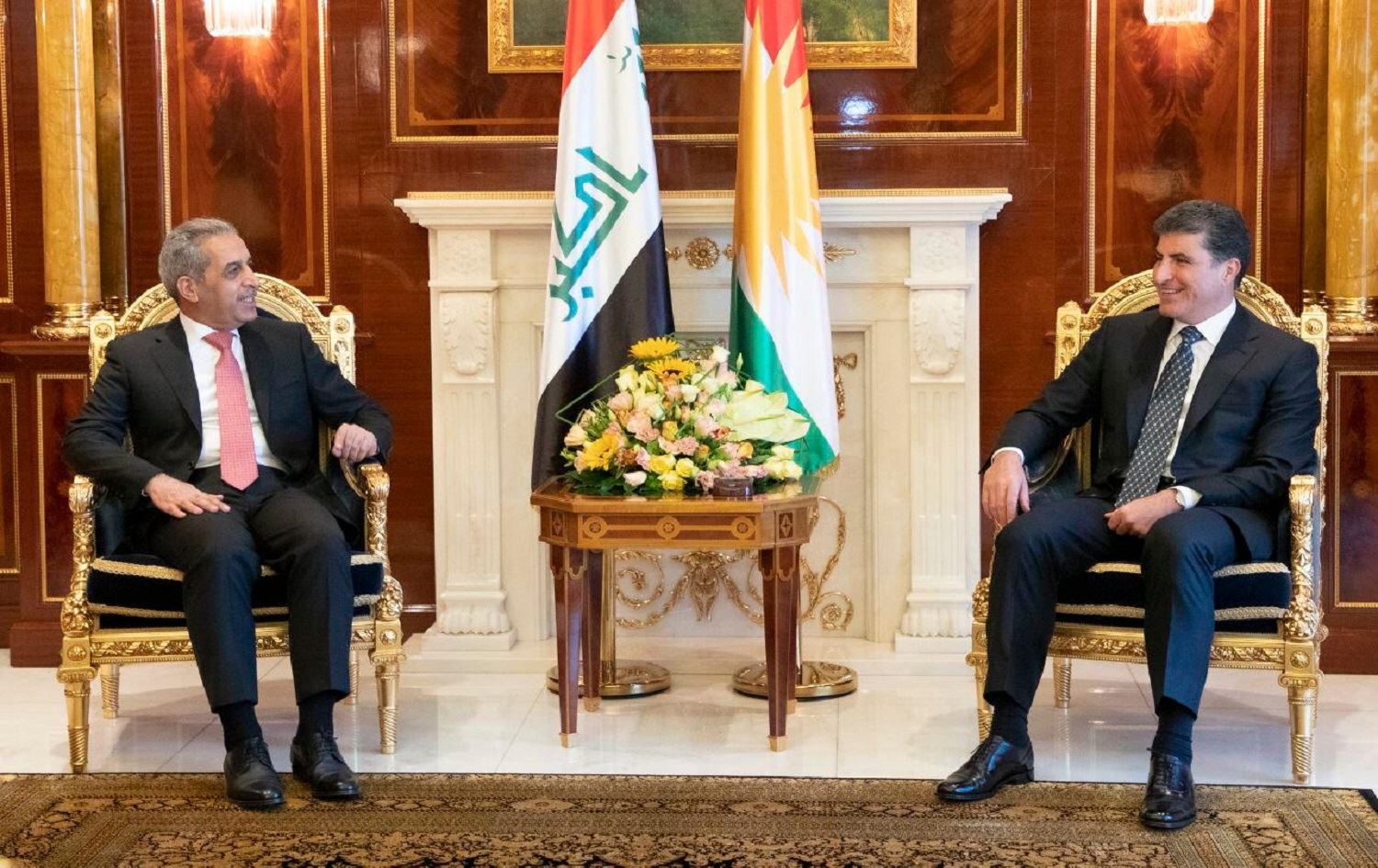
Kurdistan Region President Nechirvan Barzani meets with Fayiq Zidan, president of Iraq’s Supreme Judicial Council in Erbil on September 29, 2020. Photo: Kurdistan Region Presidency
ERBIL, Kurdistan Region — Kurdistan Region President Nechirvan Barzani met with the Iraqi Supreme Judicial Council on Tuesday, requesting continued support and training for its Kurdish counterpart.
Barzani received the president of Iraq’s Supreme Judicial Council, Fayiq Zidan, in Erbil and discussed several matters regarding the judiciary in Iraq and the Kurdistan Region, as well as the continuation of cooperation between the Iraqi council and the Kurdistan Region’s Judicial Council.
“The meeting focused on the Iraqi judiciary system and the work and functions of the Iraqi Supreme Judicial Council, the federal court, and the cooperation and coordination between the judicial council in the Kurdistan Region and the Iraqi Judicial Council,” read a statement from theh Kurdistan Region Presidency on Tuesday.
The meeting was attended by both Kurdistan Regional Government (KRG) Minister Of Justice Farsat Ahmad and Bangin Qassem, president of the Kurdistan Region Judicial Council, according to the statement.
“Barzani expressed his gratitude for the cooperation and coordination between the relevant parties in the judiciary in Iraq and the Kurdistan Region, and hoped that the Iraqi judicial council would continue its support and training for the Kurdistan Region Judicial Council,” the statement added.
Iraq’s judicial council has come under pressure from Iraqi protesters to identify and reveal the killers of Iraqi protesters. The council is yet to reveal any names.
Iraq has seen frequent protests since October 2019, with demonstrators demanding basic services, jobs, and the fall of the corruption-rife political establishment that have been in place since the 2003 US invasion.
When security forces and pro-Iran militias began attacking the protesters, killing hundreds, activists began demanding an end to foreign interference in Iraqi affairs and called for the overthrow of the political elite.
Nearly 560 protesters and security force members have been killed since October 2019, according to data provided by Hisham Dawoud, advisor to the prime minister.
However, human rights monitor Amnesty International estimates that at least 600 protesters and members of the security forces have been killed, with more than 18,000 injured in the protests.
Prime Minister Mustafa al-Kadhimi has previously vowed to bring the perpetrators to justice.
Leaders from across the political spectrum have condemned the deaths, but protesters complain that the killers – largely believed to be members of Iran-backed militias – are not being brought to justice.
Under the rule of Kadhimi’s government, two protesters were killed in clashes with security forces in July, when electricity cuts and soaring temperatures prompted demonstrations in central Baghdad.
Kadhimi ordered an investigation into the deaths, demanding answers within 72 hours.
The Iraqi government suspended three soldiers, including two senior officers, in connection with the deaths.


Comments
Rudaw moderates all comments submitted on our website. We welcome comments which are relevant to the article and encourage further discussion about the issues that matter to you. We also welcome constructive criticism about Rudaw.
To be approved for publication, however, your comments must meet our community guidelines.
We will not tolerate the following: profanity, threats, personal attacks, vulgarity, abuse (such as sexism, racism, homophobia or xenophobia), or commercial or personal promotion.
Comments that do not meet our guidelines will be rejected. Comments are not edited – they are either approved or rejected.
Post a comment