
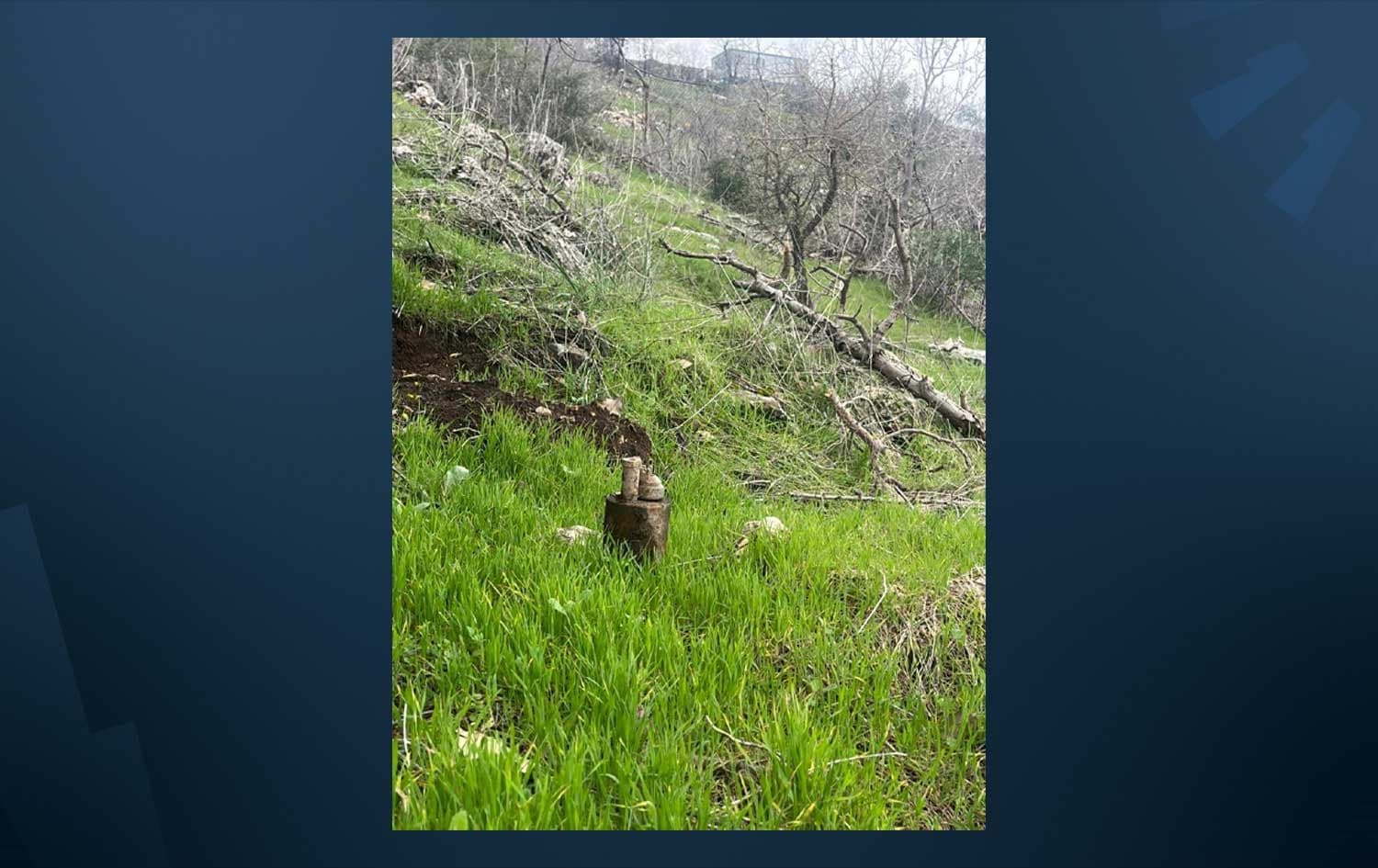
ERBIL, Kurdistan Region - Heavy rainfall in the Kurdistan Region has caused landmines to shift from their original positions, putting civilian lives at “significant” risk, the Region’s Mine Action Agency (IKMAA) warned on Monday.
Head of the IKMAA, Jabbar Mustafa, told Rudaw that recent torrential rains have caused mines and explosives on hillsides to shift from their original positions, warning that "this creates a significant danger to people's lives."
The Kurdistan Region’s rugged terrain continues to harbor landmines from the Iran-Iraq War (1980–1988), more recent clashes between Turkey and the Kurdistan Workers’ Party (PKK), and other conflicts, including Islamic State (ISIS) control of parts of Iraq between 2014 and 2017.
Mustafa urged people to act cautiously when going out to gather spring herbs. "We ask citizens to contact the hotline, 182, or our agency whenever they see a suspicious object, to prevent any tragic incidents," he said.
This comes amid a wave of snow and heavy rainfall that has swept across the Kurdistan Region this year. Since late last year, Iraq and the Kurdistan Region have experienced torrential rains, causing flash floods and overflowing rivers and dams.
The districts most at risk include Penjwen district in Sulaimani province on the Iranian border, followed by Choman in Erbil province and Amedi in Duhok province. Since the beginning of this year, two people have died, and two others were injured due to mine explosions, Mustafa said.
Providing the most recent updates on landmine contamination in the Kurdistan Region, Mustafa said that the total area affected is 776 square kilometers, of which 576 square kilometers have been cleared, leaving 200 square kilometers still contaminated, stretching from Duhok's Zakho administration to Khanaqin in the Garmiyan area.
Under a 2024 memorandum of understanding, the Iraqi Directorate for Mine Action (DMA) and IKMAA are cooperating on technical support for mine clearance through 2028.
According to the Iraqi environment ministry, more than 4,500 square kilometers of land in Iraq and the Kurdistan Region have been cleared of mines since 2003.
Despite ongoing clearance efforts, landmines remain a persistent threat in the Region. In 2024, landmines and unexploded ordnance killed six people and left four others amputated in Erbil province, according to Ali Abdulrahman, director of the IKMAA in Erbil.
Speaking during a press conference in January, Abdulrahman added that over 800,799 square meters of land were cleared of mines in Erbil province and the Soran administration in 2025. During the same period, IKMAA teams detected and destroyed 1,616 anti-personnel mines, two anti-tank mines, and 23,163 pieces of unexploded ordnance. Eleven minefields in Erbil were fully cleared and returned to their owners, but 283 remain uncleared. “A plan has been prepared to remove these mines in the future,” he said.

.png&w=3840&q=75)