



Error occured during this request! Please try again later.
Kurdistan

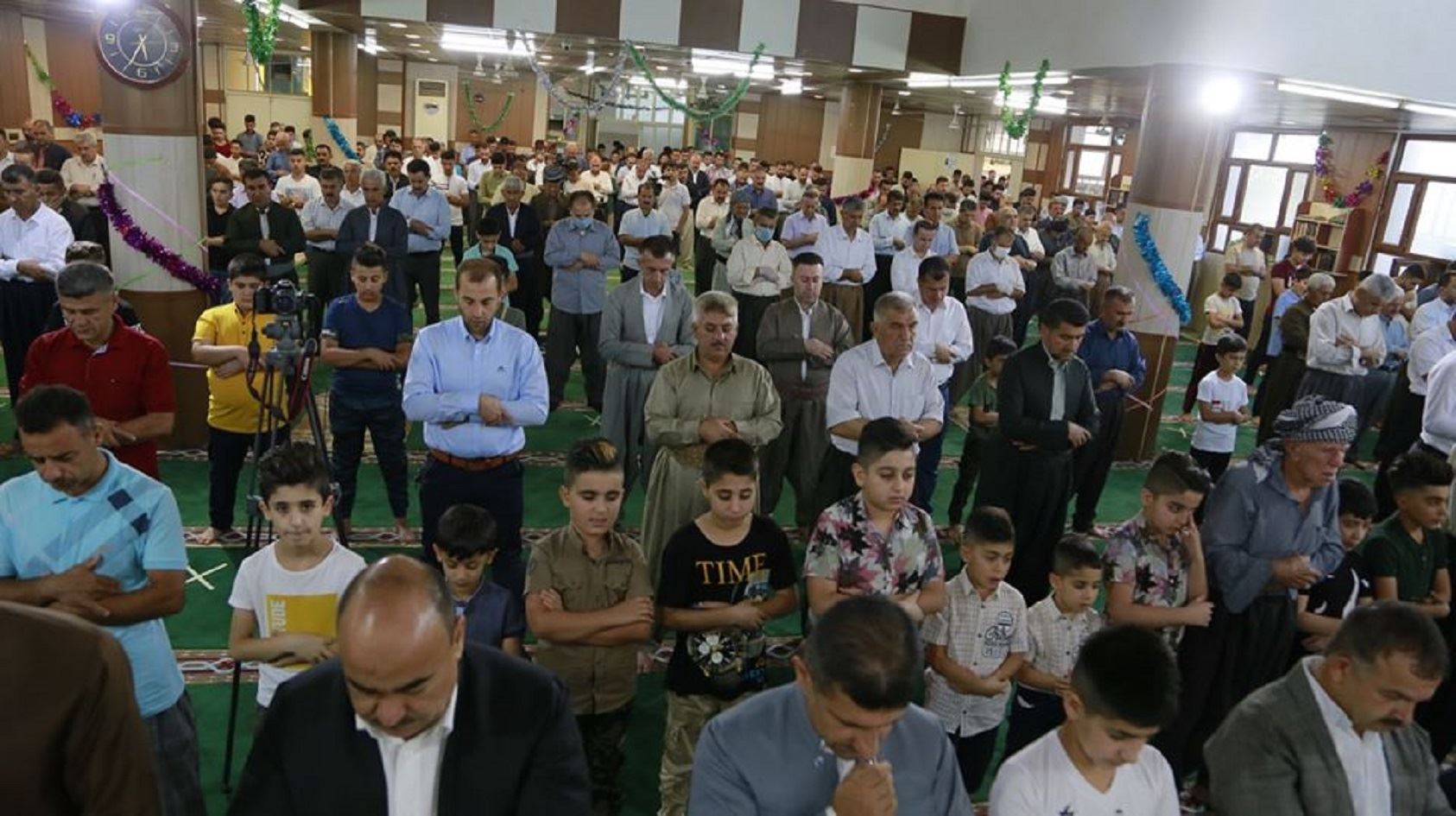
Eid prayer at Bahasht mosque in the city of Halabja on Friday. Photo submitted by Jamal Sargati
ERBIL, Kurdistan Region – Numerous mosques in the Kurdistan Region opened their doors to worshippers for Eid al-Adha prayers on Friday, ignoring a government ban on collective prayers for the holiday amidst the COVID-19 pandemic.
Friday is the first day of Eid al-Adha for Muslims around the world. Despite a ban from the Ministry of Endowments and Religious Affairs and a committee set up to counter coronavirus in the Kurdistan Region, some mosques did not adhere to the health instructions. Many in Erbil, Sulaimani, Duhok and Halabja, among other places in the Region headed to the houses of worship to mark the first day of the holiday on Friday.
Commemorating the willingness of the Prophet Abraham to sacrifice his son at the request of God but instead being permitted to slaughter a lamb instead, Muslims around the world often slaughter an animal for the holiday, among other traditions.
In the Kurdistan Region, after finishing an Eid feast, family, friends and neighbors then visit each other's homes. Men and women often wear traditional Kurdish clothing, while children dress in brand new outfits specifically bought for the special holiday.
Guests are often met with hot tea and special sweets called kulicha, which is made especially for Eid. Kulicha is a sweetened pastry stuffed or covered with dates or walnuts with sugar and spices such as cinnamon added for flavor.
Adults also give children jazhnana, a gift of money, and have candy or chocolate available for those who visit their homes with their parents.
In addition to the festivities of coming together to celebrate the first day of Eid, it is also customary for Muslims to visit cemeteries to pay their respects to loved ones they have lost.
With the number of virus cases continuing to grow in Iraq, the Erbil Province Operation Room on July 3 called on mullahs to not conduct prayers at mosques for the holiday. The director general of the Sulaimani Endowment issued the same instructions.
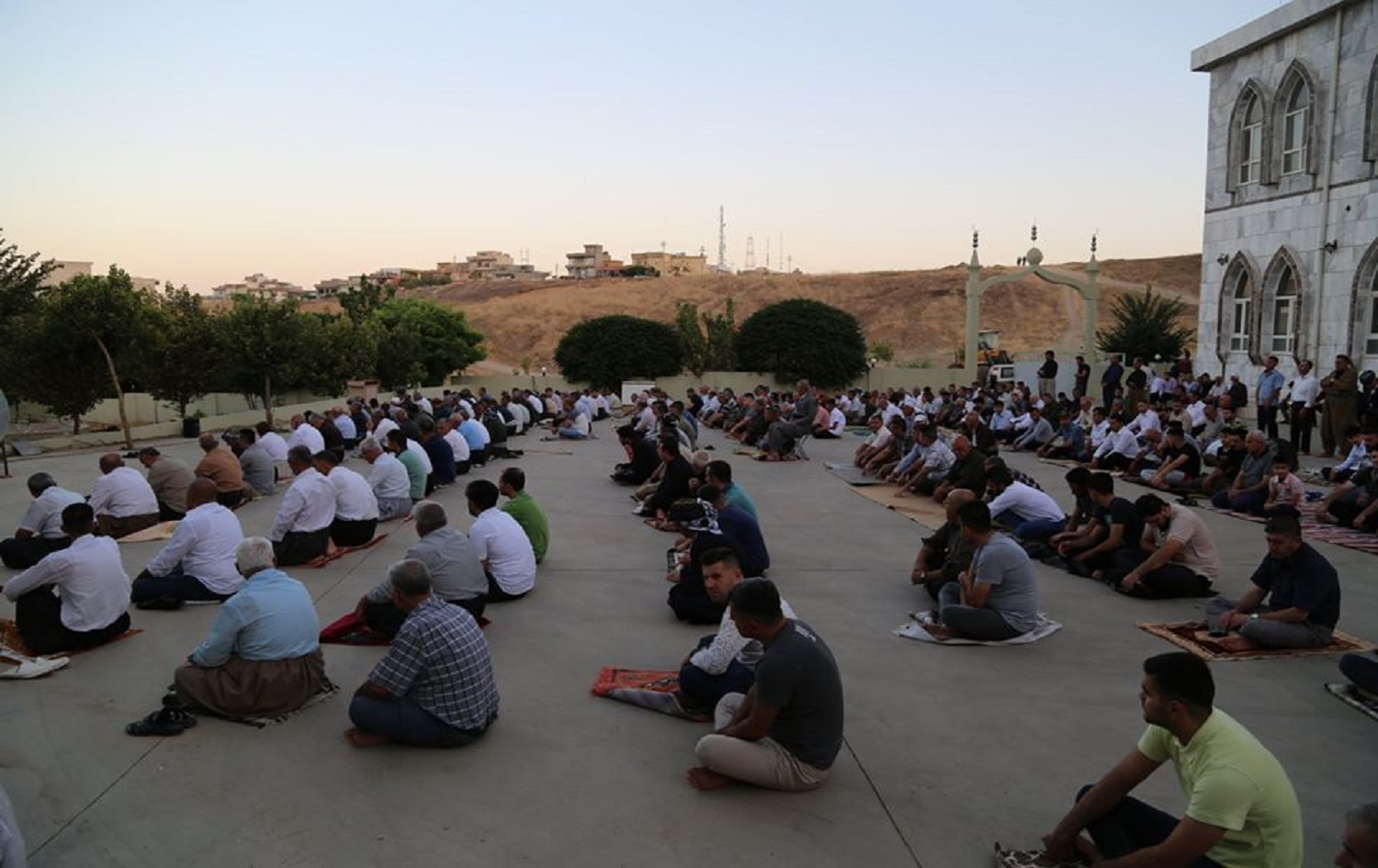
Despite this, Eid al-Adha prayer was held in all cities of the Kurdistan Region. In Erbil, the Eid prayer was performed in the mosque of Altun, in Sulaimani the Eid was celebrated at the Great Mosque, and in Duhok, the front yard of Haji Ahmed Mosque was open for prayers.
Although many worshippers wore face masks during prayers, a number of the mosques were overcrowded.
Friday is the first day of Eid al-Adha for Muslims around the world. Despite a ban from the Ministry of Endowments and Religious Affairs and a committee set up to counter coronavirus in the Kurdistan Region, some mosques did not adhere to the health instructions. Many in Erbil, Sulaimani, Duhok and Halabja, among other places in the Region headed to the houses of worship to mark the first day of the holiday on Friday.
Commemorating the willingness of the Prophet Abraham to sacrifice his son at the request of God but instead being permitted to slaughter a lamb instead, Muslims around the world often slaughter an animal for the holiday, among other traditions.
In the Kurdistan Region, after finishing an Eid feast, family, friends and neighbors then visit each other's homes. Men and women often wear traditional Kurdish clothing, while children dress in brand new outfits specifically bought for the special holiday.
Guests are often met with hot tea and special sweets called kulicha, which is made especially for Eid. Kulicha is a sweetened pastry stuffed or covered with dates or walnuts with sugar and spices such as cinnamon added for flavor.
Adults also give children jazhnana, a gift of money, and have candy or chocolate available for those who visit their homes with their parents.
In addition to the festivities of coming together to celebrate the first day of Eid, it is also customary for Muslims to visit cemeteries to pay their respects to loved ones they have lost.
With the number of virus cases continuing to grow in Iraq, the Erbil Province Operation Room on July 3 called on mullahs to not conduct prayers at mosques for the holiday. The director general of the Sulaimani Endowment issued the same instructions.
Despite this, Eid al-Adha prayer was held in all cities of the Kurdistan Region. In Erbil, the Eid prayer was performed in the mosque of Altun, in Sulaimani the Eid was celebrated at the Great Mosque, and in Duhok, the front yard of Haji Ahmed Mosque was open for prayers.
Although many worshippers wore face masks during prayers, a number of the mosques were overcrowded.


Comments
Rudaw moderates all comments submitted on our website. We welcome comments which are relevant to the article and encourage further discussion about the issues that matter to you. We also welcome constructive criticism about Rudaw.
To be approved for publication, however, your comments must meet our community guidelines.
We will not tolerate the following: profanity, threats, personal attacks, vulgarity, abuse (such as sexism, racism, homophobia or xenophobia), or commercial or personal promotion.
Comments that do not meet our guidelines will be rejected. Comments are not edited – they are either approved or rejected.
Post a comment