


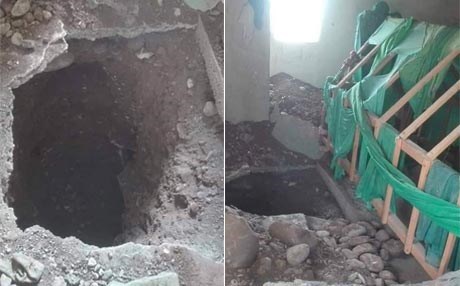
ERBIL, Kurdistan Region — Officials in the Kurdistan Region are calling for serious investigations following unknown individuals searching for “treasures” unearthed the tomb of a sheikh in Dukan that is considered by some to be holy.
“The unearthing was for the sake of finding 'valuable' artifacts, because some have disseminated the claim that the tomb contains valuable artifacts,” said Ali Qadir, the head of the organization for preserving Pishdar’s historical sites.
He confirmed that in Dukan’s Nawdasht village, the tomb of “Sheikh Korpa” was unearthed. It is visited daily.
Qadir called on security forces to seriously investigate the matter and find the people responsible.
“If this thing is given a pass, I wouldn’t eliminate the possible of such people do similar things and damaging even more significant sites,” he said.
Nawdasht is a village between Kalakan and Garmkan villages. It is a part of Dukan district in Sulaimani province and about 91 kilometers east of the Kurdistan Region’s capital of Erbil.

The stealing and damaging of historical artifacts has been on the rise, especially with ISIS’ destruction of Syrian and Iraqi museums and heritage sites.
The problem runs deep in the Kurdistan Region. Many historical sites, before ever being located and documented by experts, have been damaged or destroyed.
The Kurdistan Regional Government has a Directorate of Antiquities. They have provincial offices.
Recent joint work by teams of foreign and local archaeologists has led to monumental discoveries at Shanidar Cave in Soran and at Bassetki in Duhok.
The United Kingdom and the Netherlands have provided funds to protect Qalat Shirwana in Kalar after it was badly damaged in the November 2017 earthquake.
Comments
Rudaw moderates all comments submitted on our website. We welcome comments which are relevant to the article and encourage further discussion about the issues that matter to you. We also welcome constructive criticism about Rudaw.
To be approved for publication, however, your comments must meet our community guidelines.
We will not tolerate the following: profanity, threats, personal attacks, vulgarity, abuse (such as sexism, racism, homophobia or xenophobia), or commercial or personal promotion.
Comments that do not meet our guidelines will be rejected. Comments are not edited – they are either approved or rejected.
Post a comment