


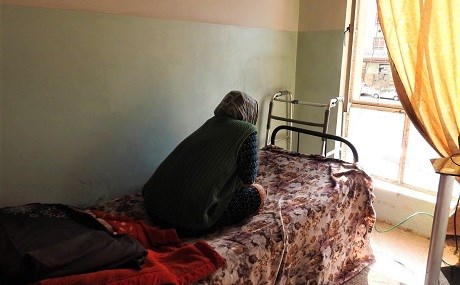
ERBIL, Kurdistan Region – Cast out by an abusive household and addicted to drugs, 21-year-old Shayma had nowhere to go and no one to turn to for help. That is until she crossed paths with Narmin, founder of the Aram House in Erbil.
Founded by Narmin Shaaban five years ago, the Aram House is a transitional home that provides shelter and care for people lost and alone in a society where family values usually reign supreme.
"My mother died so I have social issues with my family," says Shayma.
"I wanted to start my life and looked for jobs but it was difficult so I got cut off from society until Ms. Narmin grabbed my hand and brought me back."
Three years later, Shayma has turned her life around and is now one of six employees at Aram House, three of whom reside there to provide 24-hour care for its residents.
"She employed me here and sent me to school and helped me finish school," Shayma says of Narmin, known affectionately as "mom" – or "daya" in Kurdish – to those who stay in the home.
"She taught me manners and I'm happy now," Shayma adds.
Narmin says Shayma didn't get along with her stepmother and was physically abused by her father and uncle. The family situation has since improved, she says.
"She didn't want to see anyone initially but I helped her to reconcile with her family and I am trying to get her back home," Narmin says.
"But it's Shayma's wish. If she doesn't want to stay with her family, she can come back. I'll help her like a mother."
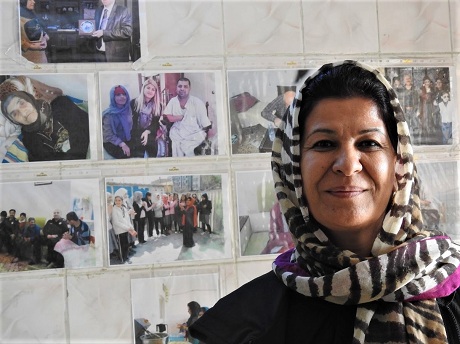 Narmin Shaaban, founder of the Aram House, stands with photographs of past and present residents. Photo: A.C. Robinson / Rudaw
Shayma’s is just one of many personal stories left untold under the roof of Aram House, where a diverse group of men and women depend on Narmin for food and shelter.
The rented two-story house located on Erbil's busy Runaky Street is already over capacity – its 34 residents, 12 of them men, 22 of them women, crammed into four bedrooms, two bathrooms, and two kitchens.
"We don't discriminate between ethnicities or religions," says Narmin. "We have Arabs, Yezidis, Kurds, Christians, and Muslims. We serve them all. Our door is always open."
"We celebrate both Christian and Muslim holidays here. I've held Christian ceremonies here. We are all human."
The residents range in age from 20 to 70. Some have lost their entire family. Others have been left fending for themselves as relatives are unable or unwilling to offer care for their psychological or physical disabilities.
Narmin opened the home with her own money when she retired in 2013, but now depends mostly on volunteers and donations to keep it running.
Doctors and nurses volunteer their time to provide specialized care for those who are ill, and local hospitals donate necessary medications.
Narmin worked for 30 years in a government nursing home and realized there were no laws to protect people who have been separated from their family and have nowhere to go.
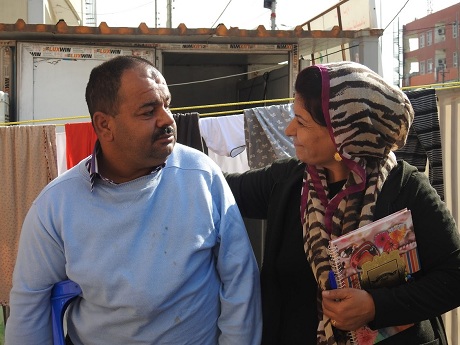 Narmin Shaaban speaks to one of Aram House's residents in the garden. Photo: A.C. Robinson / Rudaw
"Some of them have psychological issues, some have terminal illnesses or social issues," Narmin explains. "I wanted to fill that gap by helping people so that we don't have people sleeping on the streets."
She coordinates with the local police who sometimes bring homeless people to her door.
Some residents have been here several months. Others have lodged here up to four years.
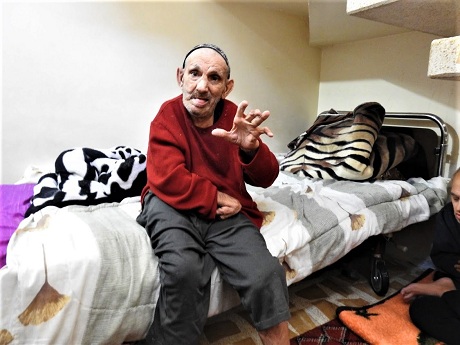 A resident born with physical disabilities. He was homeless in Mosul and hit by a car before coming to the Aram House. Photo: A.C. Robinson / Rudaw
There have been cases of seriously ill people arriving at Aram House only to die the following day. In these situations, Narmin reaches out to family members to carry out their wishes. If no family is available, she will bury them in a private cemetery.
"I have bought some land from the government in Kasnazan," Narmin says.
"There is a graveyard there. I bury them there in that land like they are my parents. I do all of the rituals for them."
Transport is a particular limitation for Aram House. Without access to a minibus, residents are often left cooped up, unable to enjoy a daytrip or even a visit to the park.
"The biggest problem that we have right now is space," says Narmin. "If the place was bigger it would be much more organized. The lives of these people here would be much better."
A new home, built on land leased to her by the government, could soon offer shelter to 100 people.
"This is the first such project in Kurdistan," Narmin says.
Although small in scale and dependent on goodwill, Aram House offers more than food and shelter. It offers dignity.
"These people have probably given more services than us. I have someone who was a teacher. I have someone who is a college graduate," Narmin says.
"They have served us, and were even more capable than us, but this has happened to them. These are humans and they deserve a good life."
"I hope with everybody's help, this project will be finished as soon as possible so that we can give these people a calm and happy life, because here is like a prison for them. They only eat and sleep."
As for Shayma, it seems she wants to follow in her daya's footsteps – and make both their dreams come true.
"Every young person has something in the back their mind that they want to achieve," says Shayma.
"I would like for this place to expand, for each of these individuals to have a private room of their own – for this to develop further."
"That is what I want for the future."
Founded by Narmin Shaaban five years ago, the Aram House is a transitional home that provides shelter and care for people lost and alone in a society where family values usually reign supreme.
"My mother died so I have social issues with my family," says Shayma.
"I wanted to start my life and looked for jobs but it was difficult so I got cut off from society until Ms. Narmin grabbed my hand and brought me back."
Three years later, Shayma has turned her life around and is now one of six employees at Aram House, three of whom reside there to provide 24-hour care for its residents.
"She employed me here and sent me to school and helped me finish school," Shayma says of Narmin, known affectionately as "mom" – or "daya" in Kurdish – to those who stay in the home.
"She taught me manners and I'm happy now," Shayma adds.
Narmin says Shayma didn't get along with her stepmother and was physically abused by her father and uncle. The family situation has since improved, she says.
"She didn't want to see anyone initially but I helped her to reconcile with her family and I am trying to get her back home," Narmin says.
"But it's Shayma's wish. If she doesn't want to stay with her family, she can come back. I'll help her like a mother."
Narmin Shaaban, founder of the Aram House, stands with photographs of past and present residents. Photo: A.C. Robinson / Rudaw Shayma’s is just one of many personal stories left untold under the roof of Aram House, where a diverse group of men and women depend on Narmin for food and shelter.
The rented two-story house located on Erbil's busy Runaky Street is already over capacity – its 34 residents, 12 of them men, 22 of them women, crammed into four bedrooms, two bathrooms, and two kitchens.
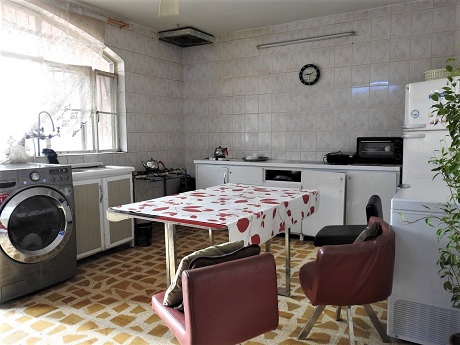
One of the two kitchens where meals are prepared for 32 residents. There aren't enough seats so during meals, residents stand while eating or sit on the floor or their beds. Photo: A.C. Robinson / Rudaw
"We don't discriminate between ethnicities or religions," says Narmin. "We have Arabs, Yezidis, Kurds, Christians, and Muslims. We serve them all. Our door is always open."
"We celebrate both Christian and Muslim holidays here. I've held Christian ceremonies here. We are all human."
The residents range in age from 20 to 70. Some have lost their entire family. Others have been left fending for themselves as relatives are unable or unwilling to offer care for their psychological or physical disabilities.
Narmin opened the home with her own money when she retired in 2013, but now depends mostly on volunteers and donations to keep it running.
Doctors and nurses volunteer their time to provide specialized care for those who are ill, and local hospitals donate necessary medications.
Narmin worked for 30 years in a government nursing home and realized there were no laws to protect people who have been separated from their family and have nowhere to go.
Narmin Shaaban speaks to one of Aram House's residents in the garden. Photo: A.C. Robinson / Rudaw "Some of them have psychological issues, some have terminal illnesses or social issues," Narmin explains. "I wanted to fill that gap by helping people so that we don't have people sleeping on the streets."
She coordinates with the local police who sometimes bring homeless people to her door.
Some residents have been here several months. Others have lodged here up to four years.
A resident born with physical disabilities. He was homeless in Mosul and hit by a car before coming to the Aram House. Photo: A.C. Robinson / Rudaw There have been cases of seriously ill people arriving at Aram House only to die the following day. In these situations, Narmin reaches out to family members to carry out their wishes. If no family is available, she will bury them in a private cemetery.
"I have bought some land from the government in Kasnazan," Narmin says.
"There is a graveyard there. I bury them there in that land like they are my parents. I do all of the rituals for them."
Transport is a particular limitation for Aram House. Without access to a minibus, residents are often left cooped up, unable to enjoy a daytrip or even a visit to the park.
"The biggest problem that we have right now is space," says Narmin. "If the place was bigger it would be much more organized. The lives of these people here would be much better."
A new home, built on land leased to her by the government, could soon offer shelter to 100 people.
"This is the first such project in Kurdistan," Narmin says.
Although small in scale and dependent on goodwill, Aram House offers more than food and shelter. It offers dignity.
"These people have probably given more services than us. I have someone who was a teacher. I have someone who is a college graduate," Narmin says.
"They have served us, and were even more capable than us, but this has happened to them. These are humans and they deserve a good life."
"I hope with everybody's help, this project will be finished as soon as possible so that we can give these people a calm and happy life, because here is like a prison for them. They only eat and sleep."
As for Shayma, it seems she wants to follow in her daya's footsteps – and make both their dreams come true.
"Every young person has something in the back their mind that they want to achieve," says Shayma.
"I would like for this place to expand, for each of these individuals to have a private room of their own – for this to develop further."
"That is what I want for the future."
Comments
Rudaw moderates all comments submitted on our website. We welcome comments which are relevant to the article and encourage further discussion about the issues that matter to you. We also welcome constructive criticism about Rudaw.
To be approved for publication, however, your comments must meet our community guidelines.
We will not tolerate the following: profanity, threats, personal attacks, vulgarity, abuse (such as sexism, racism, homophobia or xenophobia), or commercial or personal promotion.
Comments that do not meet our guidelines will be rejected. Comments are not edited – they are either approved or rejected.
Post a comment