


Middle East

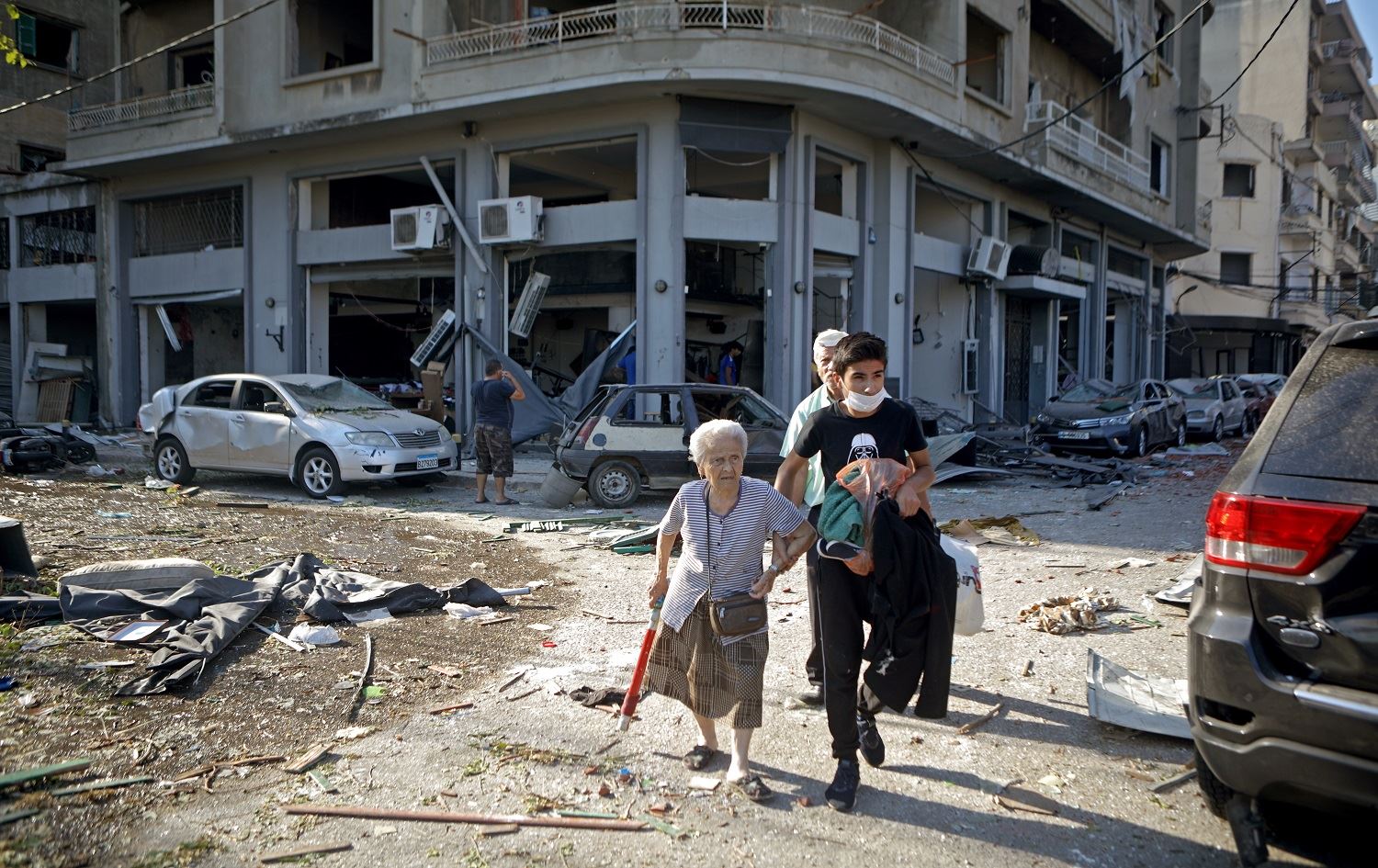
A woman is evacuated from the partially destroyed Beirut neighbourhood of Mar Mikhael on August 5, 2020. Photo: Patrick Baz/AFP
ERBIL, Kurdistan Region — Lebanon is still reeling from a deadly blast on Tuesday evening which has left at least 135 dead and thousands wounded in Beirut.
A two-week state of emergency has been announced in the capital, and government ministers have called on port officials to be placed under house arrest after an explosion ripped through the city shortly after 6pm, turning much of downtown Beirut to rubble.
The blast could be heard as far away as Cyprus, 200 kilometers away.
At least 135 people have been confirmed dead, but the number is expected to rise as debris is cleared across the city. Lebanon's health minister Hamad Hassan has said at least 5,000 were wounded by the blast.
President Michel Aoun attributed the blast to 2,750 tonnes of highly explosive ammonium nitrate stored at the city's port since 2013, prompting angry reactions from civilians already frustrated with the political establishment.
At least 300,000 have been left homeless, according to Beirut Governor Marwan Abboud, who said at least half the city has been damaged. Social media users have offered hotel rooms and empty homes across the country to those left destitute, as others comb through sites for news of the missing.
Hospitals and NGOS have appealed for blood donors as they struggle to cope with the number of casualties. Photos shared on social media showed health workers attending to patients in car parks after escaping damaged buildings, already at full capacity due to the coronavirus pandemic.
The blast has devastated the economic heart of Lebanon during a time of unprecedented financial crisis, with the value of the Lebanese pound plummeting since October 2019, when anti-government protests erupted across the country, leaving many jobless and unable to feed their families.
In a country heavily reliant on imports, now unable to reach Beirut's decimated port, Tuesday's widespread destruction has left survivors wondering what future lies ahead.
"We had the economic crisis, political instability, COVID-19, the plummet of the Lebanese Pound, a bankrupt country. I look at Lebanon and I don't know what we have left as a country," one woman told French newspaper Le Monde.


Comments
Rudaw moderates all comments submitted on our website. We welcome comments which are relevant to the article and encourage further discussion about the issues that matter to you. We also welcome constructive criticism about Rudaw.
To be approved for publication, however, your comments must meet our community guidelines.
We will not tolerate the following: profanity, threats, personal attacks, vulgarity, abuse (such as sexism, racism, homophobia or xenophobia), or commercial or personal promotion.
Comments that do not meet our guidelines will be rejected. Comments are not edited – they are either approved or rejected.
Post a comment