


WASHINGTON DC, US – A senior Kurdish official says new terror groups will likely replace the Islamic State (ISIS) in the region if no political solutions are found to century-long ethnic disputes in countries like Iraq and Syria.
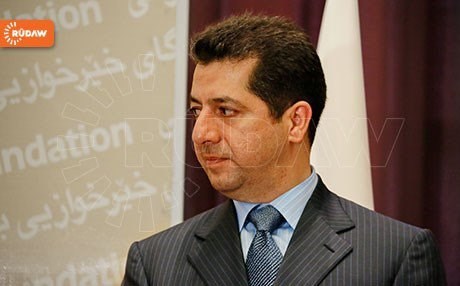
Speaking at the Woodrow Wilson Center in Washington the Chancellor of Kurdistan Region's Security Council, Masrour Barzani, said the future stability of the Middle East depends on remaking "an unjust map" that was drawn for the region over a century ago.
"We think that the world unfortunately has not been very just... It's time to fix the mistakes that were made during the Sykes-Picot agreement and until now we are paying the ultimate price for that," Barzani said, referring to the epochal 1916 agreement that followed the collapse of the Ottoman Empire. This led to the formation of new nations, including Iraq and Syria with unresolved ethnic and religious conflicts within them.
"Let me tell you that we don't think that ISIS is the end of terrorism. ISIS can be defeated but if political structure in Iraq and the Middle East is not solved and if there are not new approaches to look at how it should be structured, we do believe that there is a possibility that other terror organisations may reappear as we have seen that ISIS is an extension of Al-Qaeda," he added.
Sunni insurgency has been re-emerging in different forms in Iraq after ouster of former dictator Saddam Hussein, a Sunni, following the 2003 Iraq War, which led to a Shiite domination in the country and a rapid decline of Sunni participation in the political life.
The terror network of the infamous Al-Tawhid Wal-Jihad, whose leader Abu- Massab Zarqawi was killed by US troops in 2006, which later emerged with the Al-Qaeda in Iraq is generally seen as one the first organized terror groups in the country taking hold in heavily disfranchised Sunni regions like Anbar and Nineveh.
The Sunni leaders in Iraq have over the past years shown increasing support for the establishment of a region in Nineveh Plains with a Sunni-majority population.
Last week's legalization of the Shiite militia known as the Hashd al-Shaabi has only added to fears of escalated tensions between them and the Sunnis who see the rise of Shiite dominance in Iraq at the cost of further deprivation for the Sunni minority in the country.
Barzani also said there was coordination between Kurdish security agencies and international agencies to locate and identify foreign fighters recruited by the ISIS but could not give details on how many of these fighters are operating in Iraq.
Speaking at the Woodrow Wilson Center in Washington the Chancellor of Kurdistan Region's Security Council, Masrour Barzani, said the future stability of the Middle East depends on remaking "an unjust map" that was drawn for the region over a century ago.
"We think that the world unfortunately has not been very just... It's time to fix the mistakes that were made during the Sykes-Picot agreement and until now we are paying the ultimate price for that," Barzani said, referring to the epochal 1916 agreement that followed the collapse of the Ottoman Empire. This led to the formation of new nations, including Iraq and Syria with unresolved ethnic and religious conflicts within them.
"Let me tell you that we don't think that ISIS is the end of terrorism. ISIS can be defeated but if political structure in Iraq and the Middle East is not solved and if there are not new approaches to look at how it should be structured, we do believe that there is a possibility that other terror organisations may reappear as we have seen that ISIS is an extension of Al-Qaeda," he added.
Sunni insurgency has been re-emerging in different forms in Iraq after ouster of former dictator Saddam Hussein, a Sunni, following the 2003 Iraq War, which led to a Shiite domination in the country and a rapid decline of Sunni participation in the political life.
The terror network of the infamous Al-Tawhid Wal-Jihad, whose leader Abu- Massab Zarqawi was killed by US troops in 2006, which later emerged with the Al-Qaeda in Iraq is generally seen as one the first organized terror groups in the country taking hold in heavily disfranchised Sunni regions like Anbar and Nineveh.
The Sunni leaders in Iraq have over the past years shown increasing support for the establishment of a region in Nineveh Plains with a Sunni-majority population.
Last week's legalization of the Shiite militia known as the Hashd al-Shaabi has only added to fears of escalated tensions between them and the Sunnis who see the rise of Shiite dominance in Iraq at the cost of further deprivation for the Sunni minority in the country.
Barzani also said there was coordination between Kurdish security agencies and international agencies to locate and identify foreign fighters recruited by the ISIS but could not give details on how many of these fighters are operating in Iraq.
Comments
Rudaw moderates all comments submitted on our website. We welcome comments which are relevant to the article and encourage further discussion about the issues that matter to you. We also welcome constructive criticism about Rudaw.
To be approved for publication, however, your comments must meet our community guidelines.
We will not tolerate the following: profanity, threats, personal attacks, vulgarity, abuse (such as sexism, racism, homophobia or xenophobia), or commercial or personal promotion.
Comments that do not meet our guidelines will be rejected. Comments are not edited – they are either approved or rejected.
Post a comment