


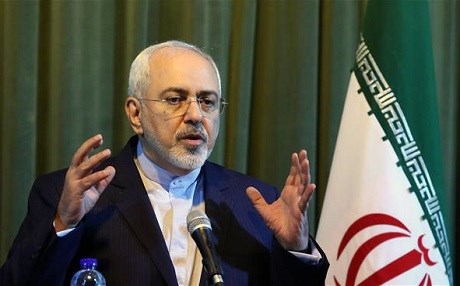
ERBIL, Kurdistan Region--Amid ongoing hostility between Iran and Saudi Arabia, the Iranian Foreign Minister Javad Zarif wrote an op-ed for The New York Times in which he denounced Riyadh for promulgating Wahhabism across the region and called for an abolition of that ideology, which has been described as the main source of global terrorism.
In the article published on Tuesday, Zarif claimed that “tainted petrodollars” are helping to fuel a narrative which is attempting to convince the world that the former al-Qaeda affiliated Jabhat al-Nusra group in Syria has now become a moderate group. This, he charged, is part of Saudi Arabia’s efforts to continuously support and fund such forces.
These moves on the part of Riyadh, Zarif claimed, are “based on the false premise that plunging the Arab world into further chaos will somehow damage Iran.”
Zarif argued that Riyadh is playing up fears of an Iranian threat in order to justify its continued support to dangerous Islamist groups across the region, which he stressed are as big a threat to Sunni Arabs as they are to Shiites.
This cannot last, he wrote, “as the realization grows that Riyadh’s persistent sponsorship of extremism repudiates its claim to be a force for stability.”
The Wahhabist ideology which Riyadh has promoted for decades, Zarif argued, has inspired, “virtually every terrorist group abusing the name of Islam – from Al Qaeda and its offshoots in Syria to Boko Haram in Nigeria.”
The Iranian Foreign Minister’s editorial comes as tensions between Tehran and Riyadh continue to escalate in the aftermath of the Hajj stampede in Mecca in September 2015 and the Saudi execution of the Shiite cleric Sheikh Nimr al-Nimr last January – which was followed by an Iranian mob ransacking the Saudi embassy in Tehran and the severing of ties between the two regional powers.
Since that time Riyadh has endorsed the Mujahideen-e Khalq (MEK) militant group which seeks to overthrow the Iranian regime, and the proxy war between the two countries across the region, most notably in Syria and Yemen, continues.
Nevertheless Zarif concluded his article by suggesting Riyadh could possibly be part of solution.
“We invite Saudi rulers to put aside the rhetoric of blame and fear, and join hands with the rest of the community of nations to eliminate the scourge of terrorism and violence that threatens us all,” he wrote.
In the article published on Tuesday, Zarif claimed that “tainted petrodollars” are helping to fuel a narrative which is attempting to convince the world that the former al-Qaeda affiliated Jabhat al-Nusra group in Syria has now become a moderate group. This, he charged, is part of Saudi Arabia’s efforts to continuously support and fund such forces.
These moves on the part of Riyadh, Zarif claimed, are “based on the false premise that plunging the Arab world into further chaos will somehow damage Iran.”
Zarif argued that Riyadh is playing up fears of an Iranian threat in order to justify its continued support to dangerous Islamist groups across the region, which he stressed are as big a threat to Sunni Arabs as they are to Shiites.
This cannot last, he wrote, “as the realization grows that Riyadh’s persistent sponsorship of extremism repudiates its claim to be a force for stability.”
The Wahhabist ideology which Riyadh has promoted for decades, Zarif argued, has inspired, “virtually every terrorist group abusing the name of Islam – from Al Qaeda and its offshoots in Syria to Boko Haram in Nigeria.”
The Iranian Foreign Minister’s editorial comes as tensions between Tehran and Riyadh continue to escalate in the aftermath of the Hajj stampede in Mecca in September 2015 and the Saudi execution of the Shiite cleric Sheikh Nimr al-Nimr last January – which was followed by an Iranian mob ransacking the Saudi embassy in Tehran and the severing of ties between the two regional powers.
Since that time Riyadh has endorsed the Mujahideen-e Khalq (MEK) militant group which seeks to overthrow the Iranian regime, and the proxy war between the two countries across the region, most notably in Syria and Yemen, continues.
Nevertheless Zarif concluded his article by suggesting Riyadh could possibly be part of solution.
“We invite Saudi rulers to put aside the rhetoric of blame and fear, and join hands with the rest of the community of nations to eliminate the scourge of terrorism and violence that threatens us all,” he wrote.
Comments
Rudaw moderates all comments submitted on our website. We welcome comments which are relevant to the article and encourage further discussion about the issues that matter to you. We also welcome constructive criticism about Rudaw.
To be approved for publication, however, your comments must meet our community guidelines.
We will not tolerate the following: profanity, threats, personal attacks, vulgarity, abuse (such as sexism, racism, homophobia or xenophobia), or commercial or personal promotion.
Comments that do not meet our guidelines will be rejected. Comments are not edited – they are either approved or rejected.
Post a comment