
ERBIL, Kurdistan Region - Ankara and Tehran signed a memorandum of understanding to boost security cooperation along their borders on Wednesday at a time when both countries are fighting Kurdish armed groups based in the Kurdistan Region of northern Iraq.
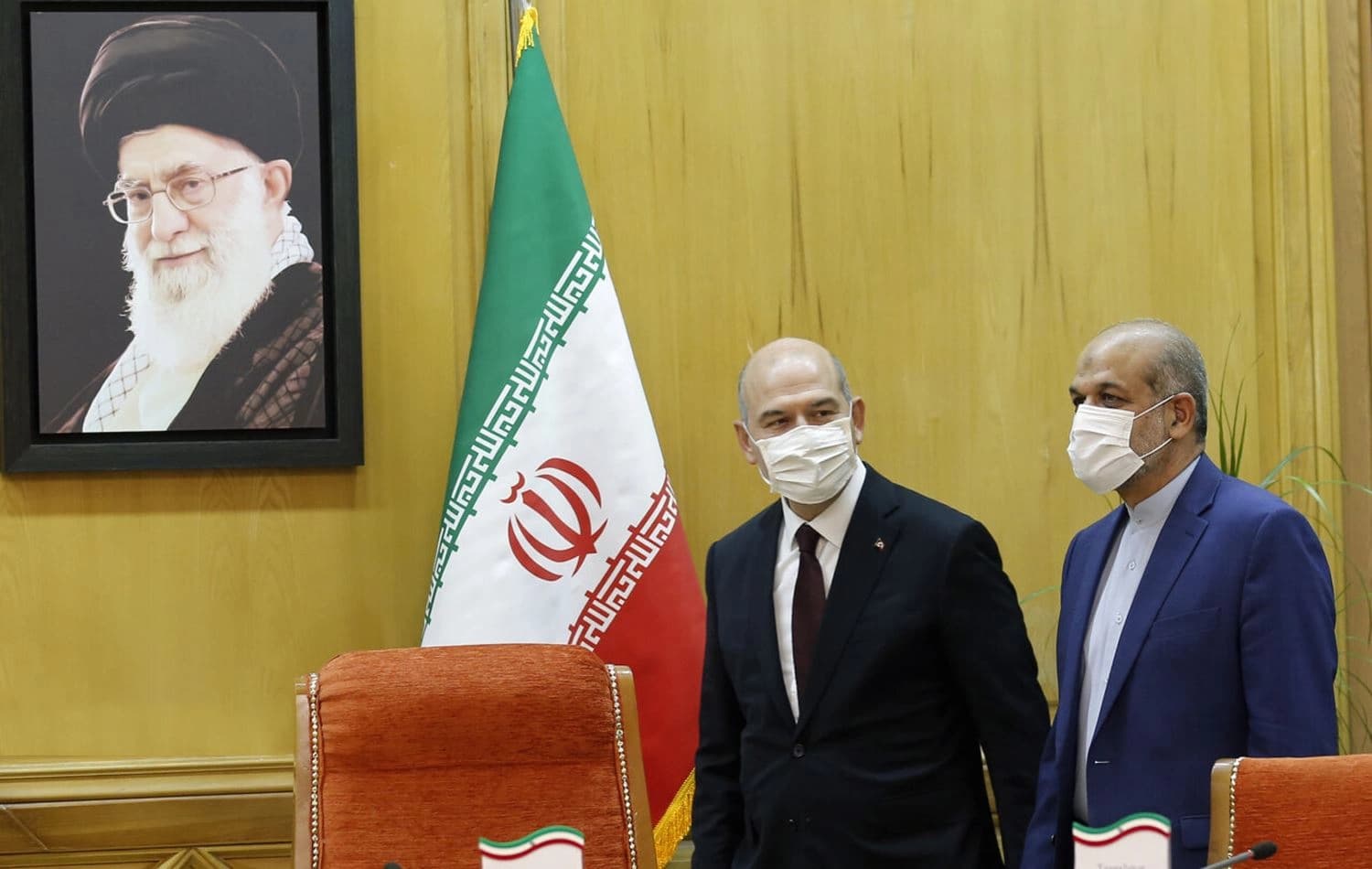
Iran’s interior minister Ahmad Vahidi received his Turkish counterpart Suleyman Soylu in Tehran on Wednesday to discuss a wide range of topics including expanding relations, but mainly cross-border security cooperation between the two sides.
“We discussed the fight against terrorism, the fight against transnational crime, the fight against arms trafficking, exchanges and the expanding of cross-border activities, as well as the expansion of joint cooperation in all areas,” Vahidi said in a press conference after the meeting, as quoted by Tasnim news, affiliated with the Islamic Revolutionary Guard Corps (IRGC).
The meeting was concluded by signing a memorandum of understanding for security cooperation. The agreement “foresees the prevention of all kinds of terrorist and illegal acts concerning the two countries, especially in the border regions,” reported Turkish state media.
Turkey and Iran frequently carry out cross-border ground and air operations claiming to be targeting the Kurdish oppositions groups based in the border area or inside the Kurdistan Region. Dozens of Iraqi Kurdish civilians have died as a result of Turkish and Iranian airstrikes and artillery fire. Turkey and Iran say that the groups including the Kurdistan Workers’ Party (PKK), Kurdistan Democratic Party of Iran (KDPI), and Kurdistan Free Life Party (PJAK) are destabilising their countries by launching attacks on their respected security forces.
There have been more than 400 military incursions into the Kurdistan Region so far this year, endangering innocent civilians and harming its environment, the Kurdistan Regional Government coordinator for international advocacy Dindar Zebari said on September 22. Zebari did not name the countries responsible for breaching Iraqi sovereignty but reports from the Duhok and Erbil provinces show that Turkey is the main culprit.
The Iranian and Turkish presidents last year agreed to coordinate attacks on these armed opposition groups.
While the two countries frequently cooperate in the field of security, they have deep distrust of each other.
Iran’s ambassador to Iraq, Iraj Masjidi, a senior member of IRGC's external arm, the Quds Force, called on Turkey in an interview with Rudaw in February to stop interfering militarily in Iraq, while both countries are widely accused of meddling in Iraqi affairs.
“We reject military intervention in Iraq and Turkish forces should not pose a threat or violate Iraqi soil,” Masjedi told Rudaw. “We do not accept at all, be it Turkey or any other country to intervene in Iraq militarily or advance or have a military presence in Iraq, therefore we believe the Turks must return to their international position and be stationed there, and the security of Iraq be maintained by Iraqis.”
Turkey’s ambassador to Iraq hit back at statements, saying “Ambassador of Iran would be the last person to lecture Turkey about respecting borders of Iraq.”
These agreements come as Turkish security forces arrested a network of eight people in September, including two alleged Iranian agents, in Van
province for trying to abduct a former Iranian soldier.
Turkey has established a number of military outposts inside Iraqi territory in the Kurdistan Region since the mid-1990s to reportedly fight guerrillas of the PKK, increasing its cross-border footprint in recent years. Since June 2020, Turkey has launched three major air and ground operations, establishing new outposts deep inside the Kurdistan Region.
.webp&w=3840&q=75)